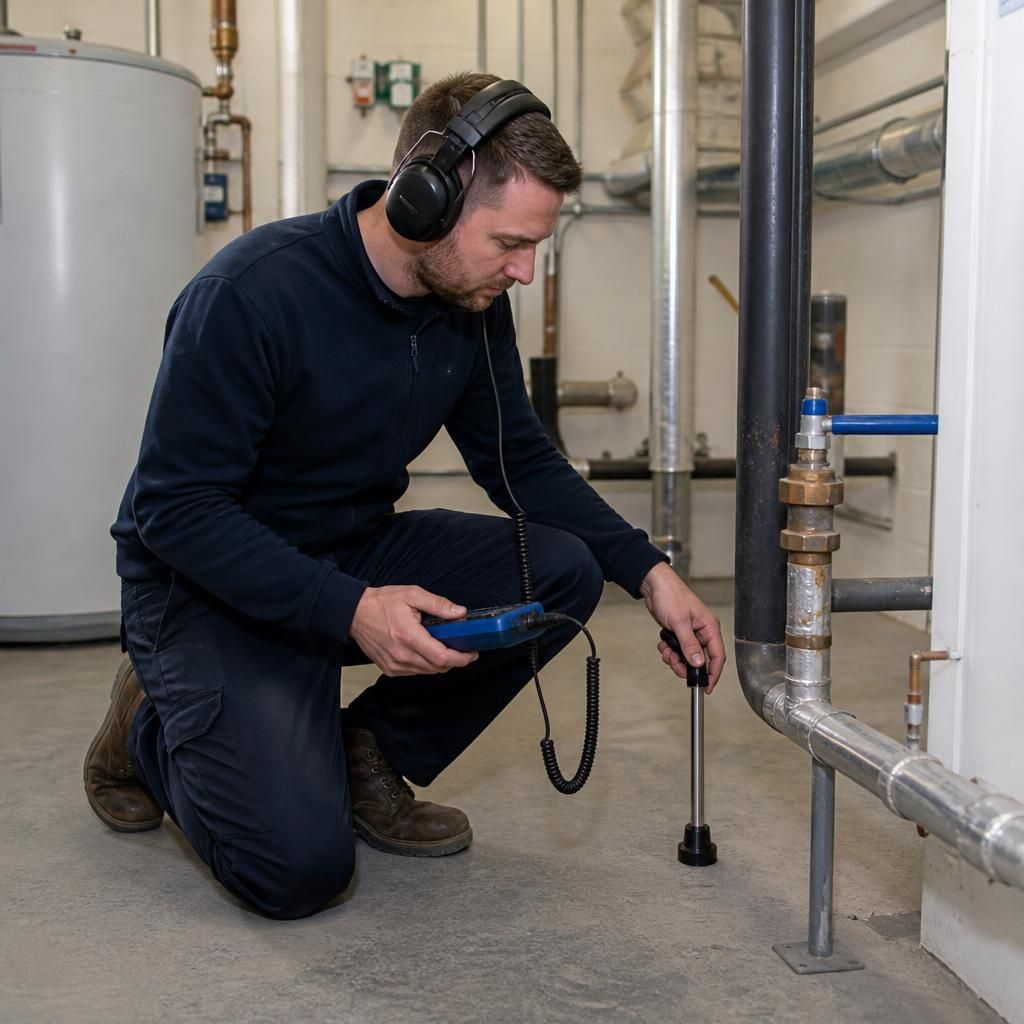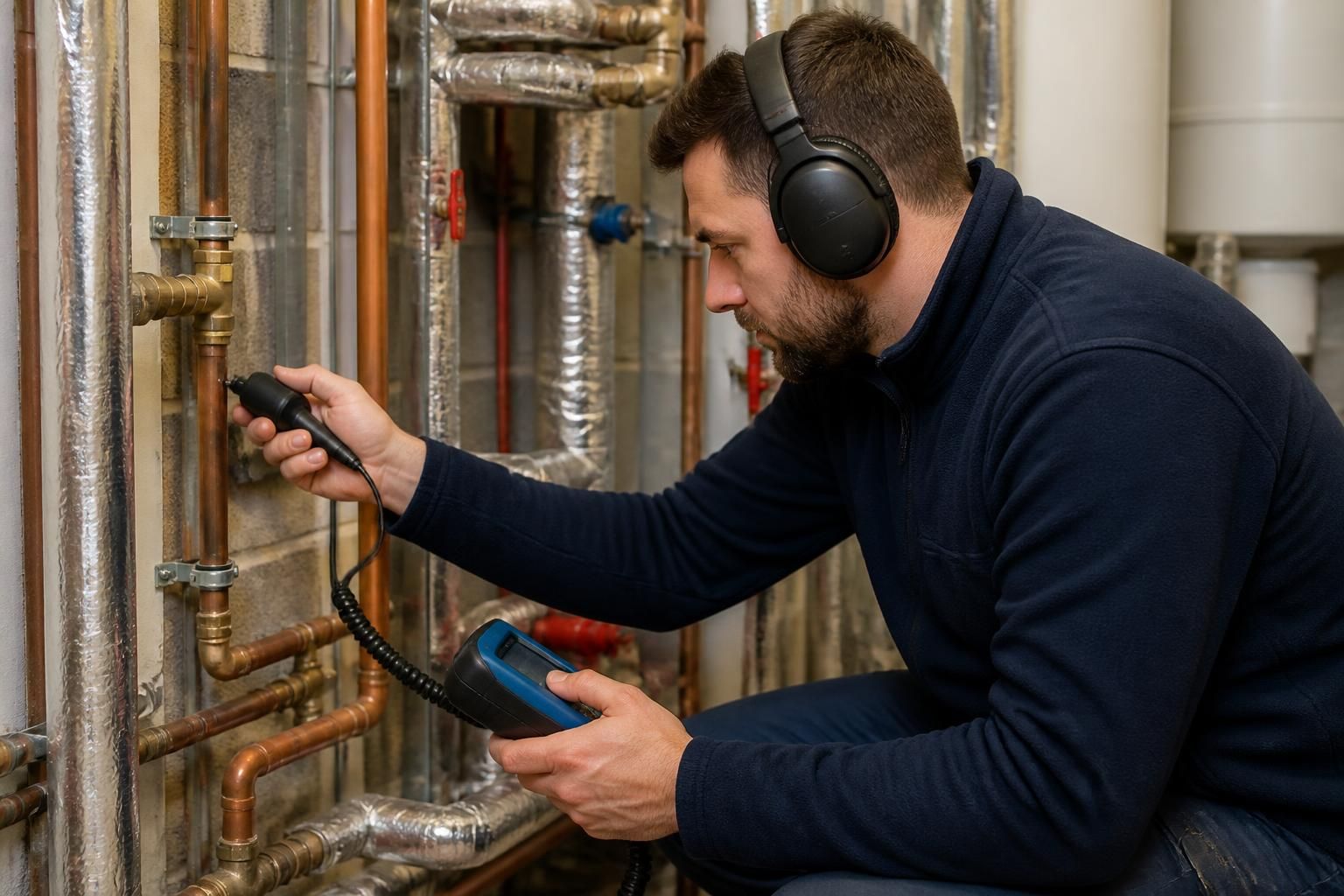
Commercial leak detection typically causes less disruption than investigating a leak by opening walls, floors or ceilings without first locating the source. The main interruption is usually limited to providing access for the inspection and, where necessary, temporarily isolating part of the water system while checks are carried out.
The level of disruption depends on several practical factors:
- Suspected leak location: A visible leak in a plant room, service cupboard or accessible toilet area is generally simpler to investigate than moisture beneath a floor, behind a wall or within a ceiling void.
- Building layout: Larger premises may require checks across several rooms, floors or service zones. Investigators may need access to valves, pipework, meters, risers and other building services.
- Type of plumbing system: Complex systems serving multiple washrooms, kitchens, heating circuits or commercial equipment can require a more structured investigation to identify which section is affected.
- Condition of the affected area: Standing water, saturated materials or restricted access may make movement and inspection more difficult, even when no major opening-up is required.
A typical investigation starts with a discussion about the symptoms, such as unexplained dampness, a drop in pressure, a continually running system or an increase in water use. The plumber then assesses accessible pipework and fittings before selecting suitable detection equipment. Depending on the circumstances, this may include acoustic checks, thermal imaging, tracer methods, moisture assessment or other non-destructive techniques.
Non-invasive detection can reduce the need to remove flooring, plasterboard, decorative finishes or fixed equipment simply to search for the source. It does not mean that every inspection is entirely interruption-free. Furniture, stored goods or access panels may need to be moved, and some rooms or work areas may need to remain clear while measurements are taken.
Water isolation is another possible source of disruption. If the suspected leak is on a particular branch, isolating that section may restrict water to selected facilities rather than the entire premises. The extent depends on how the system is configured and whether suitable isolation valves are accessible and working correctly. A plumber should explain which areas may be affected before isolation is carried out.
Occupied commercial premises can often reduce operational impact by preparing access in advance. Useful steps include:
- identifying the person who can provide access to restricted rooms or service areas;
- clearing stored items from around meters, valves, cupboards and suspected leak points;
- providing details of recent repairs, unusual water use, damp patches or pressure changes;
- informing staff, occupants or relevant contractors that selected areas may be temporarily unavailable;
- protecting stock, documents and electrical equipment near the suspected leak where it is safe to do so.
In some cases, detection confirms the source without any immediate need to remove building fabric. If the leak is concealed or a failed component cannot be reached through an existing access point, a separate repair decision may be needed. Any opening-up, removal of finishes or replacement of damaged materials is distinct from the detection stage and should be discussed before work proceeds.
After the inspection, the findings should be explained clearly, including the suspected source, the evidence supporting it, any limitations caused by restricted access and the next practical repair steps. This allows the property owner, landlord or facilities representative to plan remedial work rather than authorising unnecessary investigation across unaffected areas.
For commercial properties in Birmingham and the wider West Midlands, Ideal Plumbing Services provides leak detection as part of its plumbing support for local businesses and property managers. The appropriate approach depends on the building, the plumbing arrangement and the consequences of interrupting particular facilities, so the scope should be agreed before the inspection begins.