Commercial leak detection uses a combination of non-invasive investigation techniques to identify the source of escaping water before unnecessary floors, walls or ceilings are opened. The most suitable approach depends on the pipe material, the building’s construction, the position of the suspected leak and whether the pipework is carrying water under pressure.
Acoustic detection
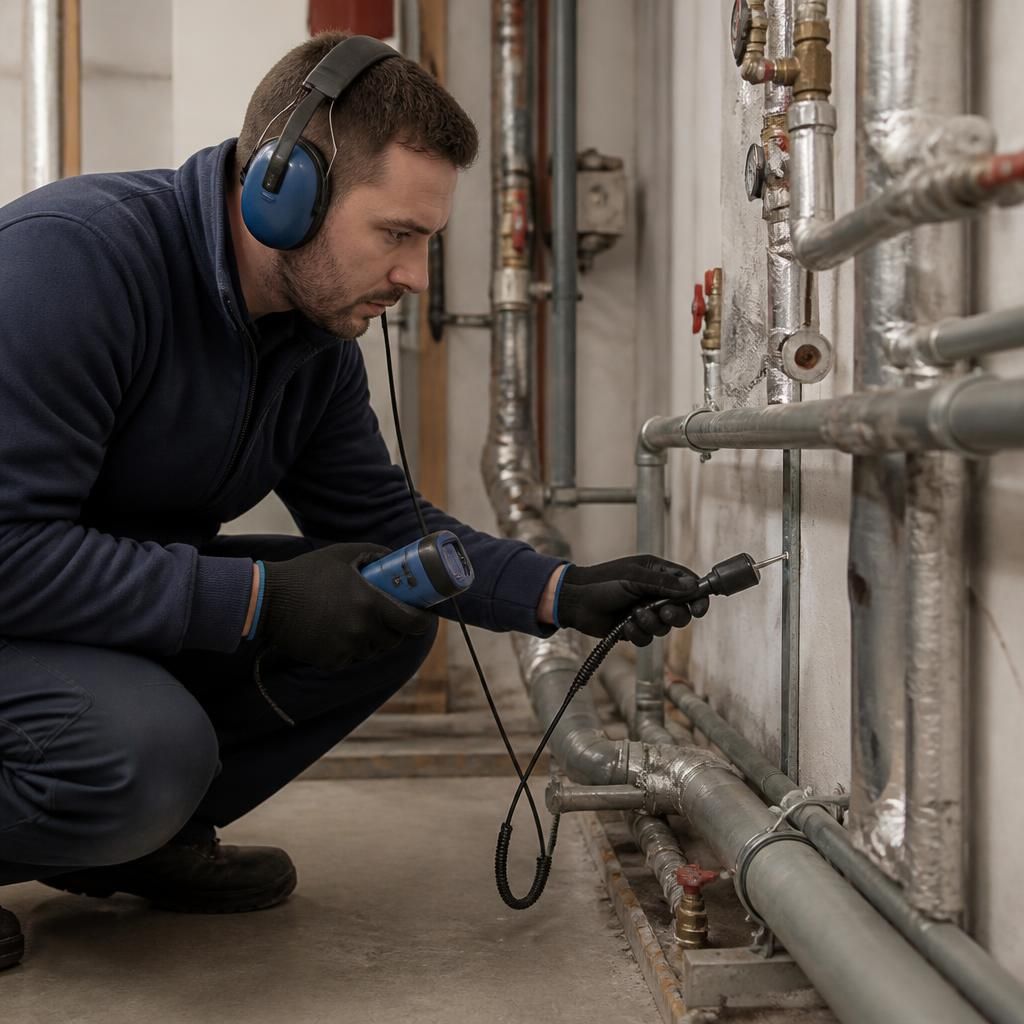
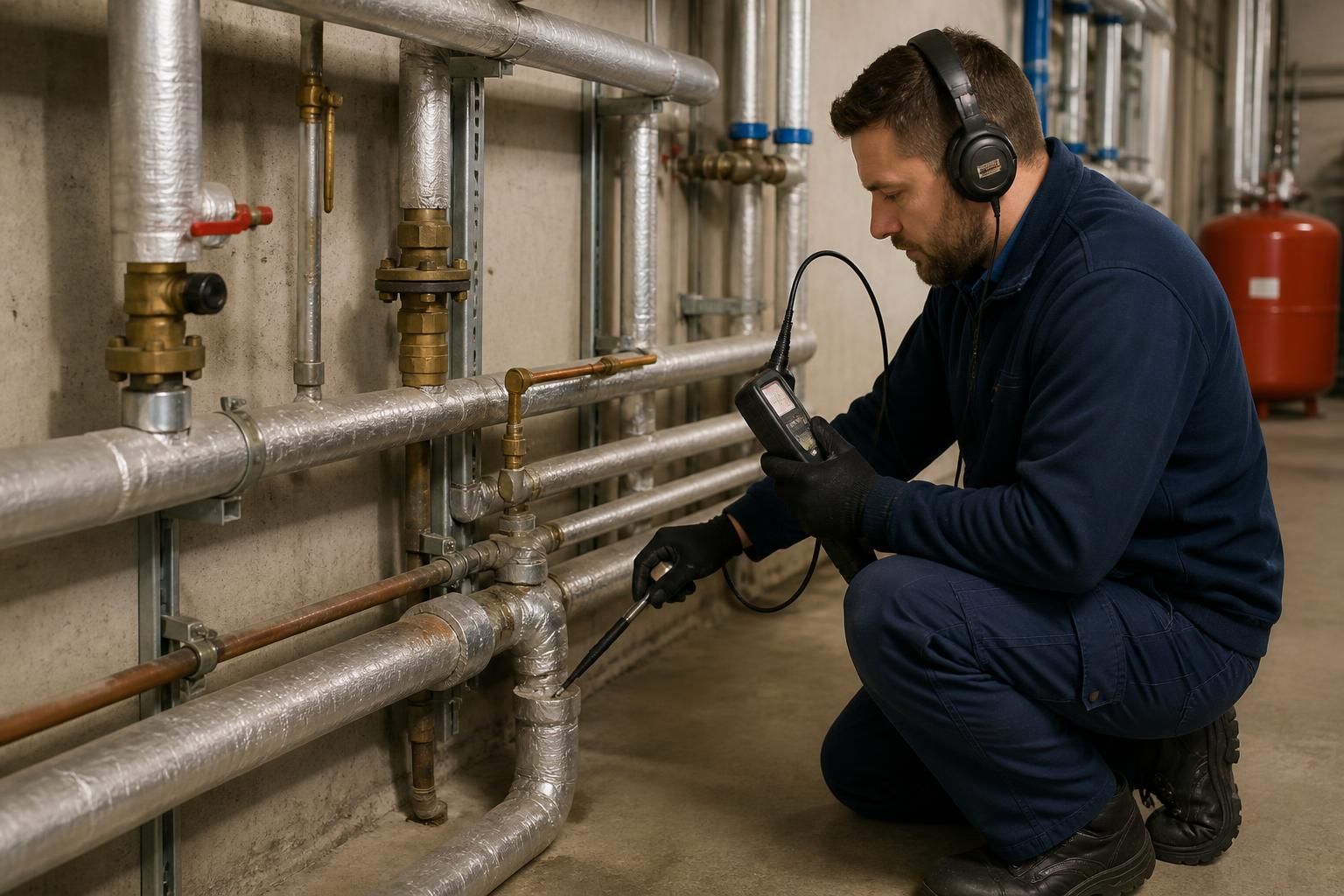
Acoustic equipment detects the sound created when pressurised water escapes through a crack, joint or fitting. A technician listens at accessible points such as valves, exposed pipework and fixtures, then compares the sound levels between locations. The loudest or most consistent reading can help narrow down the position of the break, particularly beneath hard surfaces or within voids.
Acoustic investigation is less effective where background noise, insulation, thick structural materials or low water pressure masks the sound. For that reason, readings are normally interpreted alongside other evidence rather than treated as conclusive on their own.
Thermal imaging
Thermal imaging cameras identify temperature differences across surfaces. A concealed hot-water leak may create a warmer area, while escaping cold water can produce a cooler pattern or alter the way a surface holds heat. The resulting image can show the likely route of moisture behind plasterboard, flooring or other coverings without immediately removing those materials.
Thermal imaging shows temperature variation, not water itself. A technician therefore considers the pattern, surrounding conditions and the pipe layout before deciding whether it indicates a leak. Insulation, ambient temperature and the depth of the pipework can affect the clarity of the image.
Moisture measurement
Moisture meters measure the level of moisture within materials such as plaster, timber and flooring. Taking readings at several points helps establish whether dampness is localised or spreading from another area. Comparing affected surfaces with a dry reference area can also help distinguish an active leak from residual moisture left by an earlier incident.
These readings are useful for mapping the extent of water penetration, but they do not necessarily identify the pipe that is leaking. They are most informative when combined with the observed damage, the plumbing layout and pressure or acoustic findings.
Pressure testing
Pressure testing checks whether a sealed section of pipework can maintain a stable pressure. The relevant supply is isolated, a controlled pressure is applied and the reading is monitored. A pressure loss can indicate a leak within that section, even where no visible water has appeared.
This method can help separate a problem in the supply pipework from an issue with a fixture or appliance. The test must be planned around the type and condition of the installation, because older or vulnerable components may require particular care.
Tracer gas investigation
Where a leak is difficult to hear or access, a specialist tracer gas can be introduced into suitable pipework after the water has been removed or isolated. The gas can pass through a very small opening and rise through certain surface materials, where a detector identifies its concentration. This can help locate concealed leaks that produce little acoustic noise.
Tracer gas is used selectively. The pipe system must be appropriate for the procedure, and the results still need to be assessed against the building layout and other findings.
CCTV inspection
For accessible drains and larger pipe runs, a small inspection camera can travel through the pipe to show cracks, displaced joints, blockages, root ingress or damaged sections. This is particularly useful when the suspected problem is within drainage rather than a pressurised water supply. The footage can identify the internal condition and the position of a defect without excavating the entire route.
CCTV inspection is not suitable for every pipe size or configuration. Bends, standing water, debris and restricted access may limit the view, so a clear camera image is interpreted together with the symptoms and results from other tests.
How the methods are combined
A commercial investigation generally begins by gathering information about the symptoms, recent changes, affected areas and available pipework. The technician then identifies accessible test points and establishes whether the suspected system is a water supply, heating circuit or drainage run. Initial observations may be followed by pressure, acoustic, thermal or moisture checks, with more specialised testing used where the source remains concealed.
Using more than one method helps distinguish the point where water is visible from the point where it is entering the building. It can also reduce the risk of confusing condensation, a surface spill, rising damp or an old stain with an active plumbing leak. Once the evidence is consistent, the suspected location can be marked out for targeted access and repair.
A written finding may describe the test used, the affected section, the evidence supporting the suspected location and any limitations caused by restricted access or building construction. This information helps the property owner, landlord or facilities manager decide what repair work is appropriate and whether drying or further inspection is needed afterwards.