Commercial leak detection is suitable for any non-residential property with concealed, complex or difficult-to-access water systems. It is particularly valuable in premises where a leak could affect several occupiers, damage valuable contents, restrict access to working areas or interrupt normal business activities.
Multi-occupancy and managed buildings can be difficult to investigate because several units may share incoming supplies, risers, tanks or drainage routes. In these properties, a leak may appear in one tenant’s area while the source is located elsewhere. Detection can help narrow down the affected section before floors, walls or ceilings are opened.
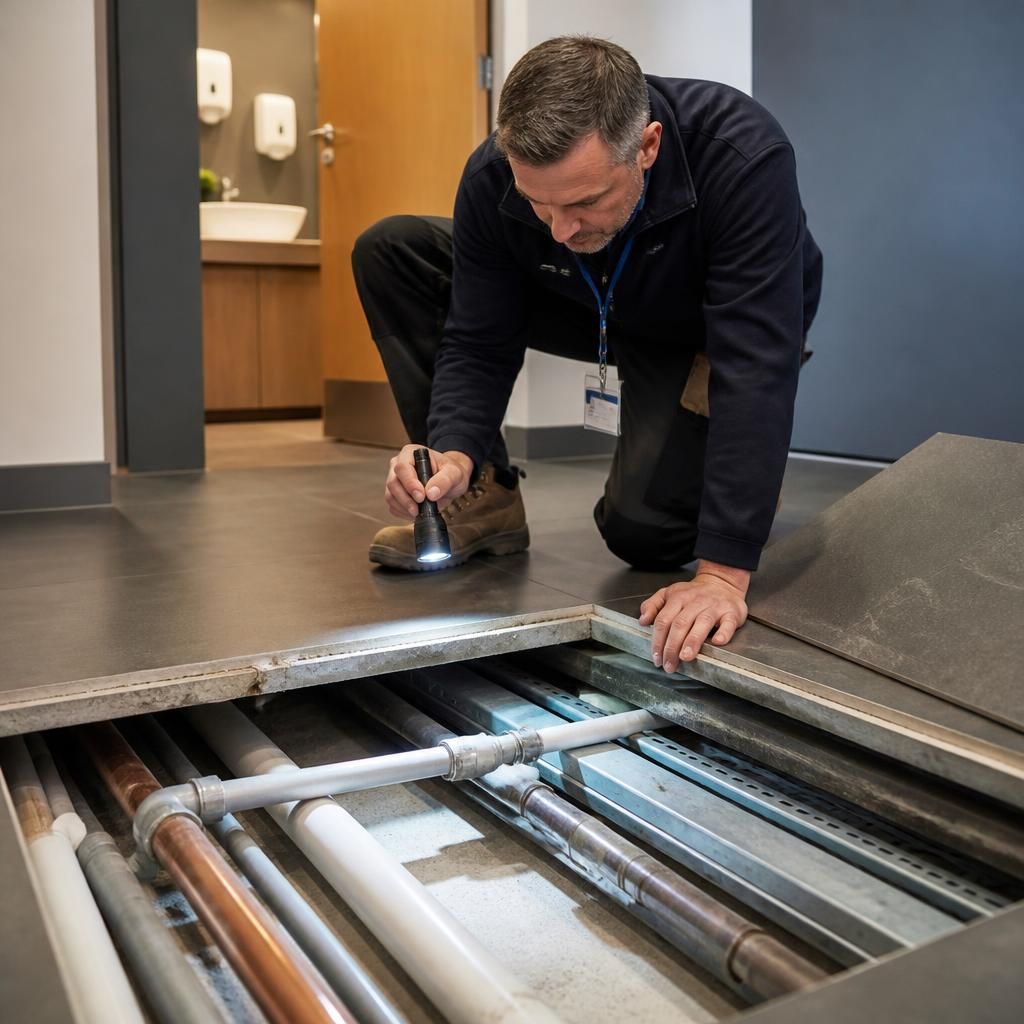
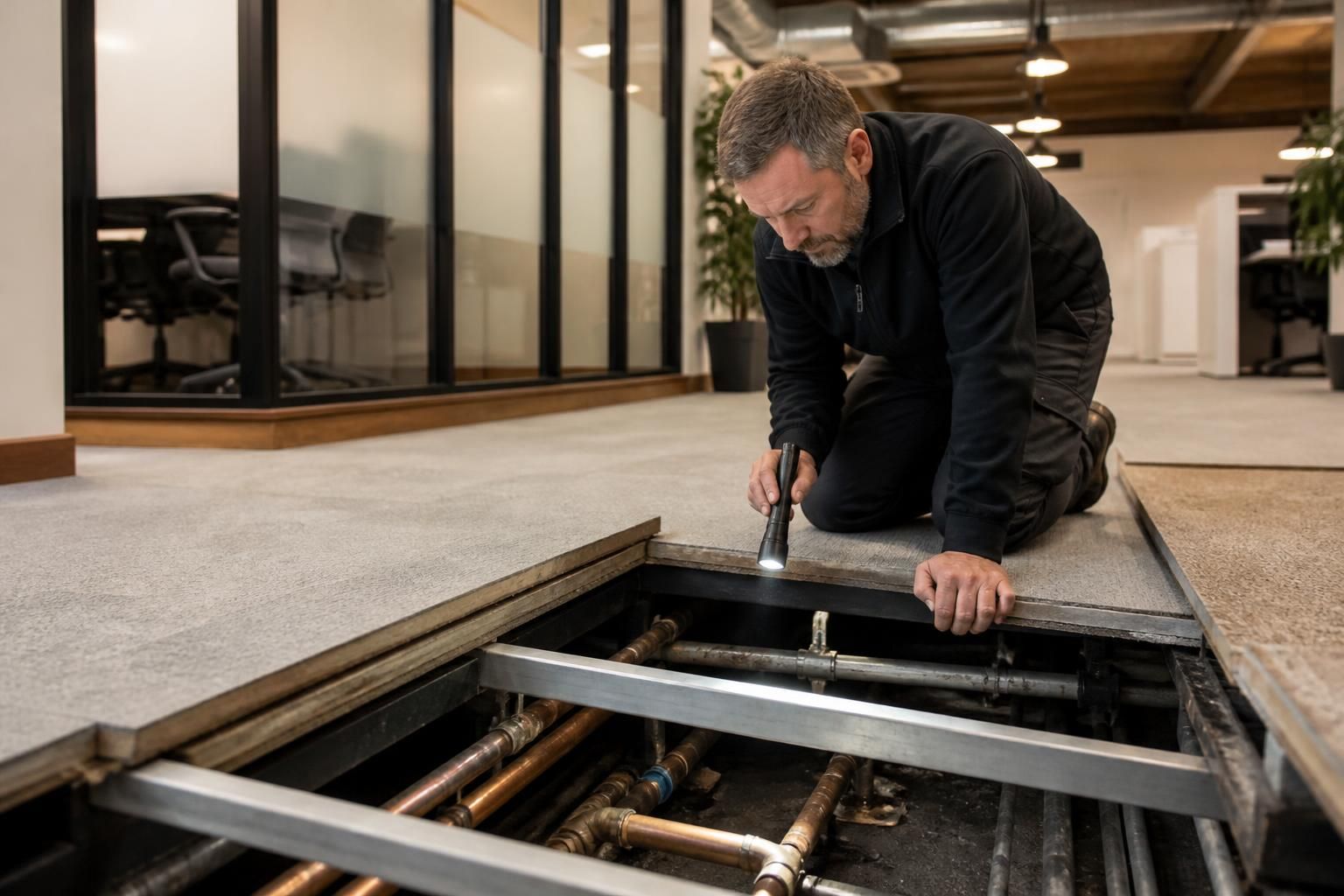
Properties with extensive internal pipework are also suitable. This includes buildings with long supply runs, concealed pipework, service voids, plant rooms, suspended ceilings or pipes beneath hard flooring. The more difficult a system is to inspect visually, the more useful a targeted detection assessment can be when water loss or dampness is suspected.
Premises with high or changing water use may benefit from investigation when consumption appears unusual or a supply continues to run when the building is not using water. This can apply where cleaning facilities, staff amenities, kitchens, toilets, storage areas or process equipment are supplied by connected pipework. Comparing expected use with observed flow can help identify whether further checks are needed.
Older or altered commercial buildings may require particular care. Extensions, refitted units and changes of occupancy can leave pipe routes that are not shown accurately on current plans. Previous building work may also conceal joints, valves or redundant sections. Detection helps establish where attention should be focused without assuming that the visible damp patch marks the point of failure.
Vacant, lightly used or periodically occupied premises can develop unnoticed leaks because there may be fewer people present to report sounds, damp smells or surface damage. A small fault can continue within a wall, floor or ceiling and become more disruptive before it is found. Property owners, landlords and managing agents may therefore use leak detection when unexplained moisture or water loss is found during inspections.
Buildings containing sensitive areas or valuable equipment are another important application. A concealed leak near electrical installations, stored stock, records, furnishings or specialist equipment needs careful investigation because opening up the wrong area can create additional damage. Locating the likely source first supports a more controlled repair plan.
Commercial leak detection may be appropriate where there is:
- Persistent dampness, staining, mould or damaged finishes without an obvious source.
- A dripping, running or pressurised system that cannot be traced by visual inspection.
- Water appearing beneath flooring, behind walls or above ceilings.
- Repeated damage in the same area after previous repairs.
- Unexplained water loss or a change in normal usage patterns.
- Suspected leakage from internal supplies, tanks, heating-related pipework or underground services.
The property’s size is not the only factor. A small commercial unit can still need specialist detection if its pipework is concealed or access is restricted, while a larger building may be easier to investigate if its services are clearly documented and accessible. The relevant considerations are the layout, pipe materials, water system, location of the symptoms and potential consequences of leaving the fault unresolved.
For landlords and facilities managers, it is useful to provide available plans, details of recent alterations and information about when the symptoms were first noticed. Occupiers can also identify affected rooms, changes in water use and any areas where access may need to be arranged. These details help establish a practical investigation area while keeping the focus on finding the source rather than treating only the visible damage.
Ideal Plumbing Services provides commercial leak detection for businesses and property managers across Birmingham and the wider West Midlands, including investigations for concealed leaks affecting occupied, managed and mixed-use commercial premises.