The time required for commercial leak detection is mainly determined by how long it takes to confirm the source, rather than simply identify where water is visible. A focused investigation may be completed during one site visit, while a concealed, intermittent or multi-source leak can require additional testing and follow-up checks before the findings are reliable.
A typical investigation involves several stages:
- Initial assessment: The engineer reviews the reported symptoms, recent changes in water use, meter readings, maintenance records and any available pipework drawings.
- System checks: Relevant sections of the plumbing or heating system may be isolated and tested to establish whether pressure is being lost and which part of the system is affected.
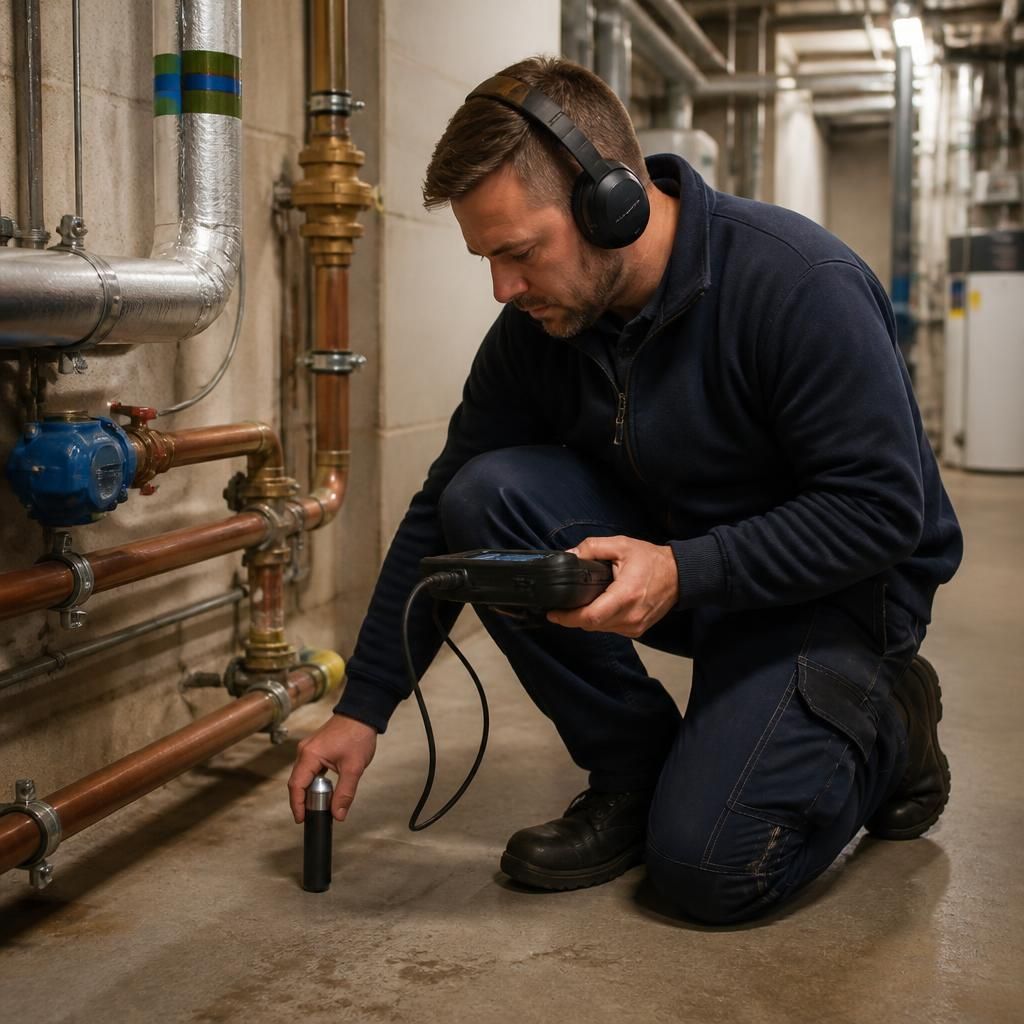
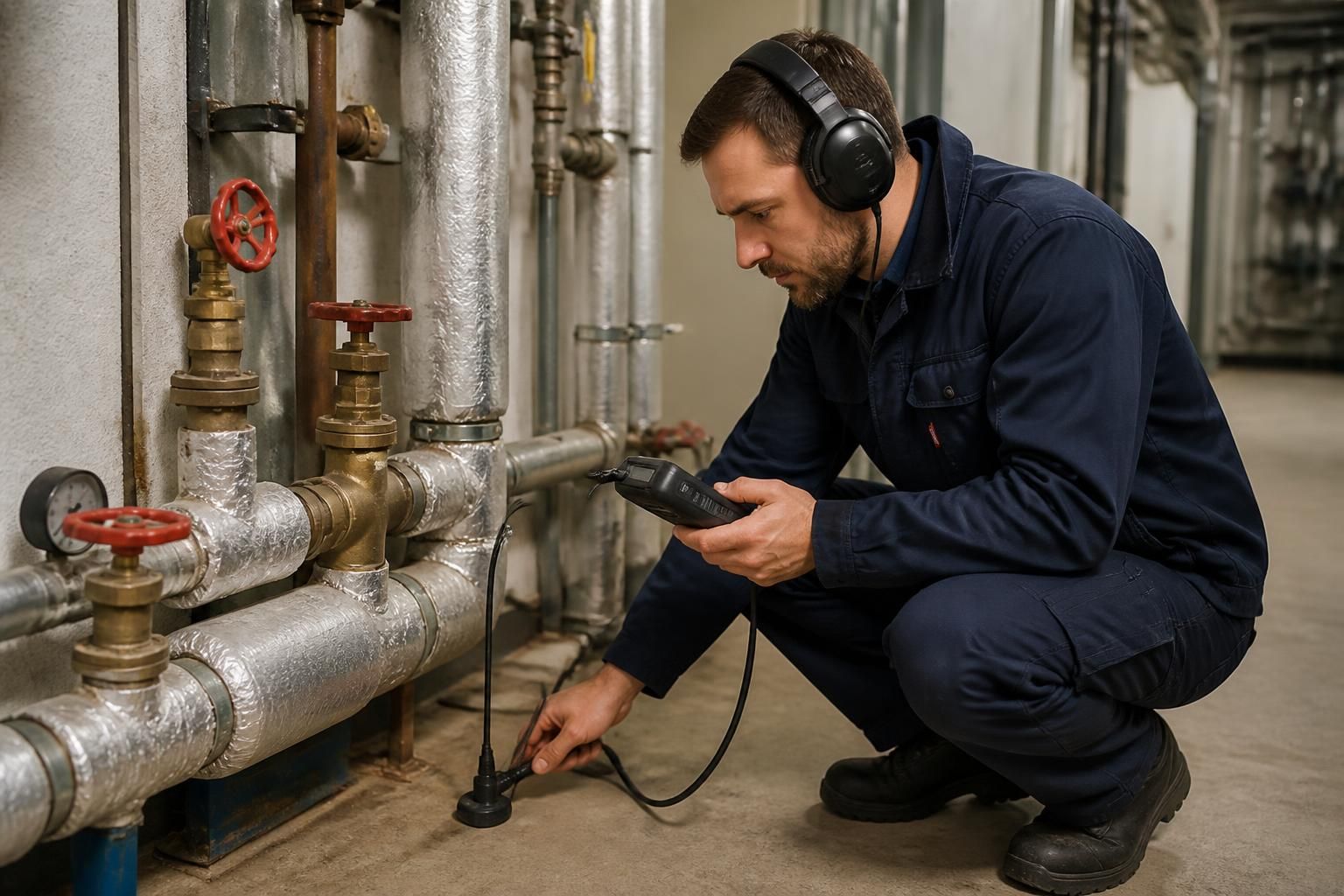
- Specialist detection: Depending on the pipework and suspected source, the investigation may use visual inspection, moisture mapping, acoustic equipment, thermal imaging or tracer methods.
- Source confirmation: The results are compared with the building’s construction and pipework arrangement. This helps distinguish the originating leak from water that has travelled through ceilings, walls, floors or service voids.
- Findings and recommendations: Once the source has been confirmed, the engineer can explain the location, likely cause and suitable repair options. A separate repair may take additional time.
Several practical issues can extend the investigation. Commercial buildings often have interconnected water, heating or process systems, so more than one section may need to be tested. A leak that appears only when equipment is operating, or one that stops and starts with changes in pressure or temperature, may not be reproducible during an initial inspection. False leads are also common where moisture has migrated from the original failure point.
The type and condition of the installation matter as well. Older pipework, undocumented alterations, buried services, insulated runs and pipes beneath solid floors can make it more difficult to trace the route without opening up surfaces. Conversely, a clearly defined pressure loss in an accessible section of pipework may allow the source to be confirmed with less investigation.
Site coordination can affect the practical duration even when the technical testing is straightforward. The engineer may need to work around staff, residents, customers or other contractors, obtain permission to isolate a system, protect sensitive equipment and maintain essential water supplies where possible. Safe working arrangements are particularly important in plant rooms, ceiling voids, basements and areas containing electrical equipment.
Leak detection should also be distinguished from remedial work. Finding and confirming the leak is the diagnostic stage; removing finishes, replacing pipework, drying affected materials and repairing secondary damage are separate tasks. A contractor can normally give a more useful indication of the likely investigation time after receiving the building type, the affected system, the visible symptoms, any recent meter readings and information about when the problem occurs.
To minimise disruption, gather maintenance records and drawings, note when the symptoms first appeared, record any changes in water pressure or usage, and identify areas showing staining, dampness, unusual sounds or temperature changes. Keeping a log of intermittent symptoms can be particularly helpful because it gives the engineer a clearer basis for selecting tests and judging whether further monitoring is needed.
For businesses in Birmingham and the wider West Midlands, Ideal Plumbing Services provides commercial leak detection as part of its plumbing support. The investigation can be planned around the evidence available on site, with the aim of locating the source accurately before repair work is recommended.