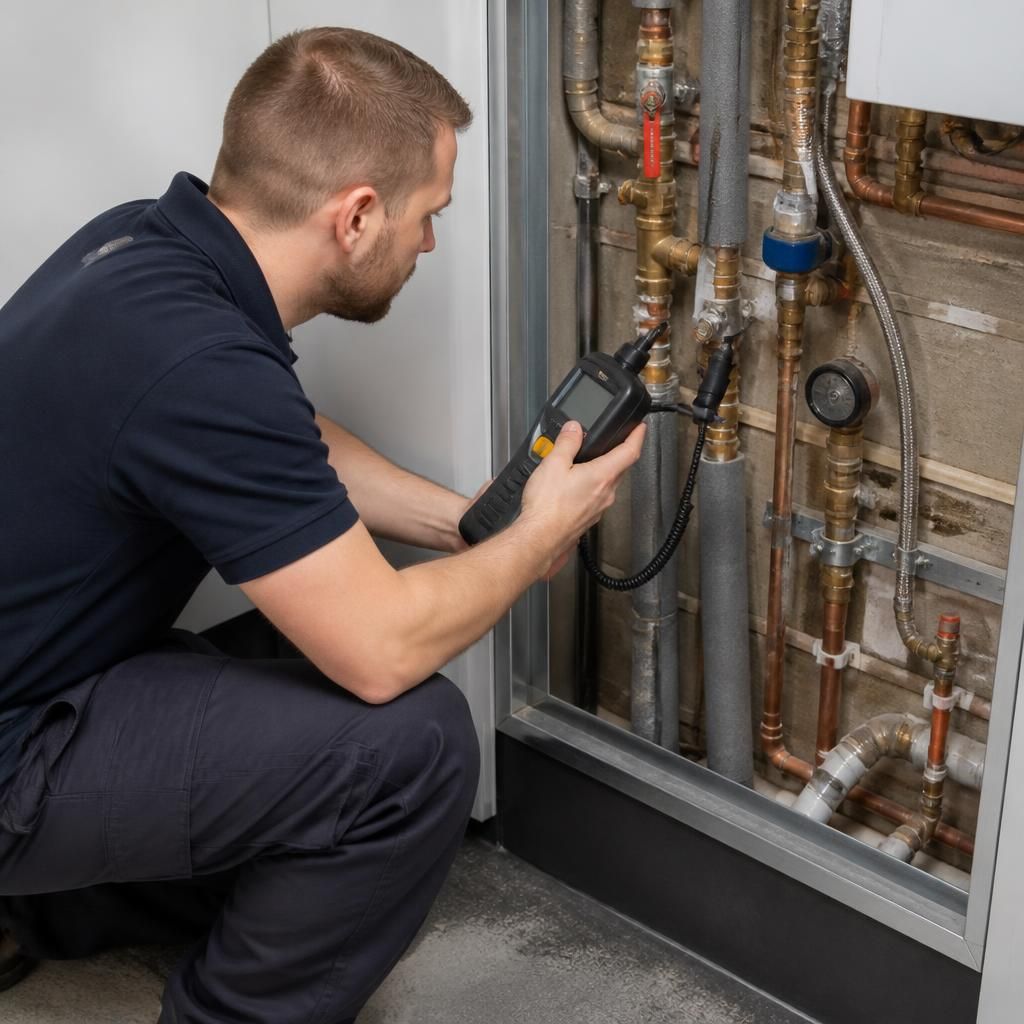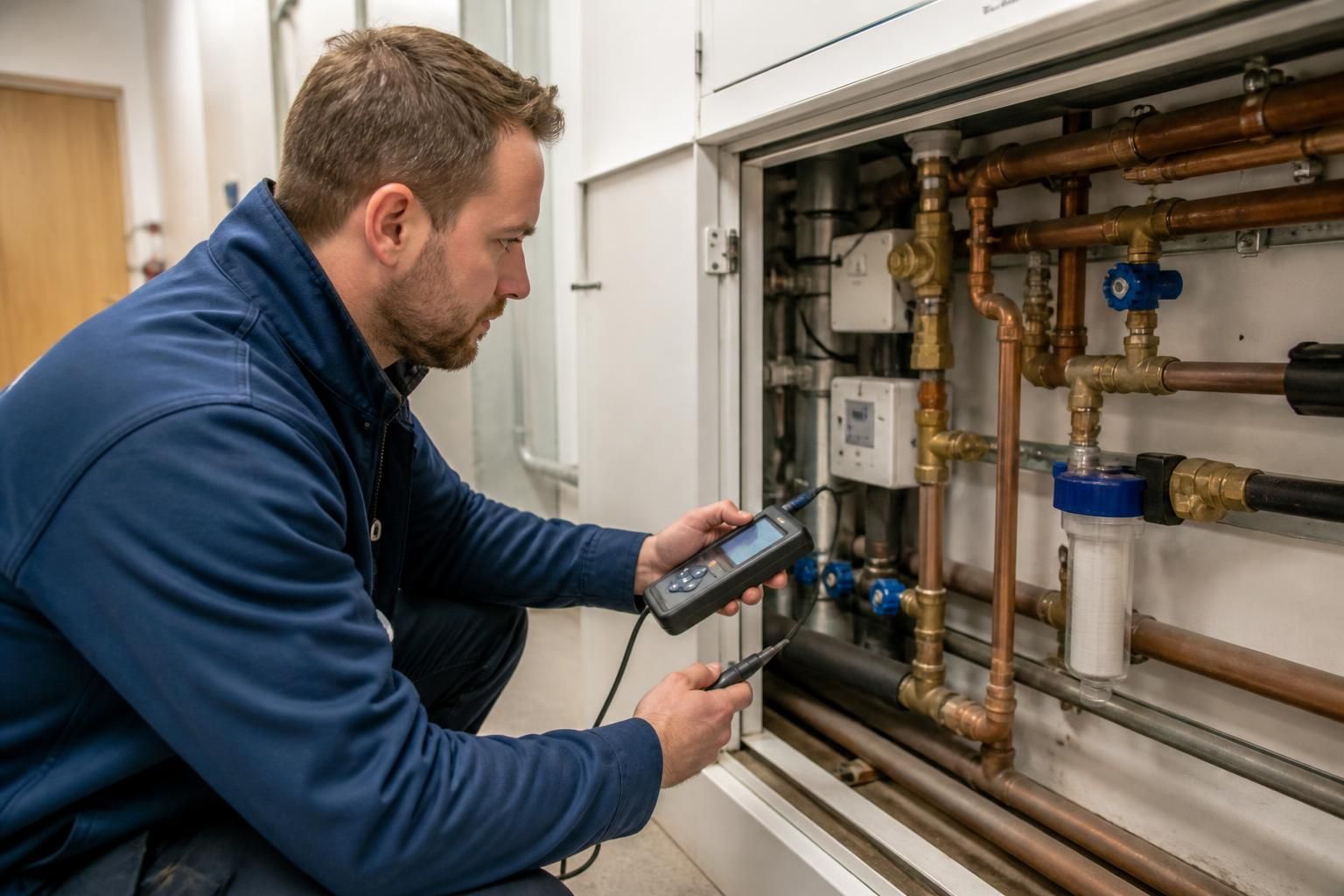
Once a commercial leak has been located, the next stage is to confirm the exact cause, decide how it should be repaired and manage any consequences for the building or business. The work normally moves from diagnosis to repair, verification and reinstatement, with the approach depending on the pipework, appliance, drainage system or heating installation involved.
Confirming the fault
The plumber will establish whether the identified point is the primary source or a symptom of a wider problem. This may involve examining joints, valves, seals, pipework, tanks, pumps, boilers or connected appliances. Where the leak is concealed, the findings should be explained clearly, including the location, likely cause and any limitations on what can be confirmed without opening a wall, floor or ceiling.
A written record, photographs or other evidence can be useful for property owners, facilities managers, insurers and contractors involved in reinstatement. It should identify the affected system, the areas inspected and any parts that require further investigation.
Choosing the repair method
The repair may be relatively localised, such as replacing a failed fitting, seal, valve or short section of pipework. In other cases, the affected component may need to be renewed because of corrosion, repeated failure, movement or deterioration. If the leak is associated with an appliance or heating installation, the repair must take account of the system’s operating requirements and safe isolation procedures.
For concealed pipework, the most suitable option may involve controlled access through a wall, floor or ceiling. The plumbing repair and the building work needed to expose and reinstate the area are separate considerations, so the likely access requirements should be agreed before work begins. Avoiding unnecessary removal can reduce disruption, but leaving defective pipework in place may create a greater risk of recurrence.
Checking the surrounding area
Water can travel away from its source through insulation, plasterboard, flooring, ceiling voids and service ducts. After the plumbing issue has been dealt with, affected areas should be checked for damp materials, staining, softened finishes, damaged insulation and signs of mould growth. Moisture may remain even when the visible flow has stopped.
Where building materials have been affected, drying and remedial work may be required before decoration or replacement finishes are carried out. Electrical equipment, sockets and other services in the affected area should be treated cautiously, particularly where water has reached concealed voids. A qualified specialist may be needed to assess any non-plumbing damage.
Testing the completed repair
The repaired system should be checked under suitable operating conditions to confirm that the defect has been addressed. Depending on the installation, this can include inspecting joints, checking pressure or flow, running connected appliances, and looking for further signs of moisture. Drainage repairs may require checks while the system is being used rather than only a visual inspection.
Testing should also consider whether the repair has affected another part of the installation. For example, restoring supply to a previously isolated section may reveal a second weak connection, while repairing a leak on a heating circuit may require the system to be checked after it has returned to normal operation.
Records and follow-up
For a commercial property, the final record should normally include:
- the reported symptoms and confirmed source;
- the repair completed and any components replaced;
- areas that were accessed or left for further investigation;
- test results or observations made after the repair; and
- recommendations for monitoring, maintenance or additional remedial work.
This information helps a landlord, managing agent or facilities team maintain an accurate property history. It can also support an insurance enquiry, although policyholders should follow their insurer’s own reporting and evidence requirements.
When the leak reveals a wider issue
A located leak can expose broader maintenance concerns, such as ageing pipework, poor access to isolation valves, inadequate support, recurring blockages or an installation that is difficult to inspect. These issues may not need to be resolved during the initial repair, but they should be recorded and prioritised. Addressing the underlying weakness can be more appropriate than repeatedly repairing the same visible symptom.
Ideal Plumbing Services can help commercial customers in Birmingham and the wider West Midlands interpret leak findings, plan appropriate plumbing repairs and identify any follow-up checks needed after the source has been located. The right next step is determined by the type of system, the extent of water damage and the operational requirements of the premises.