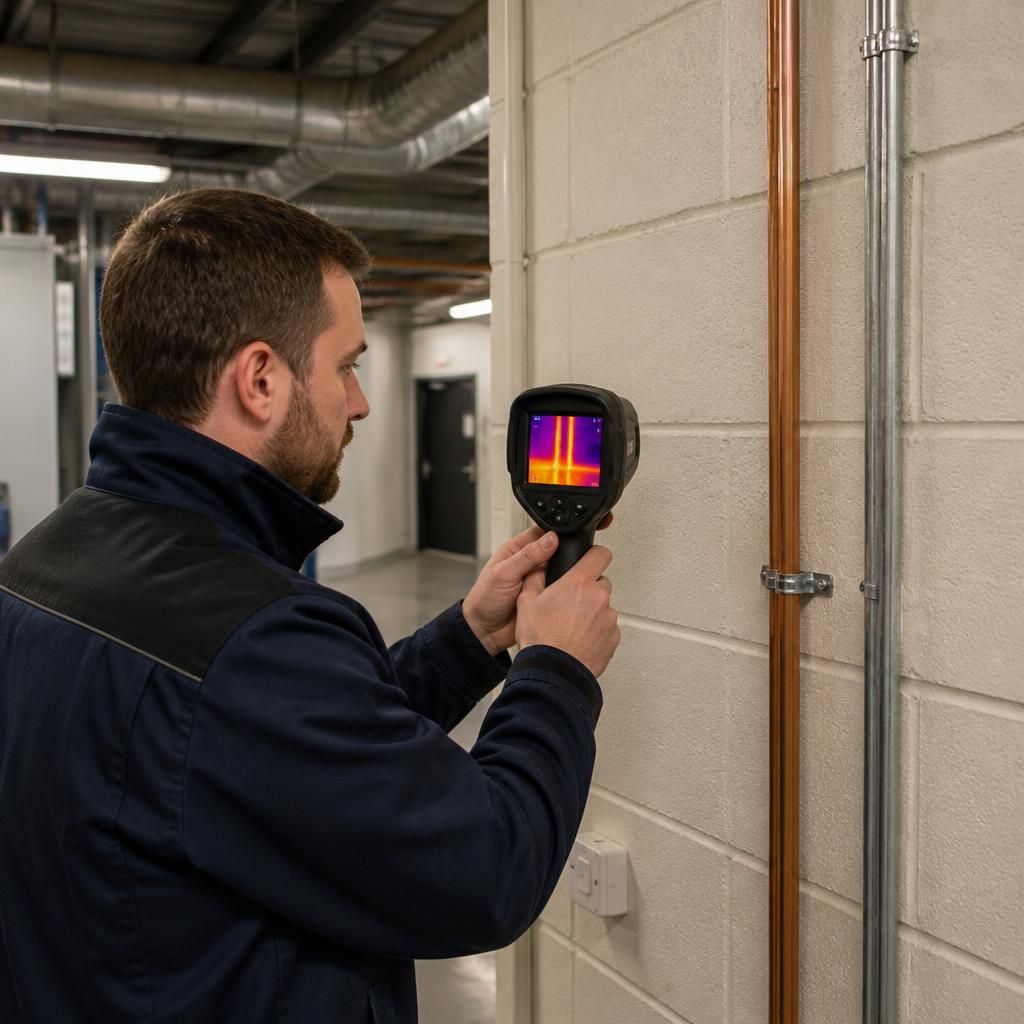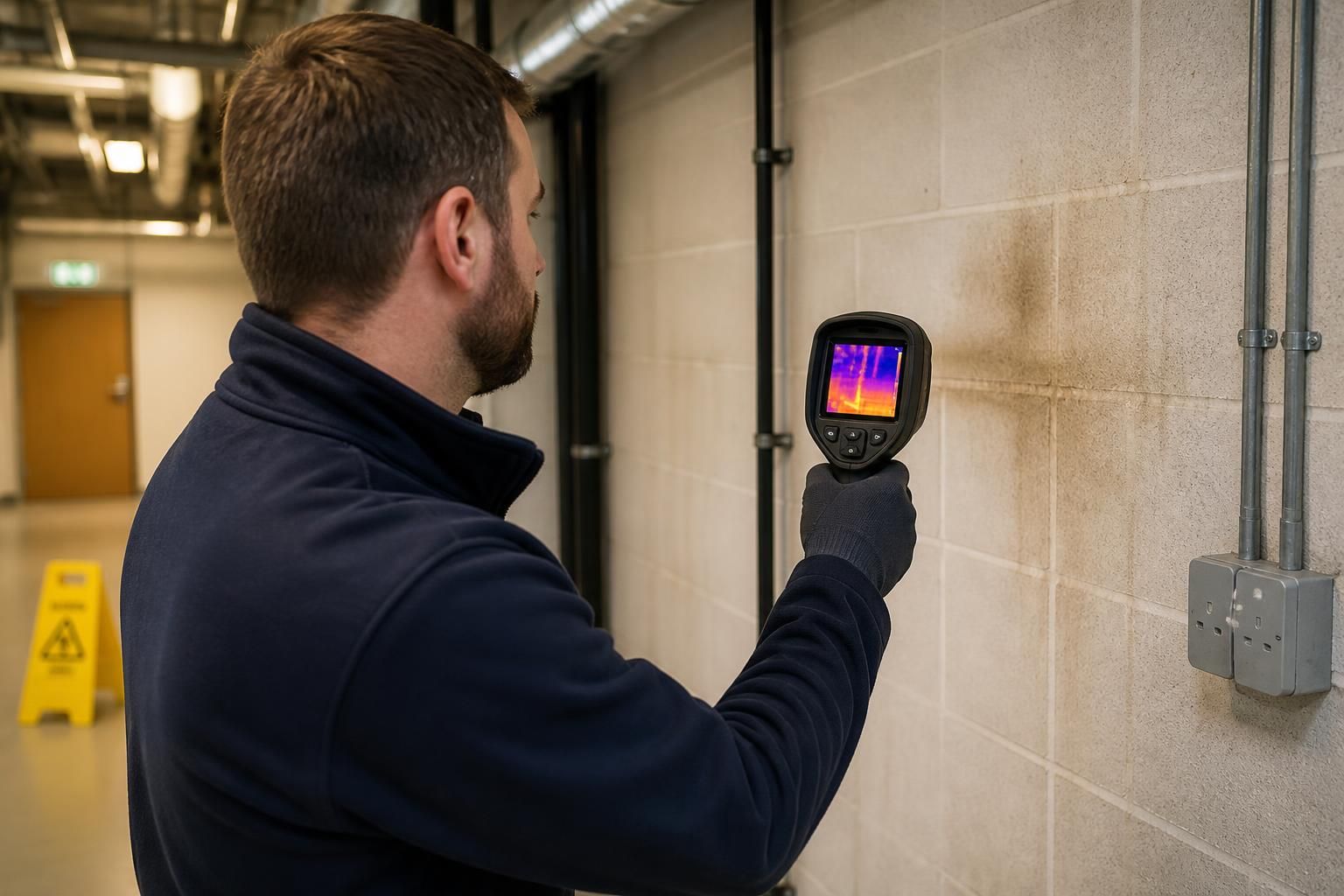
Choose a commercial leak detection contractor by checking whether they can diagnose the source of the leak, manage the risks of working in your premises, provide clear evidence of their findings and explain the full cost before work begins. The right contractor should be able to distinguish between a visible symptom and the underlying fault, set out the limits of the investigation and coordinate any necessary repair without causing avoidable disruption to your business.
Check that the proposed scope matches the building. Commercial premises can contain concealed pipework, multiple floors, plant rooms, suspended ceilings, storage areas and several water systems. Ask the contractor to confirm what is included in the inspection, which areas need to be accessible and whether adjoining units, communal spaces or external ground may need to be considered. A contractor who understands the layout and use of the building is more likely to plan a suitable investigation than one offering a generic inspection.
Ask how they separate diagnosis from repair. Leak detection should establish the likely source and extent of the problem before unnecessary opening-up takes place. Find out whether the contractor will mark the suspected location, explain the confidence level of the finding and identify any alternative causes that have been ruled out. This is particularly important where water may be travelling along flooring, walls or ceilings from a different point than the pipe failure.
Confirm what information they need before attending. Useful details may include the type of premises, the affected area, the age and material of the pipework, recent plumbing work, water meter readings, photographs and any changes in dampness or water pressure. Providing this information does not replace a professional assessment, but it can help the contractor prepare suitable equipment and understand the symptoms already observed.
Review the contractor’s safety arrangements. Work in commercial premises may involve members of the public, staff, tenants, electrical equipment, restricted areas, traffic routes or sensitive stock. Ask how the contractor will control these risks and whether they can provide the relevant method statement, risk assessment or site documentation where required. You should also establish who is responsible for isolating water, electricity or equipment and what protection will be used for floors, fixtures and stored goods.
Clarify access, permissions and disruption. A thorough investigation may require access above ceilings, behind fixed panels, inside service cupboards or to areas controlled by a tenant or facilities manager. Agree who will arrange keys, escorts and permissions. Ask whether any panels, flooring or finishes may need to be lifted, what approval will be sought before invasive work and whether reinstatement is included. This prevents a disagreement if the suspected leak cannot be confirmed using non-invasive inspection alone.
Ask what the final documentation will support. A useful leak detection report should normally record:
- the date, location and areas inspected;
- the symptoms reported and relevant observations;
- the tests or diagnostic processes carried out;
- the confirmed or suspected leak location;
- any limitations, inaccessible areas or uncertainties;
- photographs, marked-up plans or other supporting evidence where appropriate; and
- recommended next steps, including whether further opening-up or a separate repair is needed.
This evidence can help a facilities manager brief a landlord, tenant, building owner, insurer or repair contractor. Before appointment, confirm whether the report is included in the quoted service and whether additional copies, photographs or follow-up documentation incur a separate charge.
Understand the boundary between detection and repair. Some contractors only locate the fault, while others can also carry out plumbing repairs. Ask precisely what happens after the location is identified, whether the repair requires a separate authorisation and who will deal with access, isolation, replacement materials and reinstatement. If a different contractor will complete the repair, establish whether the detection report is detailed enough for that handover.
Check the terms, not just the headline price. A low initial figure may not include call-out costs, testing, additional areas, equipment, travel, opening-up, written reports, return visits or remedial work. Request a written breakdown of what is included and ask how extra work will be approved. The terms should also explain payment arrangements, cancellation, damage caused during authorised investigations and the process for raising a concern about the completed work.
Look for evidence of suitable commercial work. Customer feedback is more useful when it relates to comparable premises and describes the investigation, communication and documentation rather than simply stating that the service was good. You can also ask for anonymised examples of similar building types or leak scenarios. Be cautious if a contractor cannot explain the limits of its diagnosis, pressures you to authorise extensive opening-up immediately or refuses to provide written findings.
Finally, appoint the contractor that gives you the clearest technical explanation and most complete scope, rather than relying on price alone. A properly defined investigation reduces the risk of repairing the wrong area, repeating work or leaving the underlying leak unresolved. For a commercial property in Birmingham or elsewhere in the West Midlands, Ideal Plumbing Services can be considered alongside other suitable providers once these practical checks have been completed.