Access to every room is not normally necessary for commercial leak detection. The areas required depend on the building’s plumbing layout, the location of visible damage, the position of isolation valves and the information available about the suspected leak. A methodical inspection can often narrow the search without entering unaffected offices, bedrooms, storage rooms or other private areas.
Why access requirements vary
Water can travel along flooring, ceilings, insulation, service ducts and structural voids before becoming visible. As a result, the point where staining, dampness or a drop in pressure appears may not be the point where the pipe has failed. An engineer may need to inspect spaces above, below or beside the affected area, particularly where pipework passes through walls, suspended ceilings, risers or inaccessible voids.
The building’s use also affects the inspection. A leak in a commercial kitchen may require access to nearby washrooms, plant areas or service cupboards. In an office, the relevant route may pass through a ceiling void or a neighbouring suite. In a flat or mixed-use building, shared pipework may mean that access to a common riser or another property is necessary, subject to the appropriate permission.
Areas that may need to be checked
- the room where dampness, staining, condensation or damaged finishes have been noticed;
- rooms directly above, below or beside the affected area;
- toilets, kitchens, utility areas and other locations containing water outlets or waste connections;
- plantrooms, meter cupboards, service risers and valve locations;
- ceiling voids, floor voids and accessible inspection panels; and
- external areas where underground or incoming water services could be relevant.
This does not mean that all of these areas will definitely be entered. The engineer should use the available evidence and test results to decide which locations are relevant. Where the source can be confirmed from one accessible area, further access may not be needed. If readings point towards concealed pipework, access may instead be concentrated on a small number of adjoining or service areas.
Access, privacy and commercial operations
Before the visit, it is useful to identify rooms that contain confidential material, sensitive equipment or restricted areas. A responsible site contact can explain the building’s access rules and arrange suitable permission for plantrooms, tenant areas and shared facilities. Where possible, keeping corridors and the suspected areas clear allows the inspection to proceed without disturbing unrelated parts of the premises.
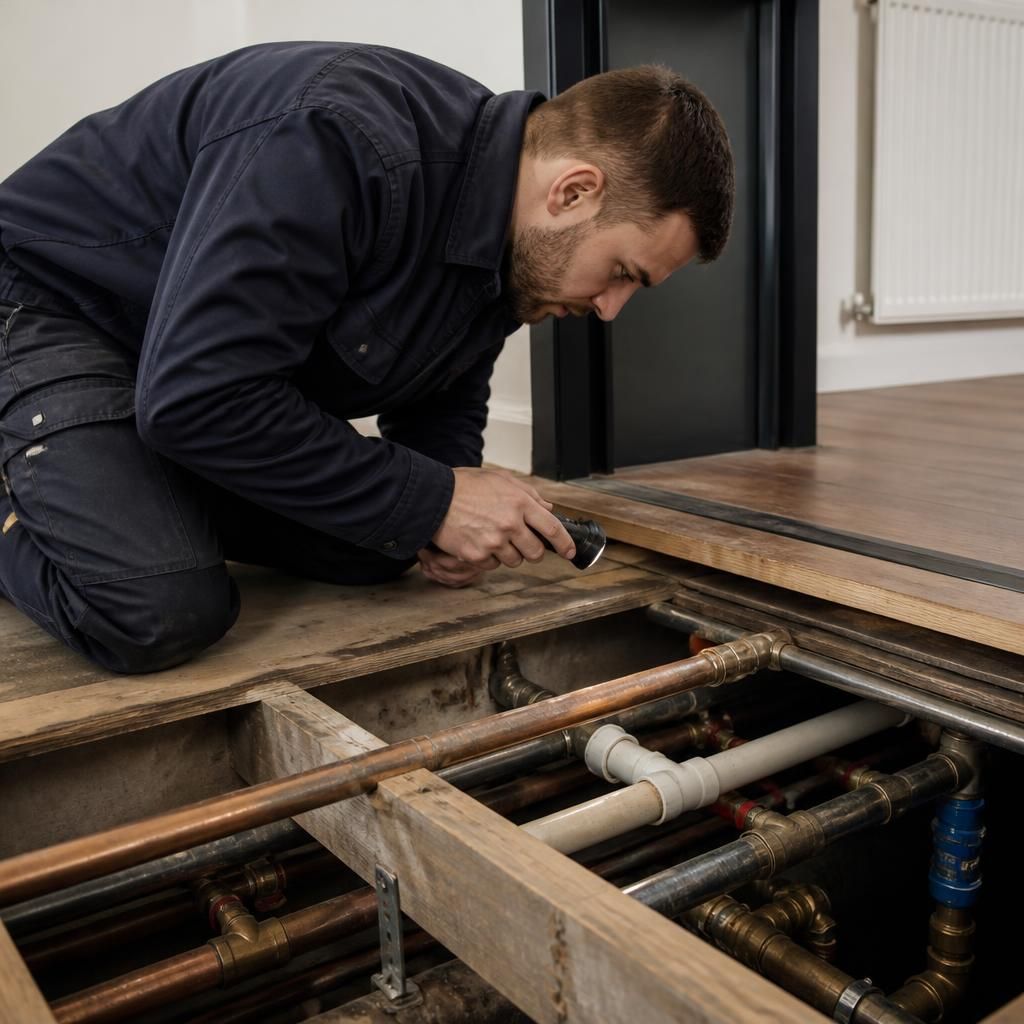
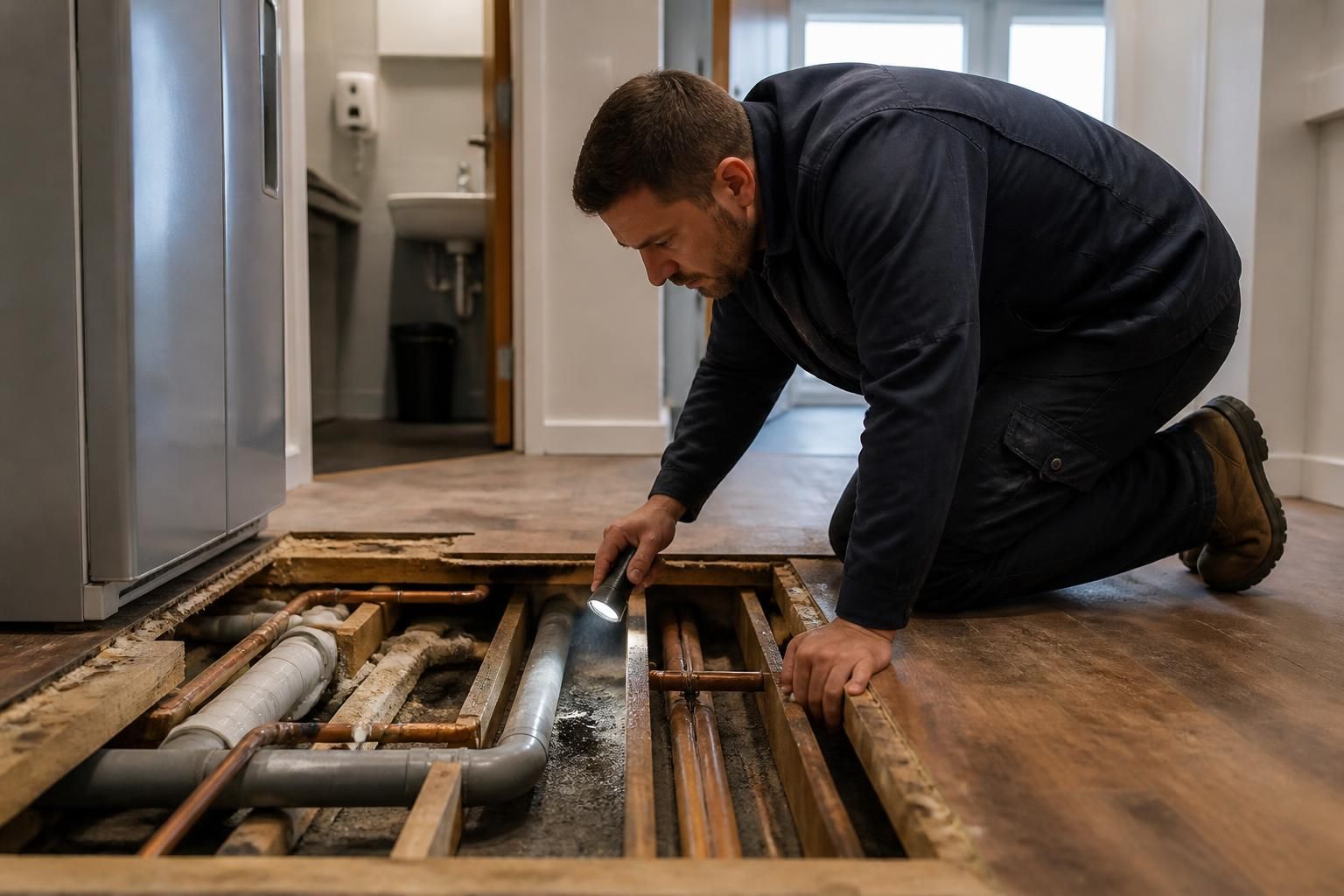
Some investigations can begin with non-invasive checks, such as examining moisture patterns, comparing temperatures or assessing the condition of exposed pipework and fittings. These checks may reduce the need to lift flooring, remove panels or disturb finishes. However, non-invasive detection cannot always identify a concealed failure conclusively. If a small opening or removal of an access panel becomes advisable, this should be discussed with the responsible person before work proceeds.
What to do if a room cannot be entered
Tell the engineer which areas are unavailable and why. Provide floor plans, details of recent plumbing work, meter readings, photographs and information about when the problem was first noticed. The engineer can then assess whether another route, a service void or an adjoining space provides enough information. An inaccessible room may limit the certainty of the investigation, especially if it contains a branch of the plumbing system or lies directly between the visible damage and the suspected source.
For larger premises, access can often be arranged in stages rather than treating the whole building as one inspection area. An initial assessment identifies the most relevant zone, followed by targeted checks where the evidence indicates that the leak may be concealed. Ideal Plumbing Services draws on over 20 years’ experience in plumbing fault investigation to help commercial property owners, landlords and site managers understand the access needed before detection work begins.