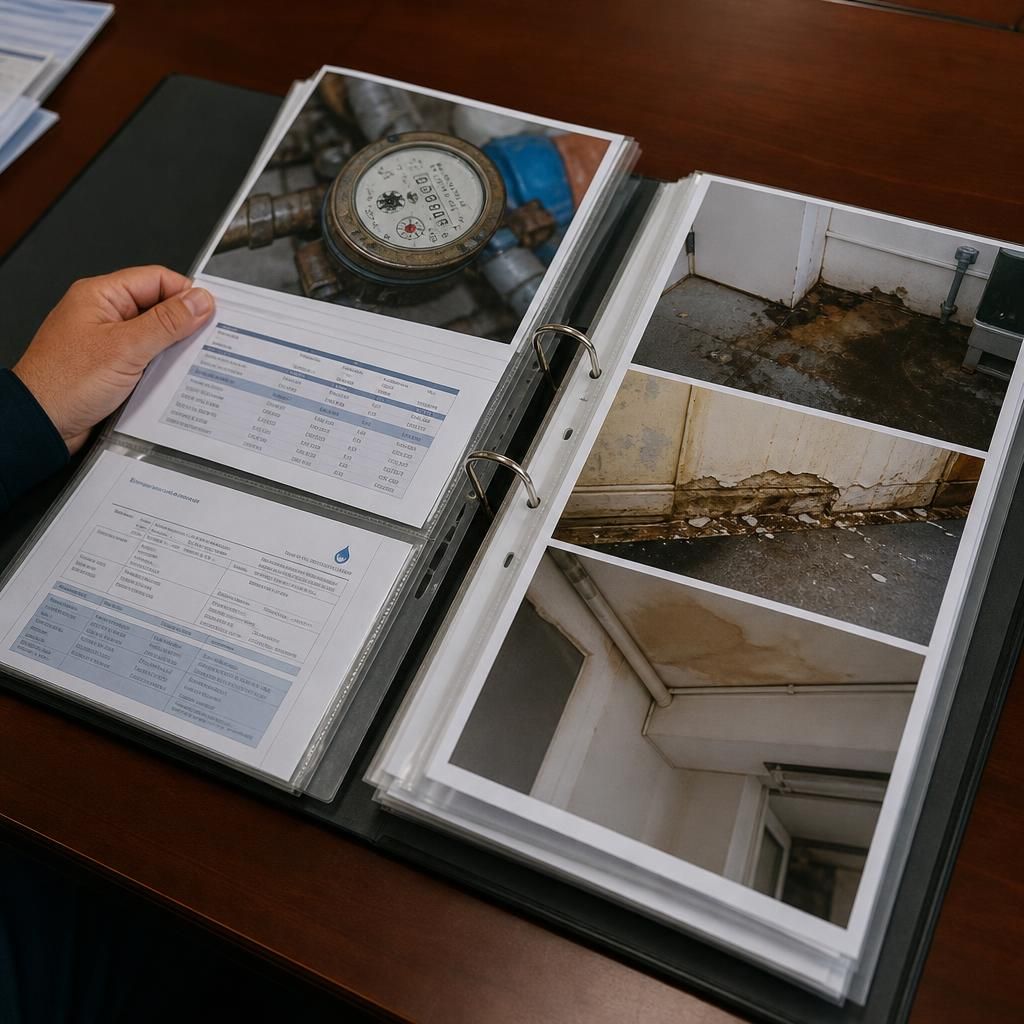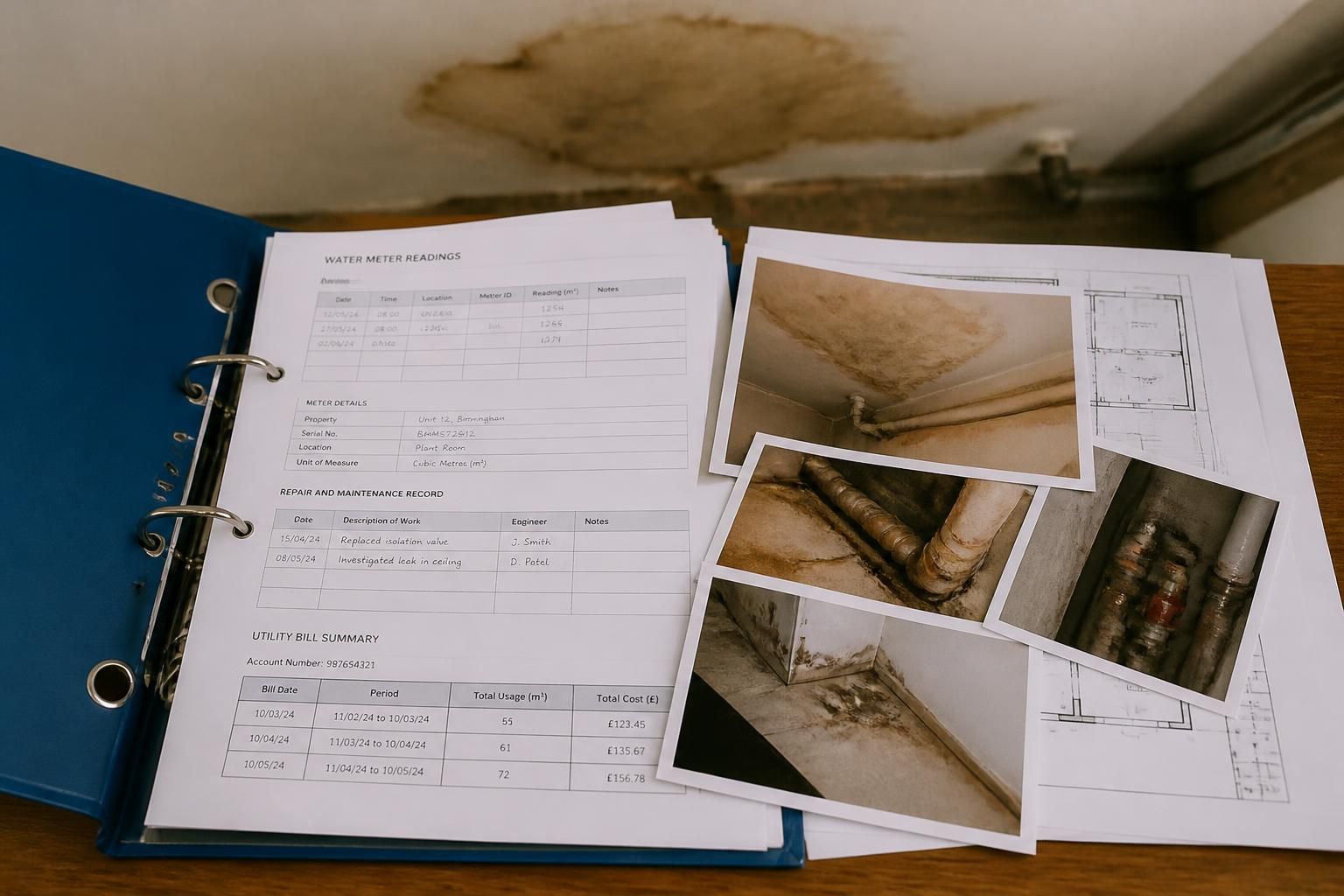
The most useful evidence for commercial leak detection is a clear record of the property’s plumbing history, water systems and any previous investigations. This helps the contractor distinguish a new leak from an unresolved defect, identify areas that may need specialist equipment and avoid repeating checks that have already been completed.
Before making an appointment, gather the following information where it is available:
- Previous repair and maintenance records: Include invoices, service reports, dates of plumbing work and details of any components that have been replaced. Repeated repairs in the same area may indicate an underlying fault rather than an isolated failure.
- Earlier leak reports: If another contractor has inspected the property, provide their findings, test results and recommendations. Include details of areas they were unable to investigate or conclusions that remained uncertain.
- Information about the water systems: Note whether the premises has stored water, boosted supplies, hot-water cylinders, central-heating pipework, sprinklers, cooling equipment or other water-fed systems. A leak may not come from the most obvious domestic plumbing route.
- Records of unusual system behaviour: Note unexplained pressure changes, pumps running when outlets are not in use, toilets or taps that continue to run, damp smells, recurring condensation or water appearing after particular activities. These observations can help narrow the investigation.
- Details of recent building or plumbing work: Keep records of refurbishments, new appliances, bathroom or kitchen installations, flooring work and alterations to pipework. Recent work can affect concealed connections, joints and service routes.
- Information about affected materials: Identify damaged flooring, plaster, ceilings, insulation, joinery, stock or equipment, and record whether the material has been removed, dried or treated. This is useful when assessing whether the visible damage is consistent with the suspected leak source.
- Insurance and landlord documentation: If an insurer, managing agent or landlord is involved, gather the relevant claim reference, inspection requirements and reporting instructions. Some policies require evidence to be preserved or particular approval before intrusive investigation or remedial work.
- Contact details for responsible people: Provide the names of the owner, tenant, facilities contact, building manager or other person authorised to approve investigation work. Clear responsibility can prevent delays in agreeing the next diagnostic step.
It is also helpful to prepare a short chronology. Record the first date the issue was noticed, any changes since then, and whether the problem has followed particular events such as appliance use, heating operation, rainfall or periods when the premises is unoccupied. Keep observations separate from assumptions: “water appears after the dishwasher runs” is more useful than concluding that the dishwasher is leaking.
Organise the evidence in a single folder, with documents labelled by date and location. Keep original reports rather than relying only on summaries, and distinguish confirmed findings from suspected causes. If several parts of the premises are affected, use consistent room or area names throughout the records. This makes it easier to compare the contractor’s findings with earlier observations.
Do not remove coverings, open walls or disconnect equipment solely to produce more evidence unless this has been assessed as safe and appropriate. Unauthorised disturbance can increase damage, conceal the original condition or create electrical and structural risks. If there is immediate concern about electrical equipment, contaminated water or structural damage, restrict the affected area and follow the relevant safety procedure before arranging diagnostic work.
For a commercial appointment, the strongest evidence pack combines reliable records, a factual chronology and information about the property’s water infrastructure. It should help the leak detection professional understand what has changed, what has already been investigated and which systems may be relevant, without presenting an untested diagnosis as fact.