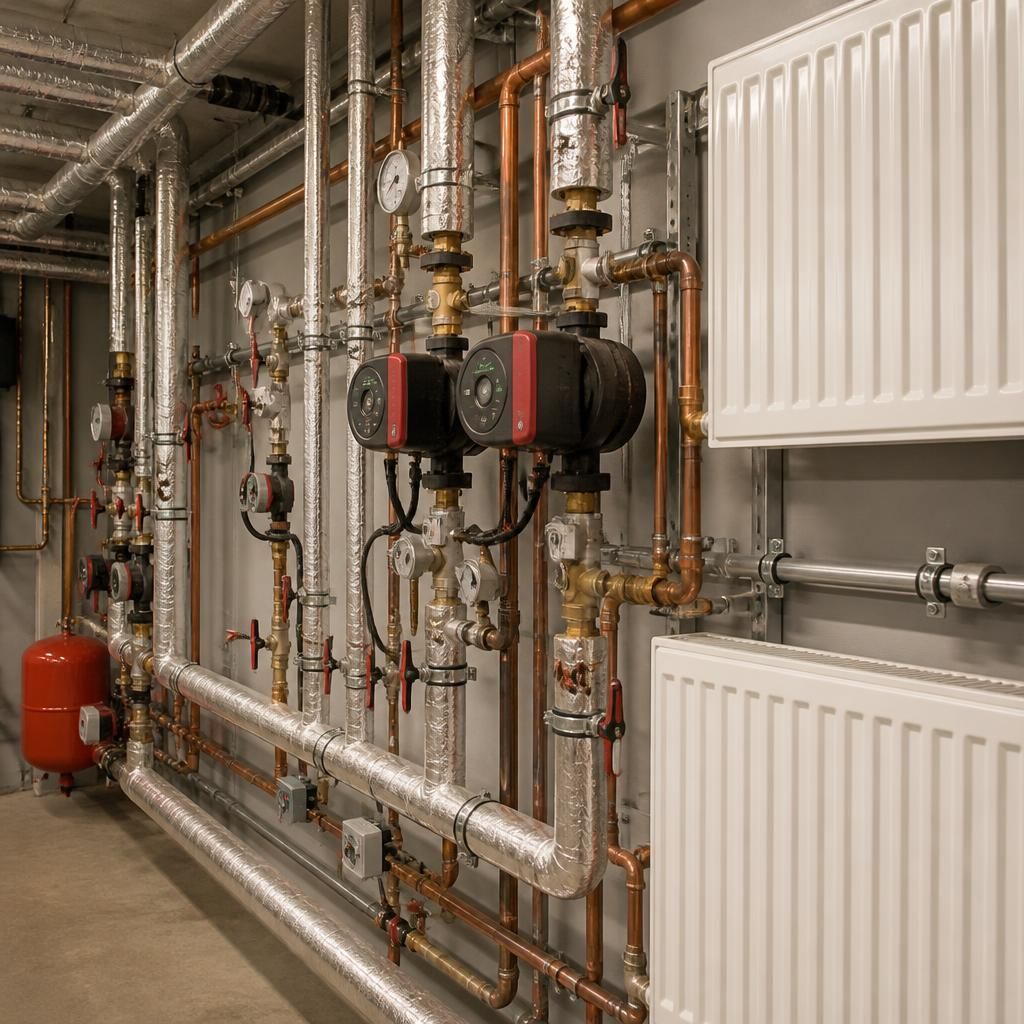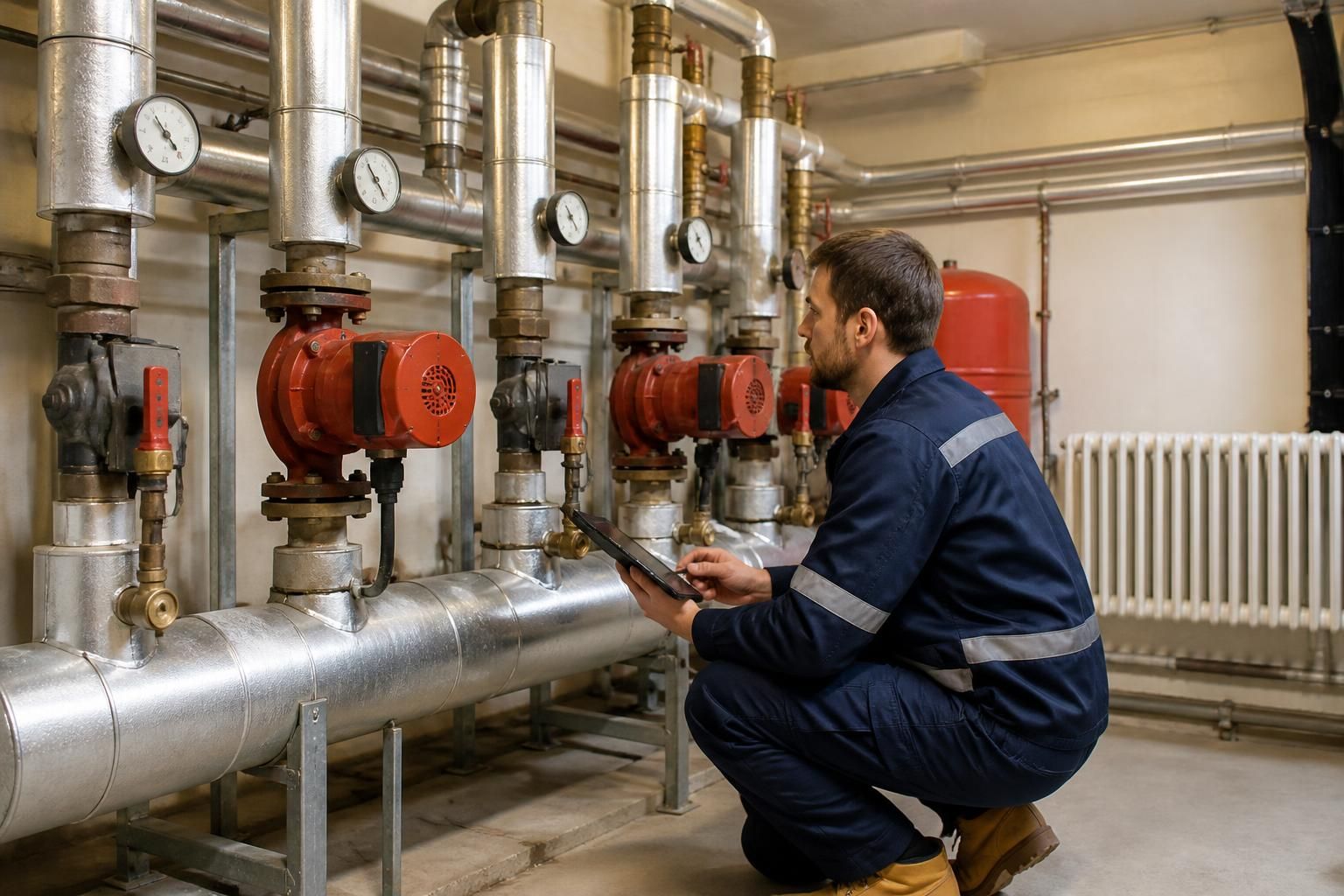
Qualified commercial plumbers can work on both heating systems and water pipework, provided the work falls within their training, competence and legal authority. In practice, this may include the wet side of a commercial heating installation, such as heating flow and return pipework, radiators, valves, pumps, expansion equipment and hot-water distribution. The person carrying out the work must also understand the type, size and operating pressure of the system involved.
What commercial heating work can include
Commercial plumbing and heating work often overlaps because both systems use pressurised water, pipework, isolation valves and control components. A suitably qualified professional may be able to:
- Install, alter or repair heating flow and return pipework.
- Replace radiators, emitters, thermostatic valves and isolation valves.
- Diagnose circulation problems caused by air, sludge, closed valves or pump faults.
- Inspect pumps, expansion vessels, pressure gauges and system filling arrangements.
- Repair leaks from heating circuits, cylinders, tanks and associated connections.
- Connect or modify hot-water storage and distribution pipework.
- Balance radiators or heating circuits so that heat is distributed more evenly.
- Drain, refill and vent suitable wet heating systems using the correct procedure.
The exact scope depends on whether the system serves a small office, shop, restaurant, block of flats, school, healthcare setting or larger premises. A larger installation may use multiple circuits, plate heat exchangers, pressurisation units, specialist pumps or building-management controls. These systems require more detailed assessment than a straightforward domestic radiator circuit.
Water pipework and heating pipework are related but not identical
Cold-water, hot-water and heating systems have different design requirements. Drinking-water pipework must be protected from contamination and installed with suitable materials, backflow protection and hygienic fittings. Heating circuits are generally closed systems containing treated water and operate under different pressures and temperatures.
A professional assessing both services should identify which pipe serves which purpose before making an alteration. Incorrectly connecting a heating circuit to a potable-water system, omitting required isolation points or using unsuitable materials can create safety, hygiene and operational problems. Pipe sizing, insulation, support, access for maintenance and protection against freezing or excessive heat also need to be considered.
Where other specialists may be needed
A plumber’s heating competence does not automatically cover every part of a commercial heating installation. Work involving the fuel supply, combustion appliance, flue or associated safety controls requires the appropriate specialist qualification. Electrical work on pumps, thermostats, programmers, motorised valves, sensors or control panels may also need a competent electrical professional, particularly where fixed wiring or testing is involved.
Some hot-water installations have additional requirements. Unvented cylinders, stored hot-water systems, boosted supplies and systems incorporating thermostatic mixing valves should be installed, repaired or commissioned by someone with the relevant training. This is important because stored water can present scalding and pressure risks if safety devices are missing, incorrectly set or not maintained.
What should be checked before work starts
Before accepting a heating or water-pipework job, the contractor should establish:
- The system type, fuel source and operating pressure.
- Whether the work is a repair, replacement, alteration, installation or commissioning task.
- The location of isolation valves, plant rooms, tanks, cylinders and access panels.
- Whether the building must remain occupied or operational during the work.
- Any water hygiene, legionella-control, fire-stopping or landlord compliance requirements that apply.
- Whether drawings, plant records, previous service reports or manufacturer instructions are available.
- Which parts of the work require a separate trade or specialist certification.
For commercial premises, the plumber may also need to coordinate with the building manager, facilities team or other contractors. Isolation plans and permits may be necessary where shutting off water or heating could affect tenants, staff, customers or critical equipment. The work area should be made safe, and any removed insulation, ceiling tiles or access panels should be accounted for during reinstatement.
Testing and completion
After repairs or alterations, the system should be checked for leaks and operated under suitable conditions. Depending on the work, this may include pressure testing, checking flow and return temperatures, confirming pump operation, inspecting safety devices, verifying hot-water temperatures and confirming that valves and controls respond correctly.
Commercial clients should ask for a clear record of what was completed, any components replaced, test results where relevant, and recommendations for follow-up maintenance. If the inspection identifies a fault outside the plumber’s competence, the correct approach is to explain the limitation and arrange the appropriately qualified specialist rather than proceed with unsafe or unauthorised work.
Ideal Plumbing Services supports residential and selected local commercial customers with plumbing, heating, repair and installation requirements across Birmingham and the wider West Midlands. For a commercial heating job, provide details of the system and the work required so its suitability can be assessed before any repair or alteration begins.