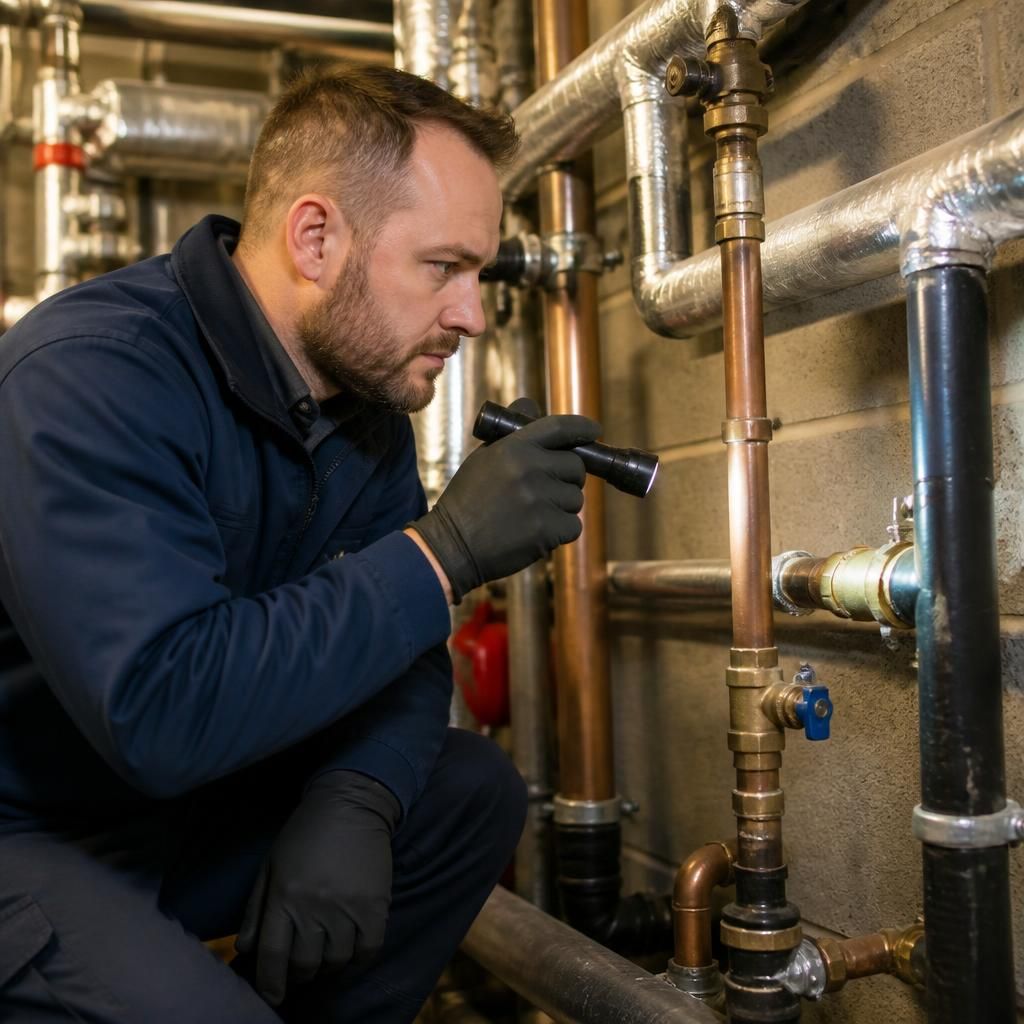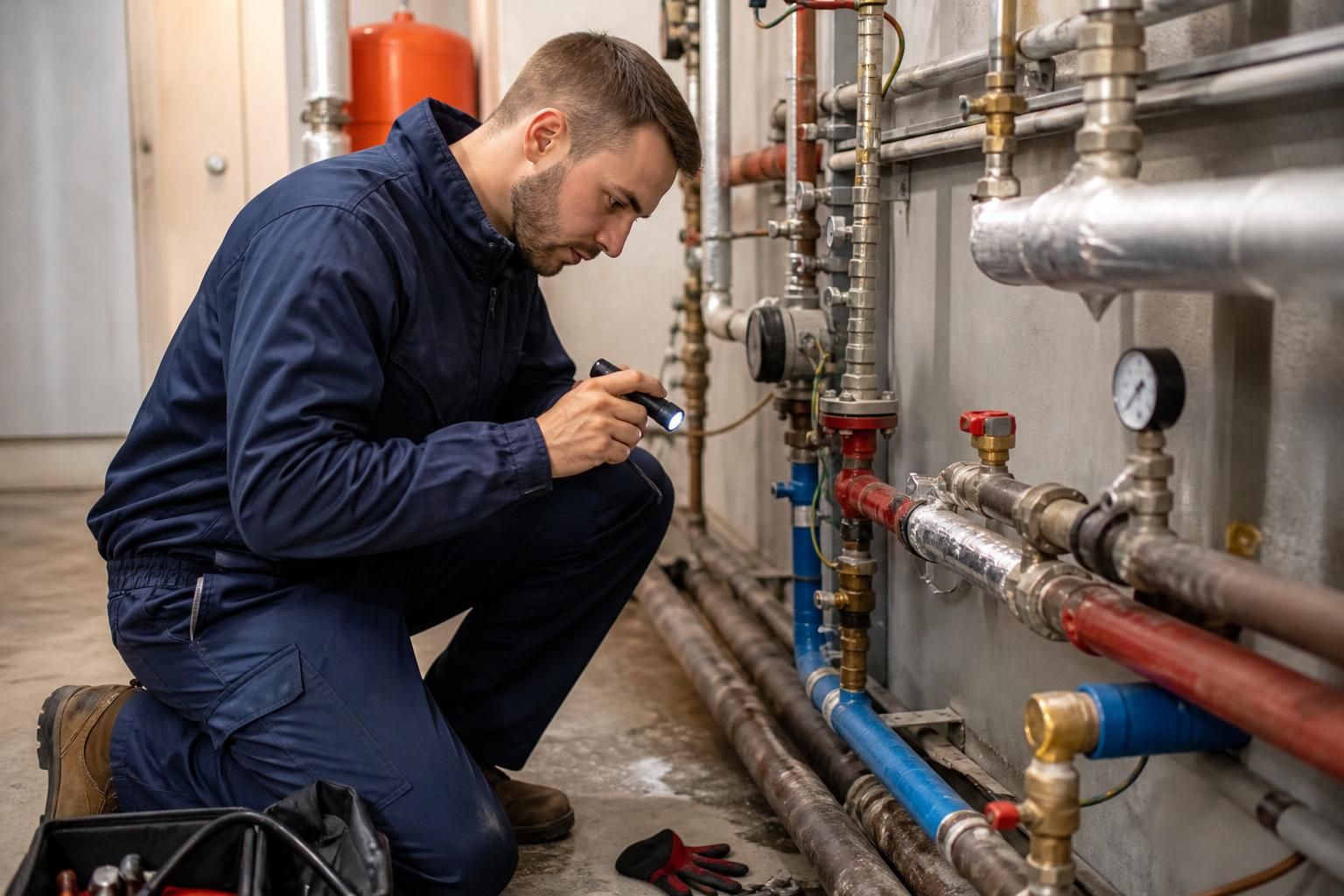
Before a licensed commercial plumber arrives, make the site safe, arrange authorised access and gather the information needed to diagnose the problem. A nominated contact should be available to explain what has happened, identify affected areas and confirm which parts of the building can be inspected or taken out of use.
Arrange a suitable site contact
- Nominate someone who understands the premises, its occupants and any operational restrictions.
- Tell the plumber who has authority to approve isolation, temporary closures, access to plant areas or remedial work.
- Provide reception, security or facilities staff with the visitor’s details and expected purpose of the visit.
- Explain any site rules, sign-in procedures, personal protective equipment requirements or escorted-access arrangements.
Prepare relevant building information
- Have available any plumbing drawings, asset registers, maintenance records, installation certificates and details of recent alterations.
- Identify plant rooms, service ducts, roof spaces, inspection chambers and other areas that may be relevant to the fault.
- List equipment connected to the affected system, such as commercial appliances, pumps, storage tanks or sanitary facilities.
- Note any restrictions affecting the inspection, including locked areas, fragile surfaces, confined spaces or work near sensitive equipment.
Protect people and maintain safe working conditions
- Keep staff, visitors and members of the public away from the work area using the site’s normal barriers and warning procedures.
- Tell the plumber about known hazards, including electrical equipment, chemicals, contaminated water, asbestos-containing materials, fragile ceilings or restricted spaces.
- Do not enter a hazardous area simply to investigate the fault, and do not remove panels, ceilings or covers unless this forms part of an approved site procedure.
- If water has reached electrical equipment, treat the area as unsafe and follow the building’s electrical isolation and emergency procedures rather than handling the equipment.
Coordinate with the business
Inform affected employees, tenants or contractors that an inspection is taking place. Where possible, identify a suitable period for access to toilets, kitchens, washrooms, heating equipment or other services to be examined. If a business process depends on the affected system, explain the operational impact so the plumber can assess the work without disrupting critical activities unnecessarily.
Check permissions and compliance requirements
Commercial premises may require approval from a landlord, managing agent, facilities manager or responsible person before work begins. Some sites also require a permit to work, risk assessment, method statement, induction or specialist supervision. Confirm these requirements in advance and tell the plumbing company about any insurance, safeguarding, security or environmental procedures that apply on the premises.
Prepare questions for the inspection
- Ask what part of the system appears to be affected and whether further investigation is needed.
- Check whether any service must remain isolated while testing or repair takes place.
- Ask whether temporary measures, replacement components or follow-up work may be required.
- Request an explanation of the proposed work, associated risks and how the area will be left afterwards.
- Clarify what information will be recorded, including the identified fault, work completed and any recommended maintenance.
Do not dismantle pipework, alter commercial appliances or attempt a temporary repair unless this is authorised and safe under the site’s procedures. Give the plumber accurate information, disclose previous relevant work and point out any changes in building use. This allows a licensed commercial plumbing professional to assess the system methodically and identify the appropriate next step.