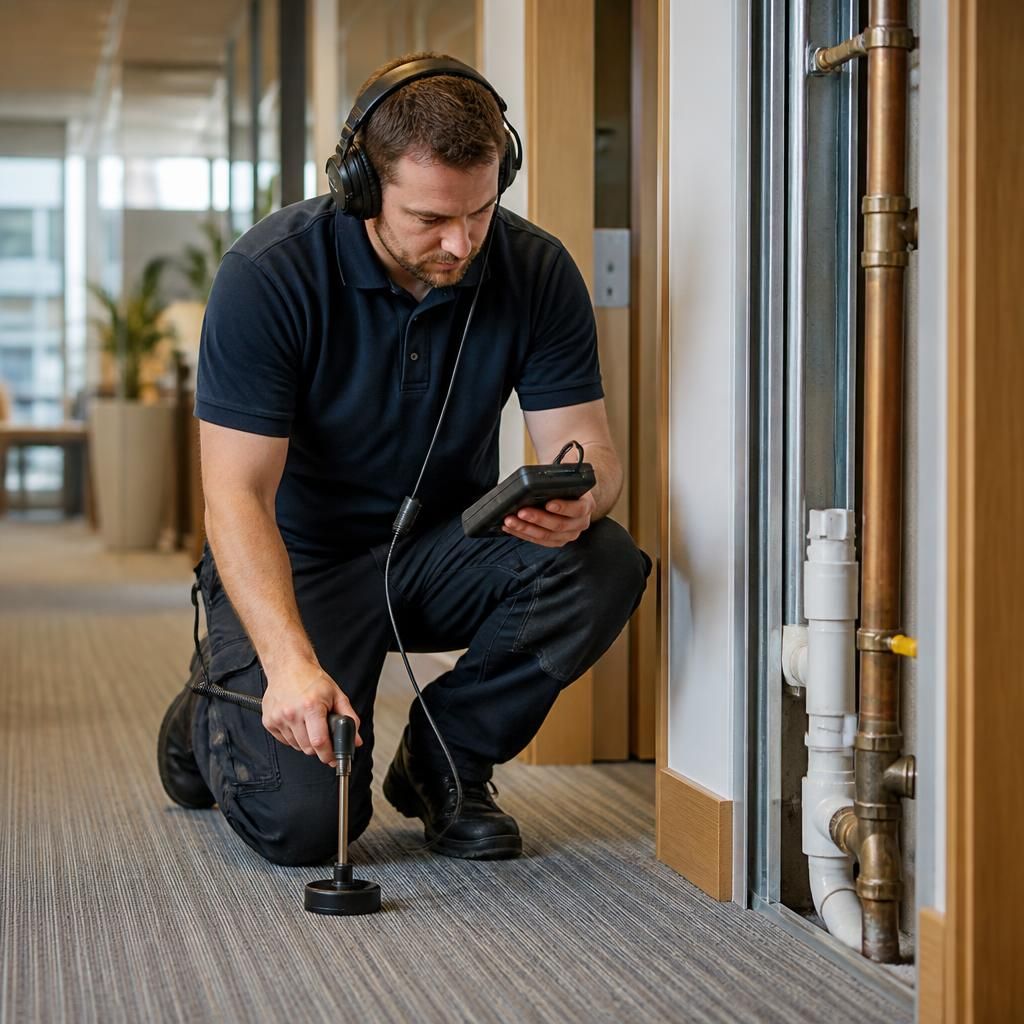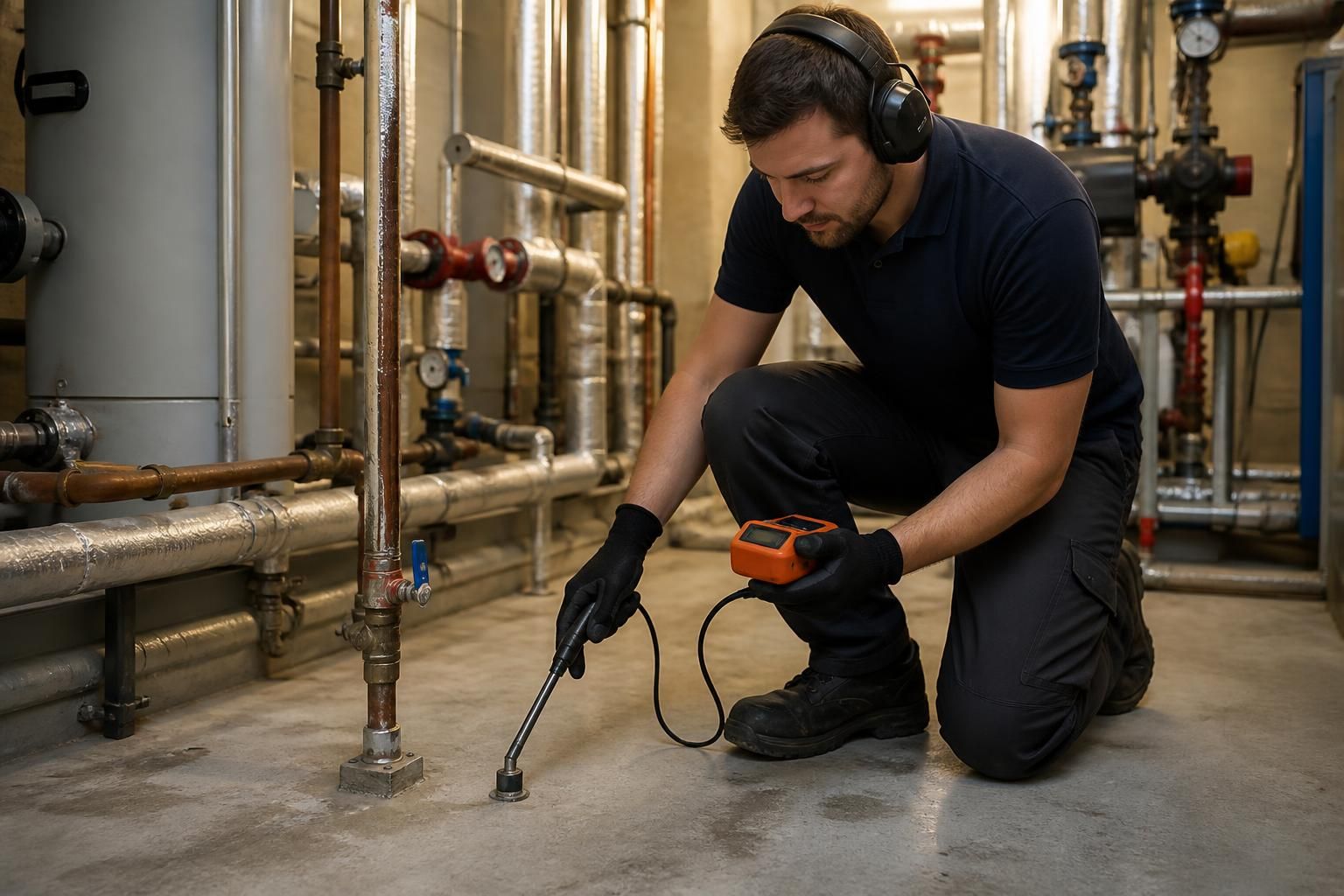
The effect of commercial leak detection on business operations depends mainly on the leak’s location, the plumbing system involved and whether the affected supply can remain in service during the investigation. A well-planned inspection can often take place alongside normal activities, but areas may need temporary access controls and certain plumbing fixtures or sections of the system may need to be taken out of use.
Before starting, a commercial plumber should establish how the premises operate and identify activities that could be affected. This includes noting customer-facing areas, staff facilities, kitchens, toilets, plant rooms, storage areas and any process that relies on a continuous water supply. The inspection can then be organised around the building’s practical requirements rather than treating every part of the premises in the same way.
Several factors influence the level of disruption:
- Leak location: A leak near a plant room or service corridor may be easier to investigate without affecting occupied areas. A suspected leak beneath a public walkway, office floor or trading area may require temporary segregation.
- Type of plumbing system: Mains water, heating circuits, boosted supplies and concealed pipework each require different testing methods. Some systems can be assessed in stages, while others need a controlled isolation.
- Building access: Ceiling voids, service cupboards, risers and restricted areas may need to be opened or made accessible. Clear routes help reduce the time that staff or customers are affected.
- Evidence of the leak: Damp materials, unusual meter readings, pressure loss, staining or unexplained water use can help narrow the investigation. A more clearly defined problem generally requires less exploratory work.
A typical inspection begins with a review of the reported symptoms and available plumbing information. The plumber may then check visible pipework, valves, meters and connected appliances before carrying out suitable diagnostic tests. Depending on the system, this may include pressure testing, acoustic investigation, thermal checks or other specialist methods. The purpose is to locate the source accurately before repair work is recommended, rather than removing finishes unnecessarily.
Where a supply must be isolated, the affected zone should be identified in advance. Isolating one branch, toilet group or appliance can allow the rest of the building to remain operational. If the plumbing layout does not permit that level of separation, the premises may need a short period without water to the wider system. The plumber should explain what will be affected, what staff need to avoid using and whether any temporary measures are appropriate.
Businesses can reduce operational interference by preparing a simple access plan. This should include:
- the location of stopcocks, isolation valves, meters and plant rooms;
- areas where floor, ceiling or cupboard access may be required;
- details of sensitive equipment or stock that must be protected from water;
- the names of people authorised to approve isolation or follow-on repairs;
- any site safety, safeguarding or visitor-control procedures that apply.
Good site coordination is particularly important in offices, shops, hospitality premises, schools, care settings, managed buildings and industrial units. In a customer-facing environment, barriers, warning signs and a clear route around the affected area may be needed. In a workplace, the inspection may be arranged around meetings, deliveries, production activity or staff access. These controls do not locate the leak themselves, but they help keep the investigation orderly and prevent an isolated plumbing issue from creating a wider safety problem.
Detection and repair are separate stages. Finding the source may require only access to valves, fixtures or service areas, whereas repairing it could involve replacing pipework, lifting a small section of flooring, opening a ceiling or removing damaged materials. A commercial plumber should distinguish between the investigative work and any remedial work, explain the likely consequences of each option and obtain appropriate approval before progressing beyond the inspection.
After the source has been identified, the business should receive a clear record of the findings, the affected section of the system and any recommended repair. This information can support decisions about access, isolation, reinstatement and future maintenance. For landlords and facilities managers, it also provides useful evidence when coordinating occupants, contractors or building insurers.
Commercial leak detection is therefore not automatically a reason to close a business or stop normal activities. The main disruption usually arises where the suspected leak is beneath occupied areas, where a shared supply must be isolated or where access to concealed pipework is unavoidable. Discussing the building layout, operational constraints and isolation points beforehand gives the plumber the information needed to plan a proportionate investigation.