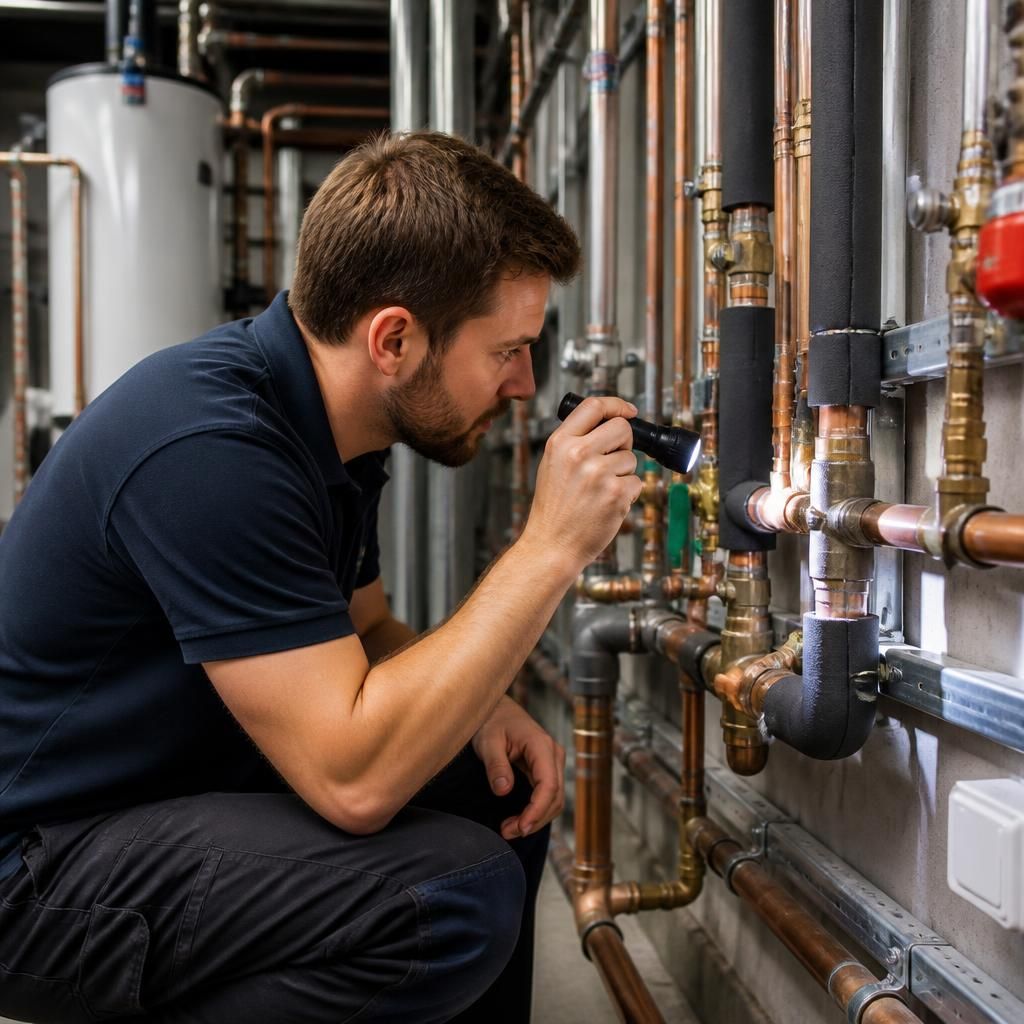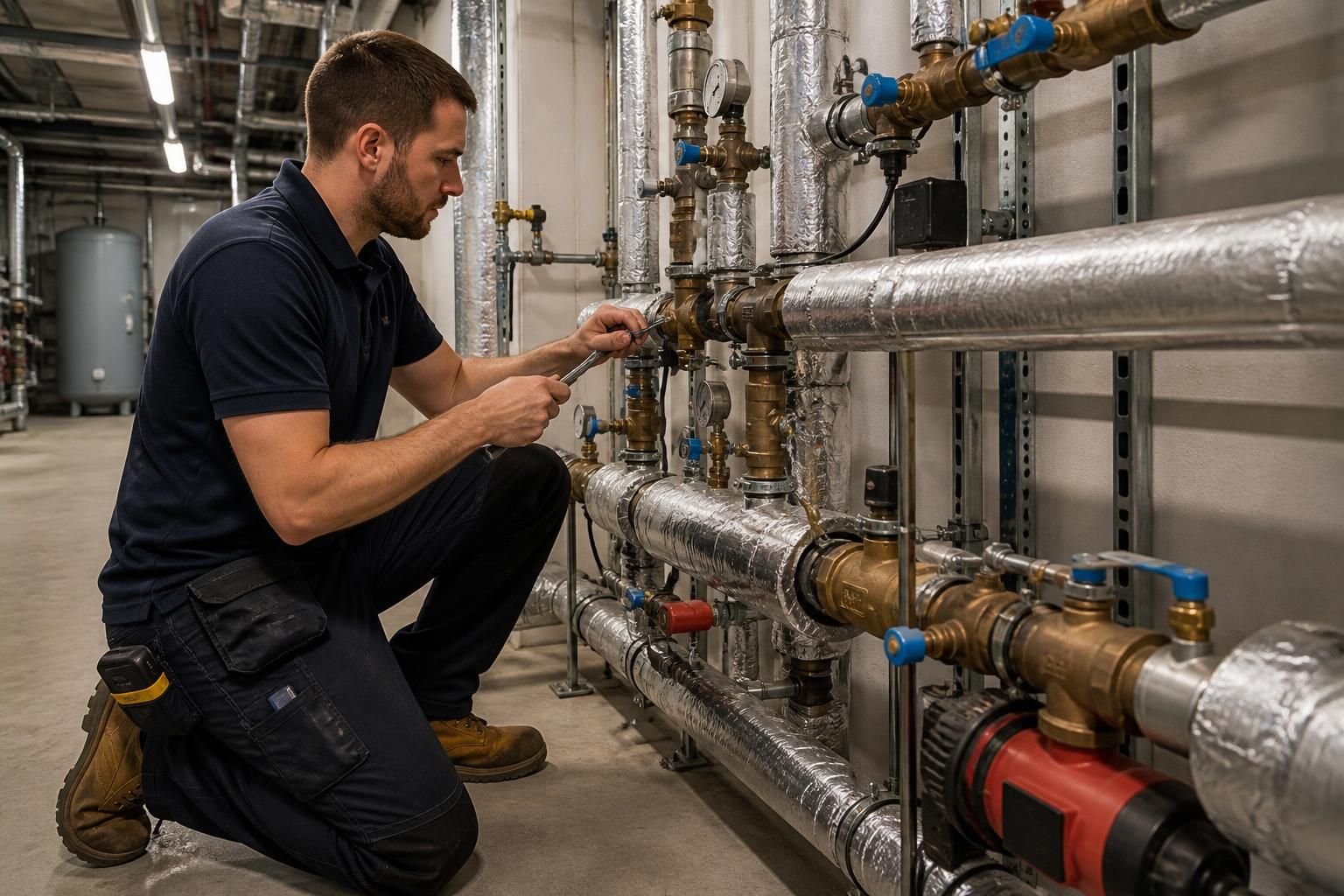
Licensed plumbers can work in most types of commercial premises, provided they have the competence, equipment and site procedures needed for the building and its plumbing systems. The important distinction is not simply whether a property is commercial, but whether the plumber understands the risks, regulations and operational requirements associated with that particular site.
Commercial plumbing work may be carried out in premises with different levels of public access, occupancy and technical complexity. A small business unit may require straightforward repairs to sanitaryware, pipework or drainage, while a larger or multi-occupancy building may involve storage tanks, boosted water supplies, multiple washrooms, plant rooms and shared services. The plumber should establish the layout and condition of the system before deciding how the work will be approached.
Several factors determine whether a plumber is suitable for a commercial property:
- The building’s use: premises used by staff, customers, residents, patients or pupils may have different hygiene, safeguarding and access requirements.
- The plumbing system: the work may involve mains water, internal distribution pipework, hot-water cylinders, tanks, pumps, sanitary facilities, drainage or heating equipment.
- The level of risk: leaks, contamination risks, restricted access and water damage can have wider consequences in a commercial setting than in a single private dwelling.
- The site layout: basements, roof spaces, service risers, plant rooms and areas behind fixed equipment may require specific access arrangements and suitable tools.
- The effect on the business: work may need to be planned around employees, customers, tenants, deliveries, food preparation or other activities taking place on the premises.
Some commercial environments need additional care because water quality, hygiene or continuity of service is especially important. Food preparation areas, healthcare-related premises and buildings with vulnerable occupants may require controlled working practices, clean isolation procedures and clear records of what has been repaired. Industrial or process-based sites may also contain specialist equipment or pipework that falls outside a general plumber’s competence. In those circumstances, a suitable plumber will identify the limits of the work and involve an appropriate specialist where necessary, rather than treating every installation as a standard repair.
In the UK, the term “licensed plumber” can be used broadly. Plumbing is not covered by one universal licence for every type of work, so a commercial customer should check that the contractor has relevant qualifications, experience and insurance for the task involved. Work connected with gas appliances or gas pipework must be handled by a suitably authorised gas engineer. Other work may need to meet building regulations, water regulations, manufacturer instructions or requirements set by the building owner and insurer.
For rented commercial premises, responsibility may be divided between the tenant, landlord, managing agent and facilities provider. A tenant will often report issues affecting its occupied space, while the landlord or managing agent may control shared risers, plant rooms, external drainage or communal water services. Clarifying responsibility before attendance helps the plumber obtain permission, isolate the correct supply and access all areas needed for inspection.
Before appointing a contractor, the person responsible for the premises should provide useful information about the problem, including:
- the exact location of the fault or affected area;
- whether the issue concerns water, drainage, hot water or heating;
- any known isolation valves, tanks, pumps or plant-room equipment;
- access restrictions, security procedures and site contacts;
- risks linked to customers, staff, residents, machinery or stored goods; and
- any permit, induction, insurance or documentation requirements.
A competent commercial plumber should inspect the relevant installation, explain the proposed work and identify any limitations before starting where practical. For repairs, this may include tracing the source of a leak, checking connected pipework and confirming whether isolation is possible without affecting other parts of the building. For planned maintenance, the focus may be on condition, recurring faults, access points and signs that a wider repair is needed.
Ideal Plumbing Services provides commercial plumbing support for properties across Birmingham and the wider West Midlands. Its assessment can help determine whether a reported fault is suitable for a standard commercial plumbing repair or requires coordination with a specialist contractor, building manager or other qualified professional.