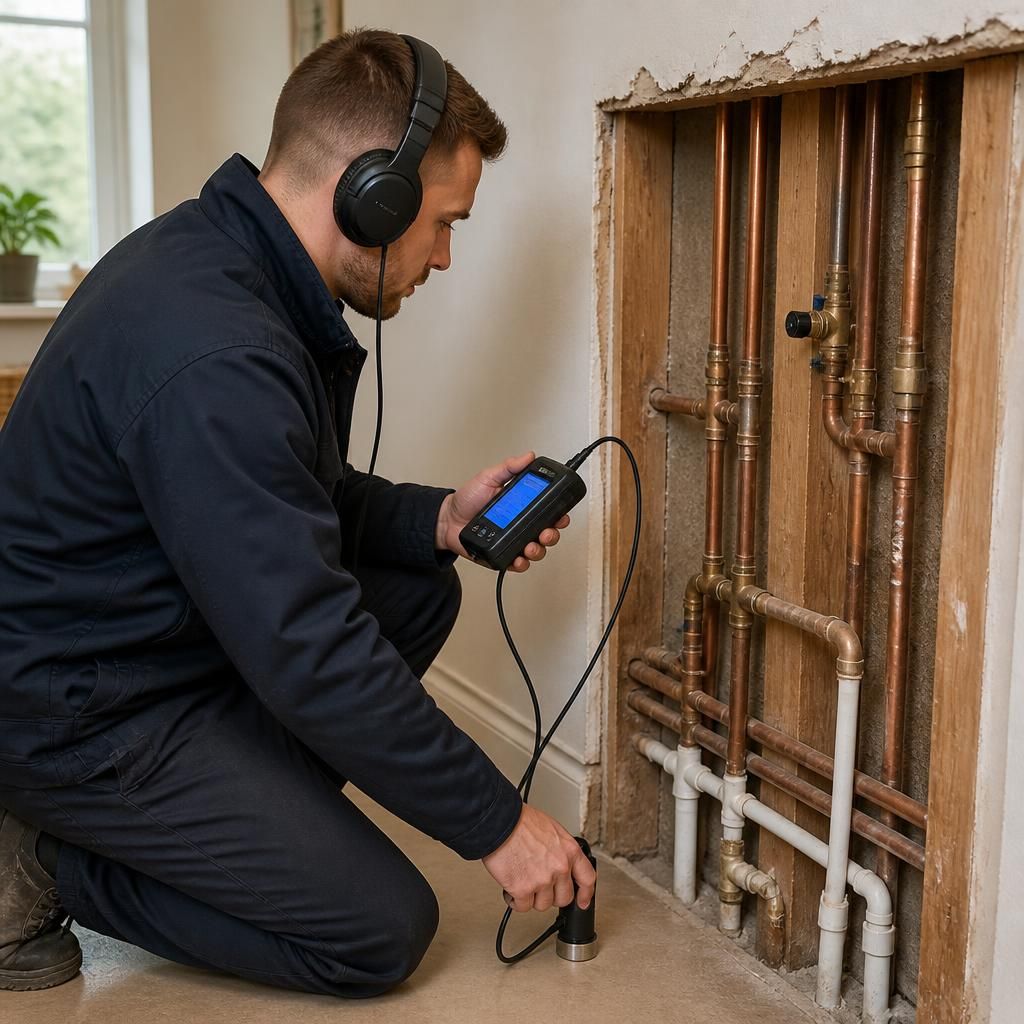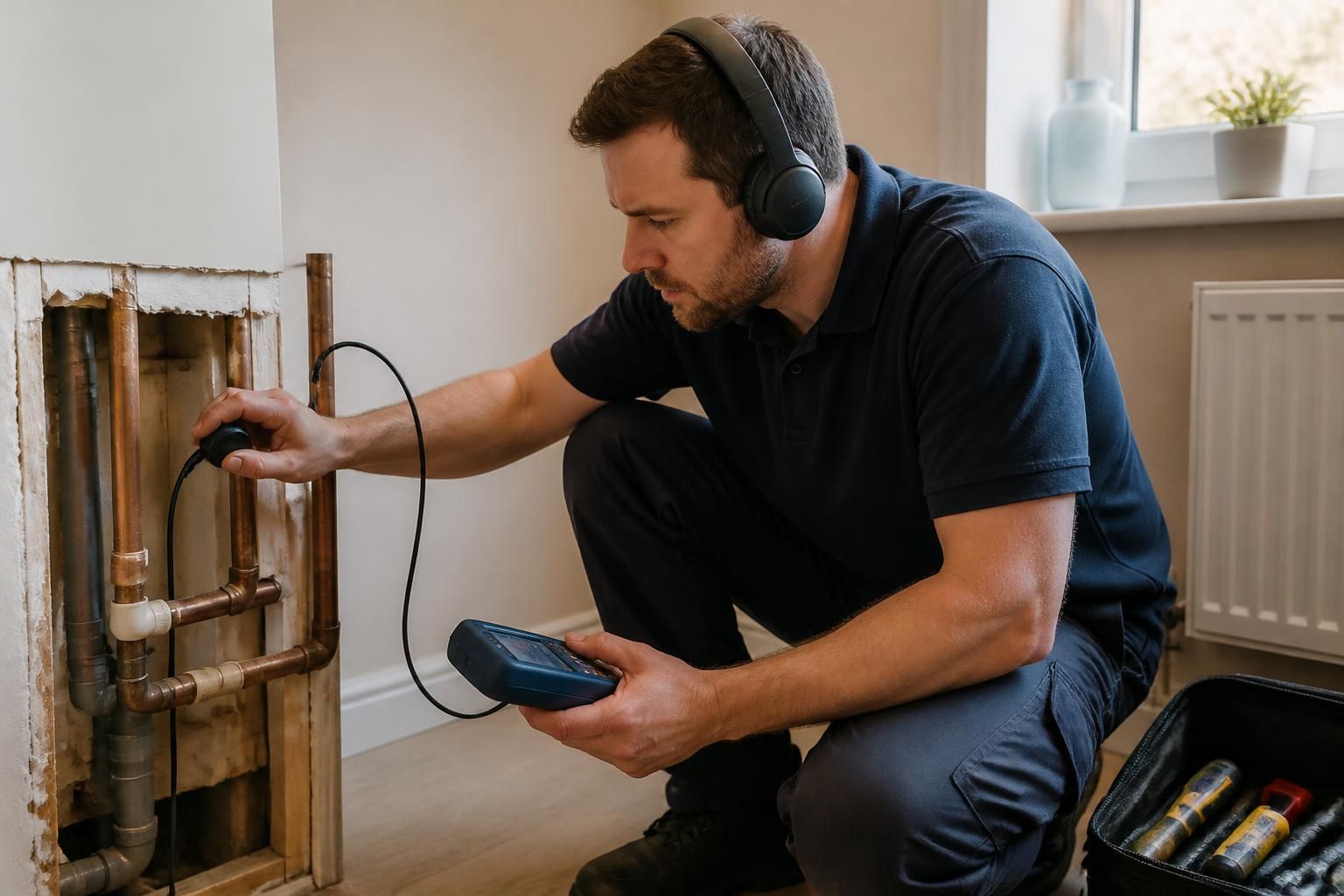
Professional leak detection normally causes little disruption, but the exact impact depends on the suspected pipework, the location of the leak and the testing method required. The investigation is usually less intrusive than the repair because its purpose is to establish what is happening before any larger building work is considered.
What the inspection may involve
- Checking visible pipework, fittings, appliances, ceilings, walls and floors for signs of moisture.
- Reviewing changes in water pressure or meter readings while outlets are closed.
- Using listening equipment to identify the sound of escaping water within concealed pipes.
- Using moisture or thermal imaging equipment to assess affected areas without immediately removing finishes.
- Using a tracer gas test where appropriate to help identify a concealed leak that cannot be located through visual checks alone.
These checks may require access to several rooms, cupboards, loft spaces, utility areas or external points. Furniture, stored items or access panels may need to be moved so that the relevant pipework and surfaces can be examined. Keeping routes and service areas accessible can reduce interruptions during the visit.
Water may need to be turned off briefly while pressure or flow tests are carried out. This can affect taps, toilets, washing machines, boilers or other water-fed appliances during the test. The technician should explain which services need to be isolated and why, so essential arrangements can be made in advance.
When more intrusive access is needed
Detection equipment cannot always identify a leak with sufficient certainty on its own. If the evidence points to pipework beneath a floor, behind a wall or above a ceiling, a small access opening may be needed to confirm the position. The extent of this work should depend on the findings rather than guesswork. Removing a limited section of plasterboard, flooring or boxing may therefore be necessary, but it is distinct from the larger work that could be required to replace damaged pipework or restore finishes.
The condition of the surrounding area also affects disruption. A clean, accessible cupboard is easier to inspect than a boxed-in pipe, while tiled surfaces, fitted furniture and built-in appliances can make access more involved. A leak that has already affected plaster, flooring or insulation may require drying and remedial work after the plumbing fault has been dealt with.
How to limit inconvenience
- Clear access to the stop tap, boiler, water meter and any suspected areas.
- Move valuables and moisture-sensitive items away from damp surfaces.
- Tell the plumber about recent changes in water pressure, staining, damp smells or unusual sounds.
- Make sure the technician can inspect adjoining rooms or the property below where relevant.
- Ask which areas may need temporary isolation and whether any access panel or finish might need to be opened.
For homeowners, landlords and tenants, the main practical distinction is between the disruption caused by locating the fault and the disruption caused by putting it right. A professional assessment can clarify the likely scope of the repair, helping the responsible person decide how access, reinstatement and any affected occupants should be managed. Ideal Plumbing Services provides leak detection and plumbing support for residential properties in Birmingham and across the West Midlands, with findings explained before repair work is considered.