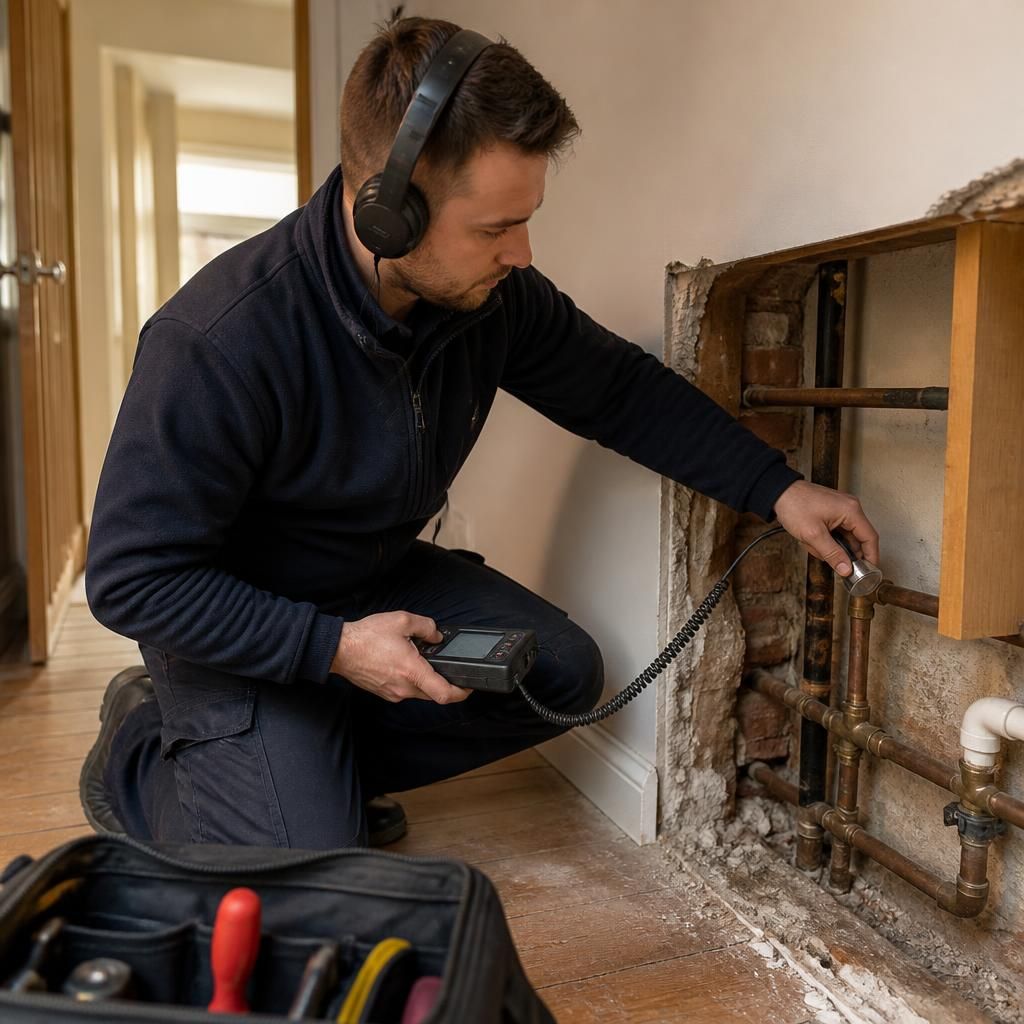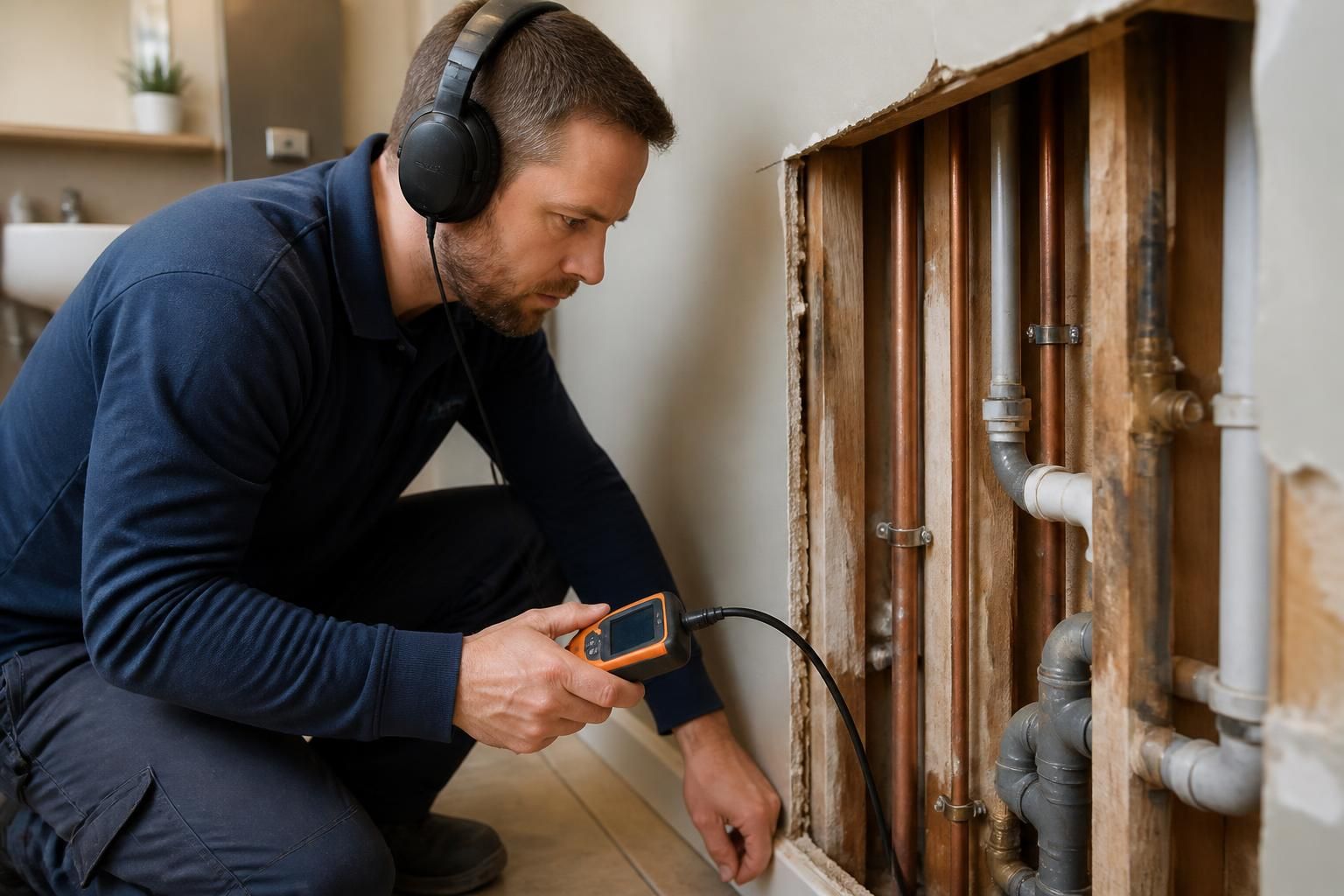
Before repairs begin, a suspected leak is tested by confirming whether water is escaping, identifying which part of the plumbing system is involved and separating the actual leak from related signs such as condensation, surface water or a faulty appliance. Testing should establish enough evidence to choose a suitable repair method rather than opening walls, floors or ceilings without a clear reason.
1. Establishing the plumbing layout
The plumber first works out which services may be affected. This can include the mains water supply, hot-water pipework, central-heating circuit, bathroom fittings, kitchen appliances, external supplies and drainage connections. Understanding the layout helps narrow the investigation and prevents unrelated pipework from being tested or disturbed.
Information from the occupant is also relevant. The timing of dampness, changes in water use, noises behind a surface, boiler pressure changes and any previous repair work can indicate whether the issue is continuous, intermittent or linked to a particular fixture. A leak that appears only when a tap, toilet or appliance is used requires a different investigation from one that occurs while the property is unoccupied.
2. Isolating possible sources
Individual appliances, fixtures or sections of pipework may be isolated in turn. This helps determine whether the suspected loss is connected with a toilet cistern, shower, washing machine, boiler circuit or another part of the installation. If the signs stop when one component is isolated, that component becomes the main area for further examination.
Isolation is particularly useful where several pipes run close together. Moisture can travel along joists, plaster, insulation or other building materials, so the visible mark is not necessarily directly below the fault. Testing the relevant section rather than relying on the position of the stain reduces the risk of repairing the wrong location.
3. Choosing a suitable test
The test depends on the type of system and the suspected location. A sealed heating circuit, for example, is assessed differently from a supply pipe serving a kitchen tap. The plumber considers whether the pipework can safely be isolated, whether the system is pressurised, whether hot water or heating is involved and whether testing could affect appliances or vulnerable fittings.
Common methods include:
- Sectional isolation: individual branches or fittings are shut off so their effect on the system can be compared.
- Controlled pressure assessment: a suitable section is monitored for an abnormal change after it has been stabilised. The result must be interpreted alongside the pipe material, temperature and condition of the system.
- Acoustic or electronic tracing: specialist sensors can help identify the sound or pattern associated with escaping water, especially where pipework is concealed.
- Thermal or moisture assessment: changes in surface temperature or moisture distribution can help map the affected area, although these findings normally need to be checked against the plumbing system itself.
- Dye or flow-based checks: where appropriate, a coloured tracing liquid or controlled discharge can help distinguish a faulty sanitary fitting or drainage connection from a supply-pipe leak.
No single test is conclusive in every property. For example, a small leak may not produce a strong acoustic signal, while residual moisture can remain after the supply has been stopped. A competent assessment therefore compares more than one finding where necessary.
4. Interpreting the results
Test results are considered with the condition of the installation and the behaviour of the suspected leak. A pressure change may indicate loss from the tested section, but it may also result from trapped air, temperature variation or a valve that is not fully closing. Similarly, dampness may be old, travelling from another point or caused by condensation rather than escaping pipework.
The plumber may repeat a test after allowing the system to settle, test an adjacent section or compare an isolated branch with the rest of the installation. This confirmation stage is important because the repair method depends on whether the fault is located in an exposed fitting, concealed supply pipe, heating circuit, appliance connection or drainage component.
5. Deciding whether access is needed
Once the likely source has been narrowed down, the plumber can identify the least disruptive access point. Where possible, the investigation is completed from accessible valves, fittings or service areas. If a concealed pipe remains the only credible source, the findings can guide a limited opening rather than exploratory removal across a large area.
Before work starts, the implications should be explained clearly: which section appears to be affected, what evidence supports that conclusion, whether the supply needs to be isolated, and whether the repair may involve lifting flooring, removing a panel or opening a wall. If testing cannot produce a definite result, that uncertainty should also be made clear before further invasive work is undertaken.
6. What happens immediately before repair
The affected service is made safe and isolated as required. Any remaining water is controlled, nearby electrical risks are considered and vulnerable furnishings or surfaces are protected. The plumber then confirms the replacement or repair approach, including whether a fitting can be renewed, a section of pipe replaced or a connection resealed.
After the repair, the relevant section should be tested again to check that the original loss has stopped. Surfaces may remain damp for some time even when the plumbing fault has been corrected, so continuing moisture does not automatically prove that the repair has failed. Further drying and, where necessary, building-related assessment may be needed if materials have absorbed water.
Professional leak detection is therefore not simply a search for a wet patch. It is a process of isolating the system, selecting an appropriate test, checking alternative explanations and confirming the suspected source before repair work is authorised.