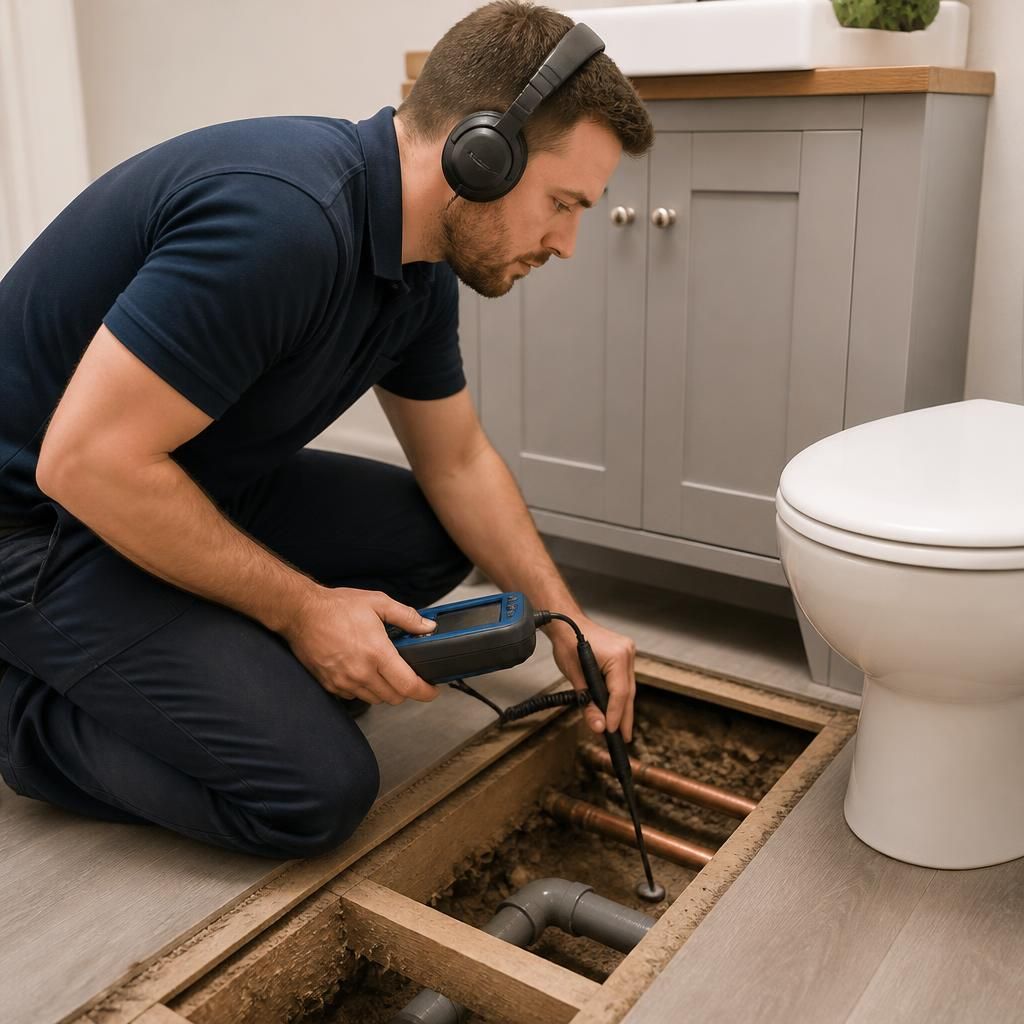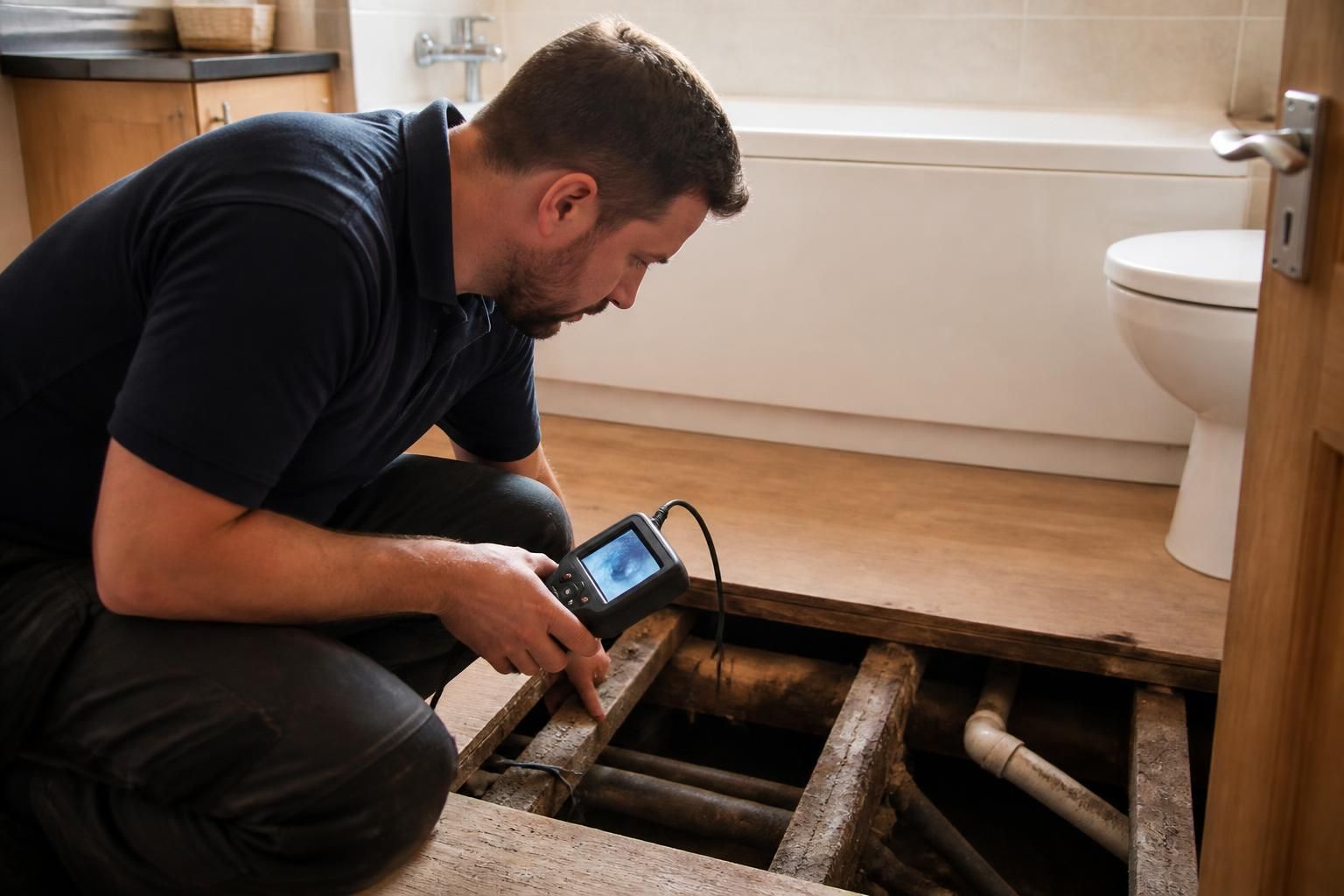
Professional water leak detection is suitable for anyone who needs the source of a suspected concealed leak identified accurately without relying on guesswork. It is particularly relevant where water is escaping behind walls, beneath floors, inside ceilings or around fixed plumbing, making the origin difficult to see. A specialist investigation can help establish whether the symptoms are linked to a pressurised water pipe, a heating-related pipework issue or another plumbing fault before further work is considered.
Homeowners may benefit when there are signs of moisture but no obvious failed fitting. Common reasons for arranging an inspection include:
- Persistent damp patches, staining, peeling finishes or mould with no clear source.
- A ceiling or wall becoming wet below a bathroom, kitchen or other plumbing area.
- Floorboards, flooring or plaster showing damage that cannot be explained by a visible spill.
- Water sounds, pressure changes or unexplained moisture around pipework.
- Suspected damage beneath a floor or behind a wall where access would involve removing finishes.
It can also be appropriate when a visible drip has already been dealt with but dampness continues. The point of detection is not simply to confirm that water is present; it is to narrow down the route and likely source so that repair decisions are based on evidence.
Landlords and property managers can use professional detection when a tenant reports damp, staining, a leak or unexplained water damage but the cause is uncertain. This is especially useful in flats, older properties and buildings with concealed pipework, where water may travel away from the original fault before becoming visible. Locating the source can help distinguish a plumbing failure from moisture caused by condensation, an appliance, a roof defect or another issue requiring a different type of investigation.
Tenants may find detection suitable when they have reported a suspected leak but cannot identify where it starts. A tenant should normally notify the landlord or managing agent about the problem and avoid removing flooring, plaster or fitted units to investigate it independently. Professional assessment can provide clearer information for deciding what needs to happen next, particularly where the visible symptom is some distance from the concealed pipework.
Detection is also suitable before planned repair work where several possible leak points exist. Rather than opening multiple areas in search of the fault, a plumber can assess the available evidence and use appropriate testing methods to focus the investigation. This can be valuable where access is restricted, pipework is embedded or the suspected leak is beneath a finished surface.
It may be less appropriate to begin with specialist detection when the fault is already plainly visible, such as an accessible joint that is actively leaking and can be examined directly. In those circumstances, the priority may be to isolate the water supply safely and assess the fitting itself. Where the source is hidden, symptoms are inconsistent or more than one explanation is possible, professional water leak detection provides a more suitable way to establish the cause.
Although the main need is residential, the same principles can apply to smaller commercial premises where concealed plumbing is affecting walls, floors, ceilings or occupied areas. The suitability of an inspection depends on the symptoms, the construction of the property and whether the source can be reached safely without specialist investigation.