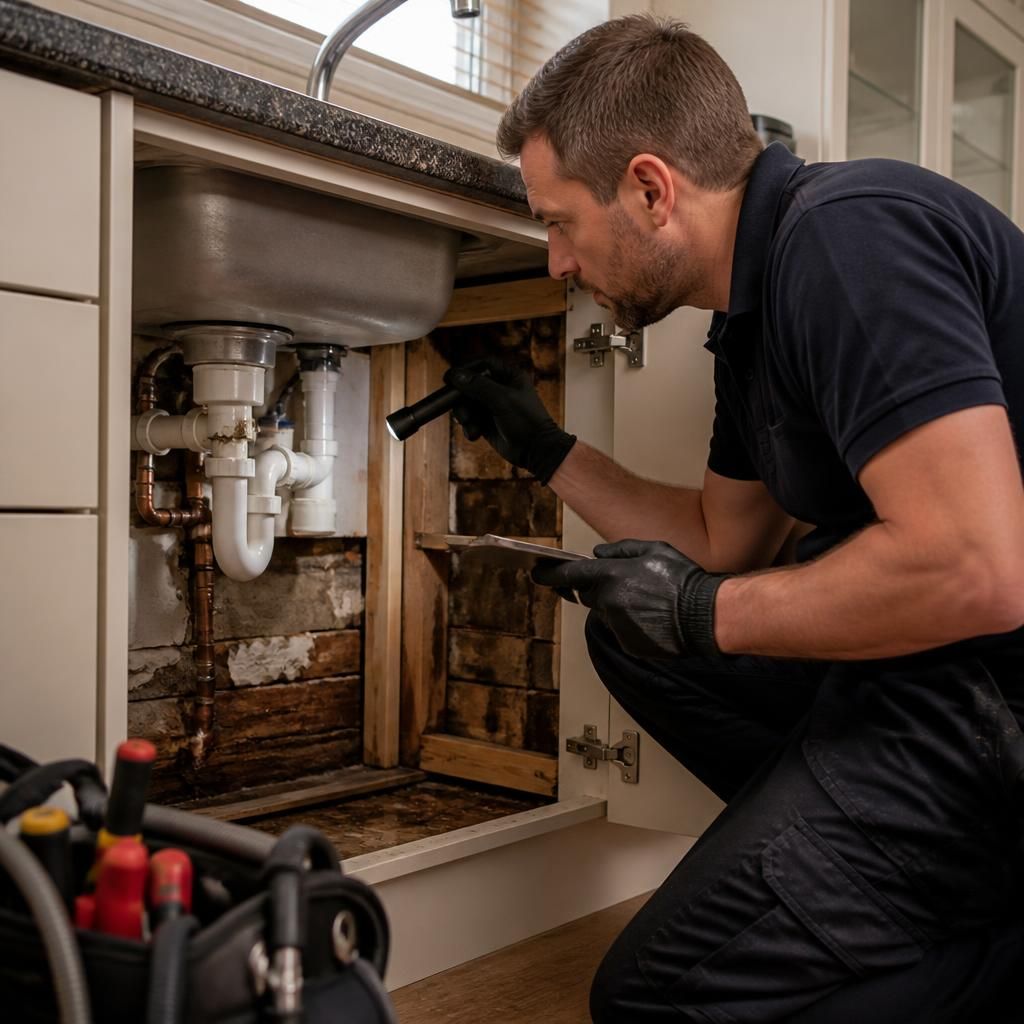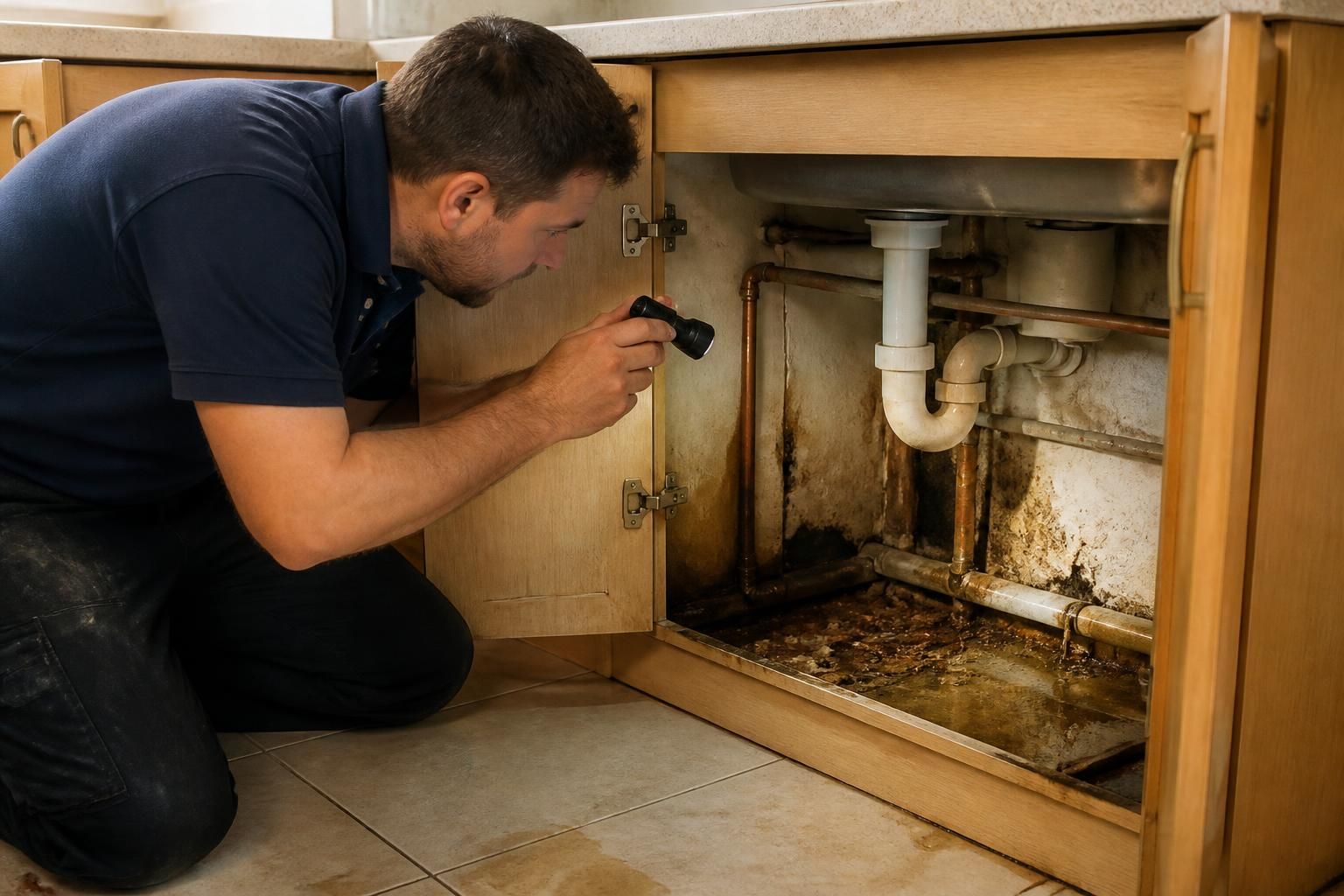
After a hidden water leak is located, the next stage is to assess the extent of the problem, agree the appropriate repair and confirm that the plumbing system is sound before the affected area is reinstated. The work should address both the immediate source and any related damage caused by escaping water.
- The access requirements are assessed. The plumber determines how to reach the faulty pipe, joint, valve or fitting with as little disturbance as reasonably possible. This may involve removing a small section of a wall, floor or ceiling, or using an existing access point.
- The repair method is selected. The most suitable approach depends on the pipe material, the location of the fault, the condition of nearby components and whether replacing one fitting or a larger section will provide the more dependable result. Repairing only the visible symptom may not be appropriate if surrounding pipework is degraded.
- The proposed work is explained. Before additional work begins, the homeowner, landlord or tenant should understand what needs to be repaired, what access may be required and whether any follow-on work is advisable. A clear scope helps prevent confusion about charges, particularly where opening up a building reveals further damage.
- The faulty component is repaired or replaced. This may involve renewing a connector, sealing a joint, replacing a valve or fitting, or removing and replacing a damaged section of pipe. Components are fitted securely and in a way that remains accessible for future inspection where practical.
- The system is tested. Once the repair is complete, the plumbing is checked under normal operating conditions. The surrounding area is inspected for further signs of moisture, and the original leak location is monitored to confirm that water is no longer escaping.
- The building materials are dealt with separately. Plumbing repair stops the source, but wet plaster, flooring, insulation, cabinetry and furnishings may need additional drying, cleaning or replacement. Materials should not be sealed, painted or covered while they remain damp, as trapped moisture can lead to staining, mould or deterioration.
- The repair is recorded and the area is reinstated. Useful records can include the location of the fault, the work completed, photographs and any recommendations for future maintenance. Replacing removed finishes is usually a separate building task, so the responsibility and scope should be clear.
If the leak has affected electrical fittings, structural materials or contaminated water has entered the property, the relevant risk should be addressed before ordinary reinstatement takes place. A professional leak detection and repair service can coordinate the plumbing findings with the next practical steps, while keeping the repair focused on the confirmed source.
General guidance only. If you smell gas, leave the property and call the National Gas Emergency line on 0800 111 999.