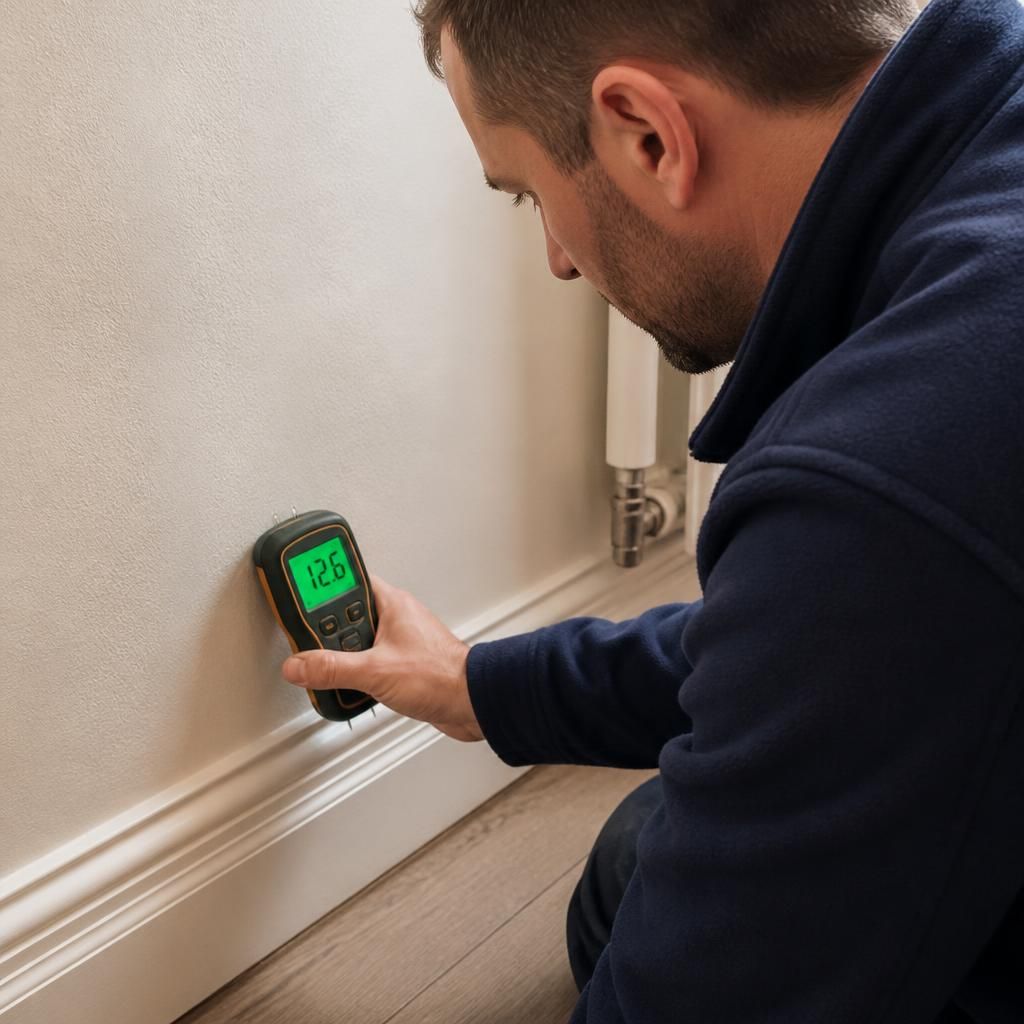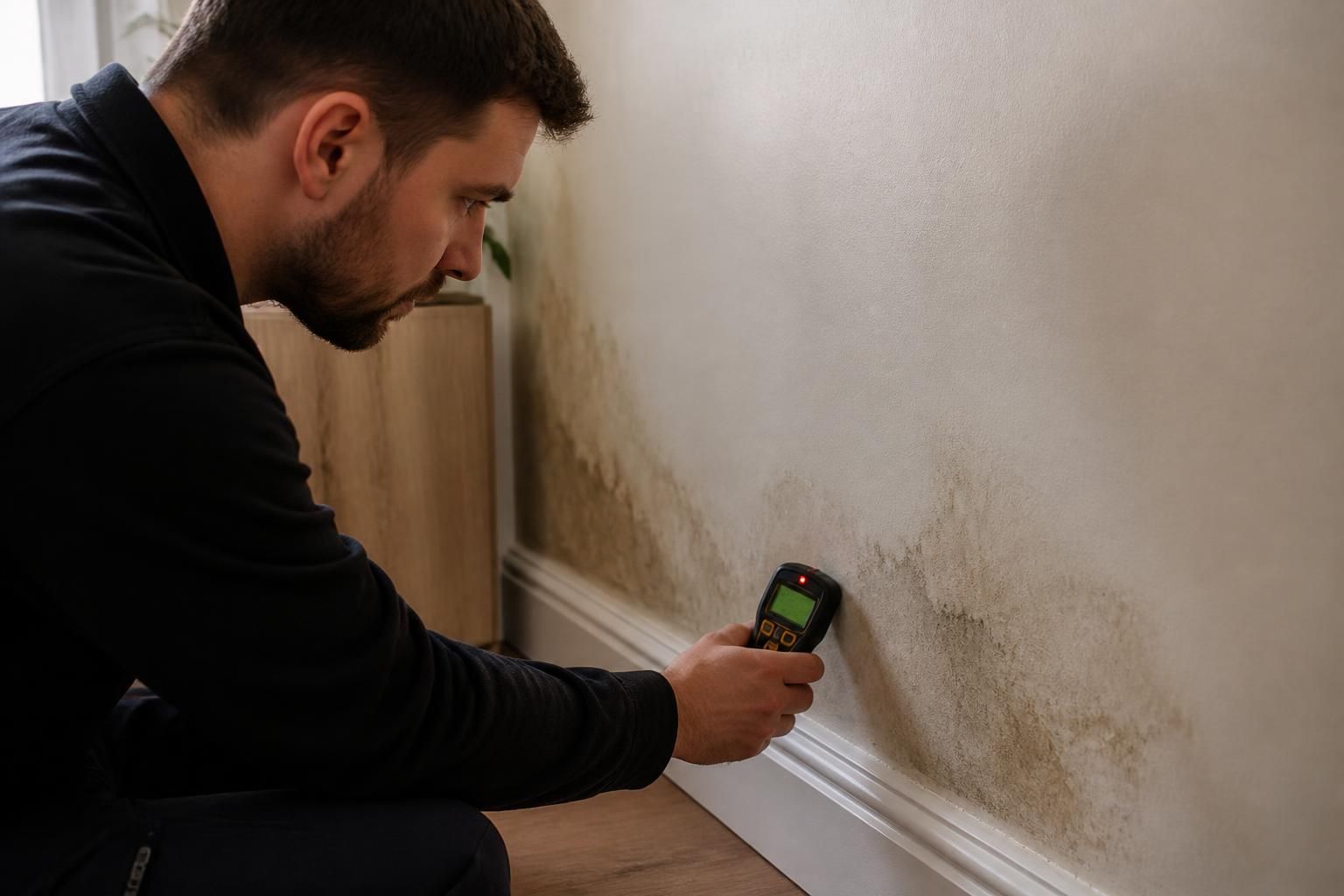
A hidden water leak is often indicated by a change in how a plumbing or heating system behaves, even when there is no visible water. The most useful warning signs are movement on the water meter when every outlet is closed, a toilet that refills without being used, repeated boiler pressure loss, localised changes to floors or joinery, and unexplained deterioration around pipe routes.
- The water meter moves when no water is being used. Turn off taps and appliances that use water, such as washing machines and dishwashers, then check the meter after allowing the system to settle. If the reading continues to change, water may be escaping from a supply pipe, toilet cistern or concealed fitting. Avoid drawing conclusions from a single brief movement, as some appliances can complete a cycle after being switched off.
- A toilet cistern refills or runs intermittently. A faulty inlet valve can cause this, but a leak through the flush valve can produce the same pattern. In either case, water is being lost without an obvious puddle. A simple indication is a faint flow into the pan or periodic refill noises, particularly when the toilet has not been used.
- The boiler pressure repeatedly drops. A sealed central-heating system should not regularly need topping up. Falling pressure can result from a faulty component, air in the system or a leak on the heating circuit, including pipework beneath floors. The pressure gauge alone cannot identify the cause, so repeated loss should be assessed rather than repeatedly corrected.
- Flooring changes shape or feels different in one area. Laminate may lift, timber can swell or cup, and floor coverings may develop raised edges or soft sections. A localised change near a bathroom, kitchen, radiator or utility area can point towards water beneath the floor. These changes can also follow spills, condensation or installation problems, so the location and pattern matter.
- Paint, wallpaper, skirting boards or cupboards begin to deteriorate without an obvious cause. Bubbling paint, lifting wallpaper, swollen MDF and distorted cabinet panels can occur when water is entering from behind a surface. Damage that follows a straight route or appears close to pipework is more significant than isolated wear, although condensation and poor ventilation should also be considered.
- One part of a wall, ceiling or floor is noticeably colder than the surrounding area. Escaping water can alter the temperature of building materials, especially around concealed pipe runs. A cold area is not proof of a leak because insulation gaps and draughts can create a similar effect, but a persistent, sharply defined change warrants investigation when it occurs near plumbing.
- Heating or hot-water performance changes without a clear control problem. Air entering a heating circuit, loss of system pressure or a concealed escape can contribute to radiators warming unevenly or hot water becoming less consistent. A faulty boiler or control may cause similar symptoms, so this sign should be considered alongside pressure readings and any changes around the property.
These signs are not conclusive on their own. Plumbing faults, condensation, defective sealant, blocked gutters, faulty valves and heating-system problems can produce similar symptoms. The strongest indication is usually a combination of evidence: a meter movement, a recurring system fault and physical changes concentrated around the same area.
Before arranging an inspection, note when the symptom appears, which outlets or appliances were in use, whether the boiler pressure has changed and where physical deterioration is located. Do not remove flooring, drill into walls or interfere with electrical fittings to search for the source. If water is actively escaping, turn off the internal stop tap if it is safe to do so and keep clear of affected electrical equipment.
Ideal Plumbing Services provides leak detection and plumbing support for homeowners, landlords and tenants in Birmingham and across the West Midlands. A professional assessment can help distinguish a concealed leak from a fault with the plumbing, heating or building fabric and identify the appropriate next step.