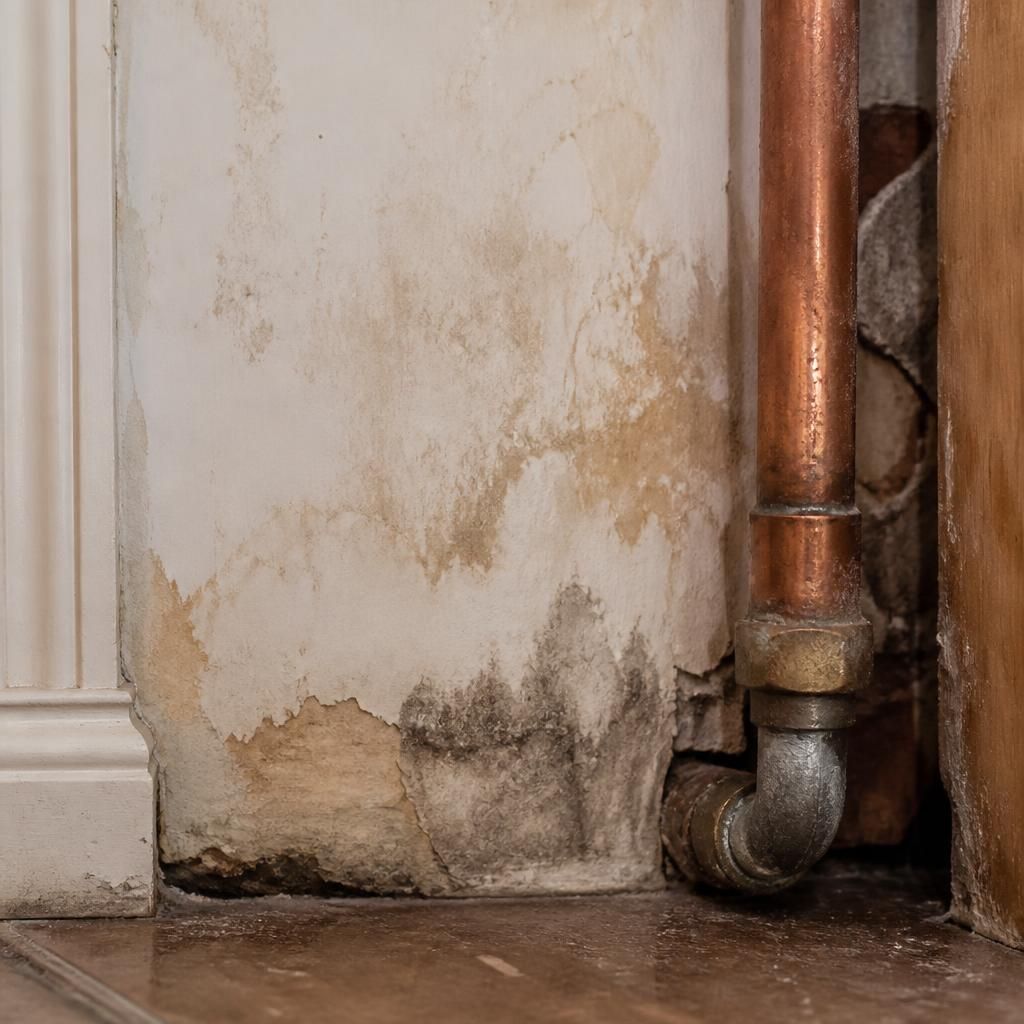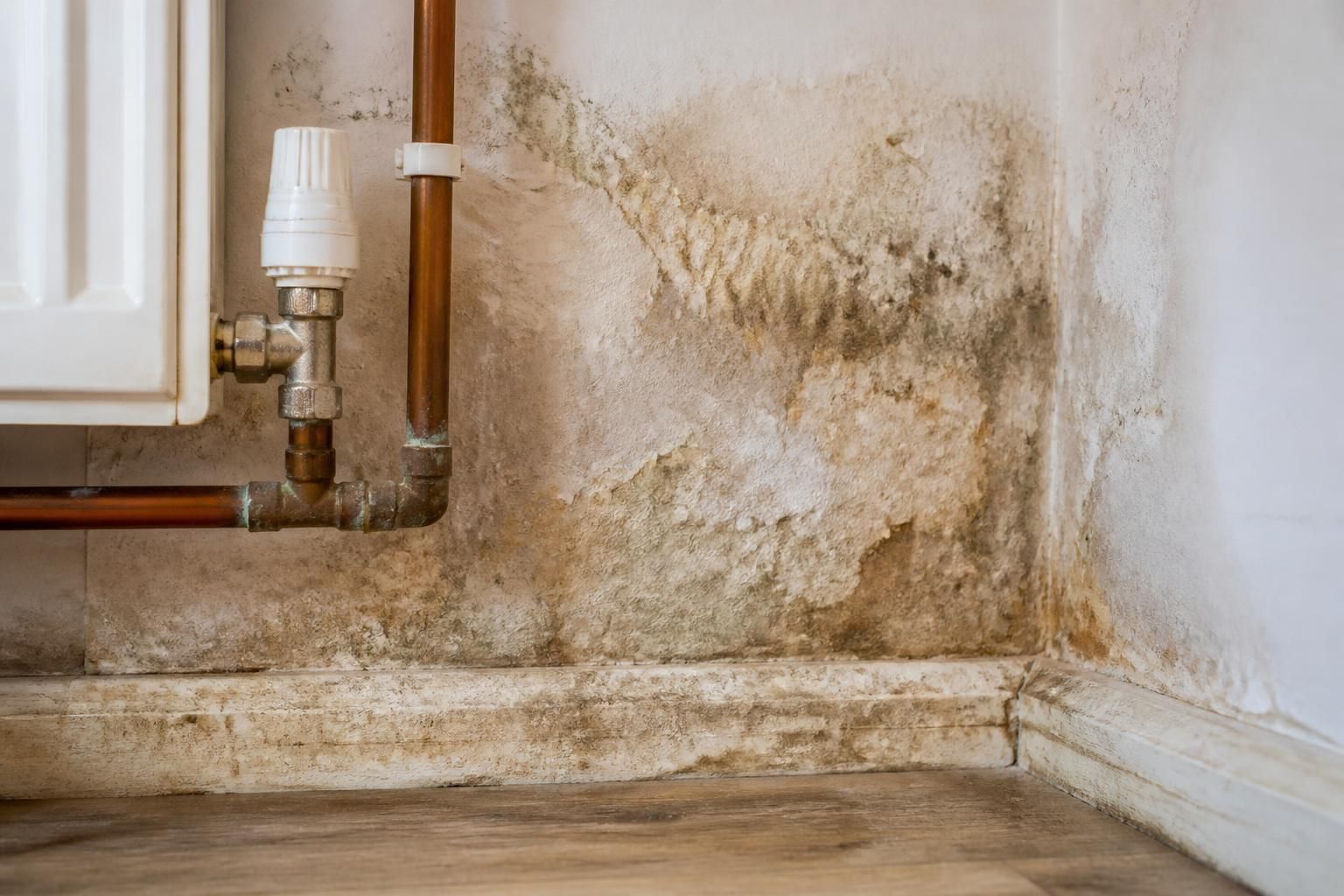
Damp is likely to be caused by a plumbing leak when moisture testing and the pattern of spread connect it to a pressurised supply pipe, heating circuit, waste pipe, tank, valve or appliance connection. A visual inspection can suggest the cause, but it cannot reliably identify a concealed leak or distinguish plumbing moisture from water entering through the building fabric.
Start by considering whether the damp follows a recognisable plumbing route. Moisture that tracks along the line of a pipe, collects below a joint or appears on the opposite side of a bathroom or utility area deserves particular attention. A leak may travel through plaster, insulation, floor voids and masonry before becoming visible, so the wet patch is not necessarily directly below the failed fitting.
The timing of the problem can also provide useful evidence. Note whether the affected area changes after:
- a toilet is flushed;
- a bath, shower or basin is emptied;
- a washing machine or dishwasher runs;
- the central heating is switched on;
- cold-water taps are used; or
- the property has been unoccupied for a period.
Different responses can point towards different systems. A change after using a bathroom may involve a supply, waste or seal failure. Damp linked specifically to heating operation may indicate a problem within the heating circuit, radiator connection or associated pipework. Moisture that continues to increase when no water is being used may be associated with a concealed pressurised pipe, although environmental water sources must also be considered.
Several simple observations can help narrow the possibilities without opening walls or lifting flooring:
- Check whether the boiler pressure is repeatedly falling, if the property has a sealed central-heating system.
- With all taps and water-using appliances turned off, observe whether the water meter continues to register use. This can indicate a leak on the supply side, but it is not conclusive and should not be relied on where the meter serves more than one property.
- Inspect accessible valves, pipe joints, appliance hoses and the base of sanitaryware for fresh moisture, corrosion, limescale or damaged seals.
- Compare the damp area with rooms above, below and beside it. Water can move laterally through ceilings and floors, making the original source difficult to see.
- Record when the patch first appeared and whether its size, temperature or moisture level changes over time.
Condensation usually affects colder surfaces and may be more widespread around windows, external corners or poorly ventilated areas. Penetrating damp is more closely associated with defects in roofs, walls, pointing, gutters or external seals. Rising damp normally begins at the lower part of a wall and has a different moisture distribution from a leak within a service void. These distinctions are useful, but a property can have more than one moisture problem at the same time.
A professional assessment normally combines a visual inspection with non-invasive moisture measurements and targeted tests. The technician may compare readings around the affected area, check accessible plumbing components, test individual water systems and assess whether the moisture is active or residual. Where necessary, specialist leak detection equipment can help trace concealed pipework or identify a change in moisture conditions without immediately removing finishes.
It is important to establish whether the water is clean supply water, used waste water or heating-system water. Discolouration, odour, staining and the location of the damp may provide clues, but they do not prove the source. A waste leak can remain hidden beneath a bath or shower tray, while a heating leak may leave staining that develops gradually as water escapes from the circuit.
Avoid painting over the area, sealing it with waterproof products or removing substantial sections of plaster before the cause is confirmed. These actions can hide useful evidence, spread contamination or make it harder to see how far moisture has travelled. Keep the area ventilated where safe to do so, and move vulnerable furniture or belongings away from the affected surface.
Arrange an assessment if the damp is spreading, returns after drying, affects a ceiling, is close to electrical fittings, or cannot be explained by normal condensation. If there is active water escape, isolate the relevant stop tap or appliance valve only if it can be done safely, and avoid using the suspected fixture until it has been checked. For homeowners, landlords and tenants, keeping dated photographs and notes of changes can also help establish the sequence of events and support decisions about the appropriate repair.