Before plumbing repairs begin, a suspected leak is tested to establish whether water is escaping, where it is coming from, and whether the problem is active or the result of earlier damage. Testing helps distinguish a leaking supply pipe from a failed fitting, appliance connection, heating component, waste pipe or ingress from another source, so the repair is based on evidence rather than guesswork.
The process usually starts with a discussion of the symptoms and a review of the property’s plumbing layout. Information such as a falling boiler pressure, an unexplained increase in water use, a damp patch that changes size, or staining that appears after using a particular appliance can indicate which part of the system needs closer assessment. The location of a visible mark is not necessarily the location of the leak, because water can travel along pipework, joists, plasterboard or flooring before it becomes noticeable.
Where appropriate, the plumbing system may be isolated into sections. Individual outlets, appliances or circuits can be checked separately to establish whether the pressure changes when a particular part is shut off. A pressure test can then show whether a closed water system is holding pressure as expected. A continuing drop suggests that water is escaping somewhere in the isolated section, although the result needs to be considered alongside the type and condition of the installation.
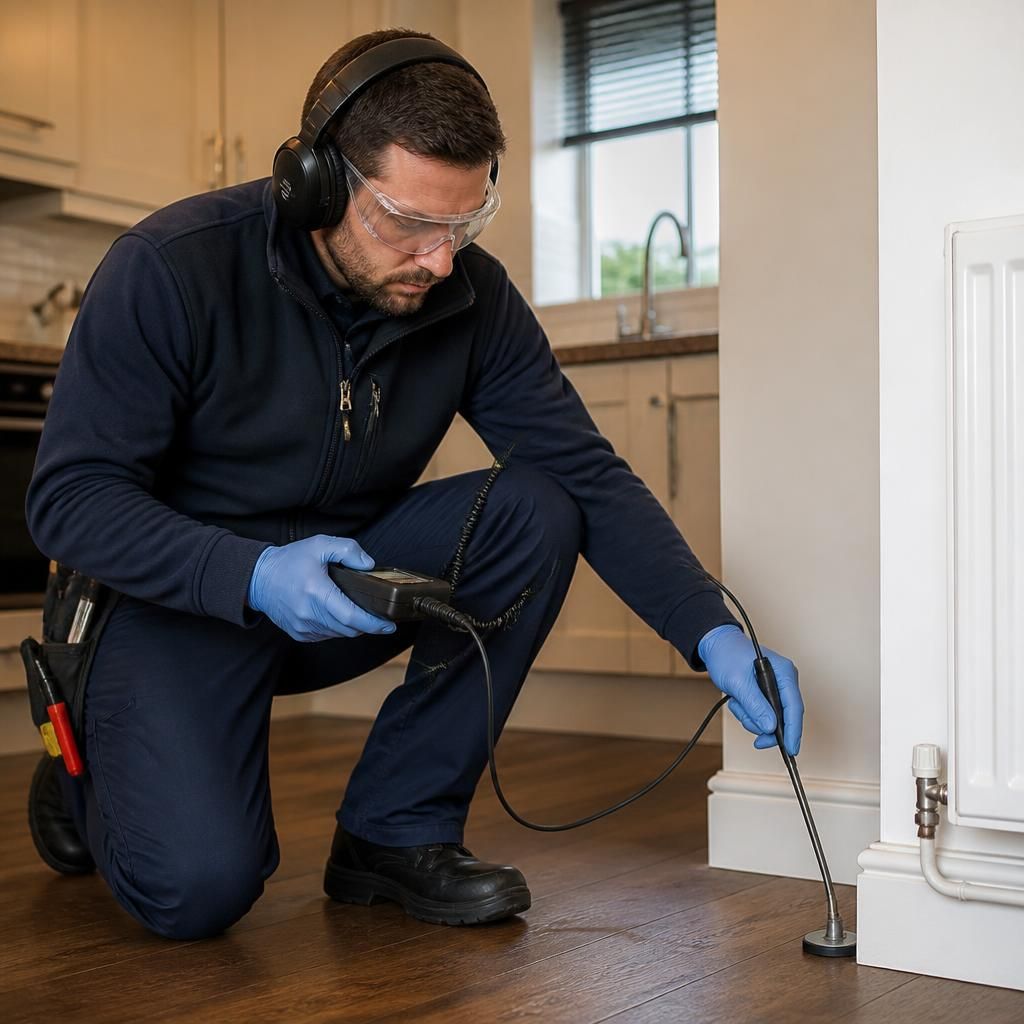
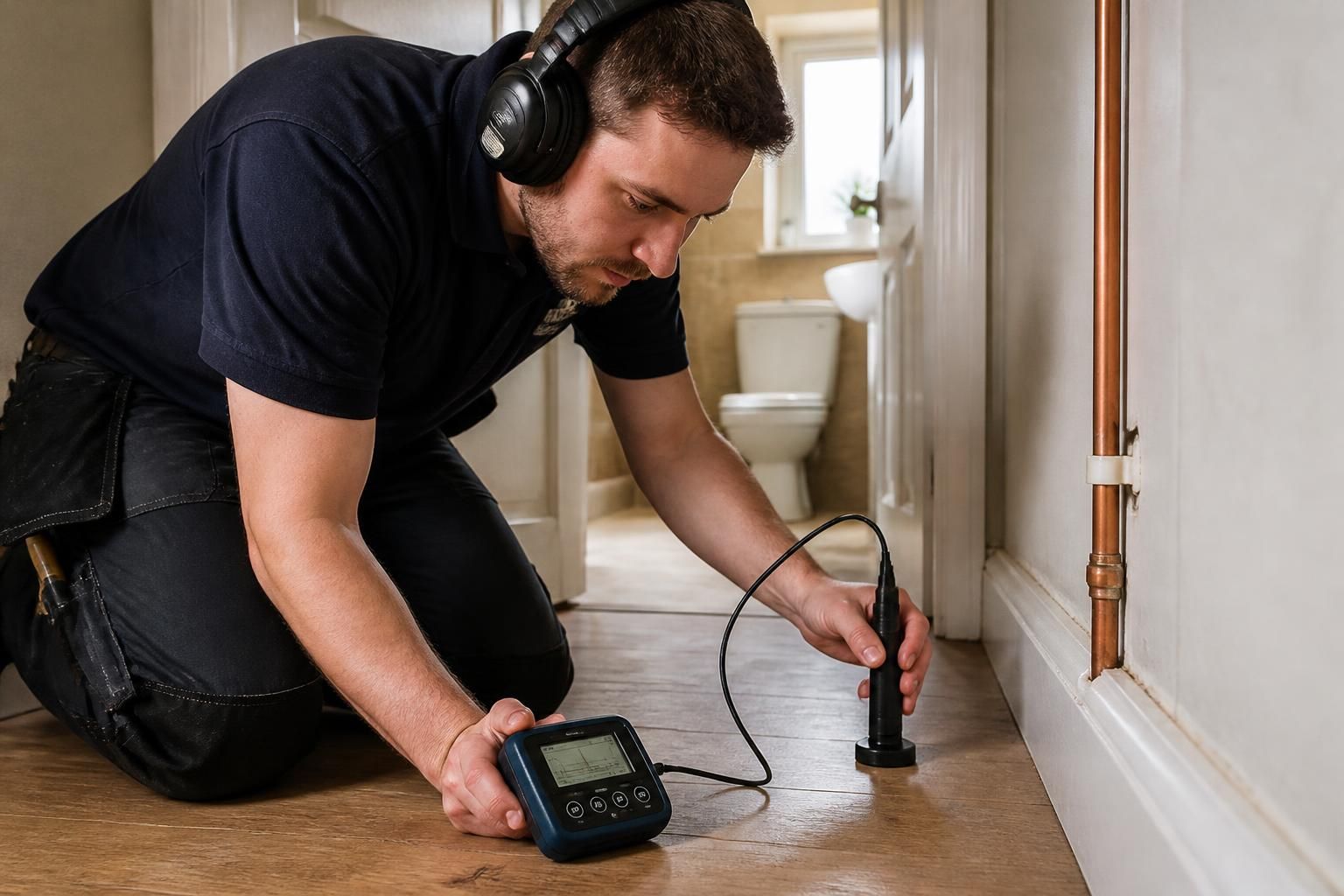
For concealed leaks, the tester may use acoustic equipment to listen for the sound produced by pressurised water escaping through a small opening. This can help narrow down the position beneath floors, behind walls or in other inaccessible areas. The reliability of the reading can be affected by background noise, pipe materials, water pressure and the size of the leak, so acoustic evidence is normally interpreted with the other findings rather than treated as a standalone answer.
Moisture measurements provide information about how much water has affected a material and whether dampness extends beyond the visible mark. Readings may be taken at several points to compare the suspected area with nearby unaffected surfaces. Thermal imaging can also identify temperature differences linked to warm water, evaporating moisture or damp materials. It does not usually show the pipe itself, so an unusual thermal pattern must be assessed in context.
Testing also considers whether the symptoms could have another cause. Condensation, rainwater penetration, defective sealant, a blocked gutter, a damaged waste connection or moisture rising from below can all produce staining or dampness that resembles a plumbing leak. Checking the timing of the symptoms and how they relate to water use helps avoid carrying out unnecessary pipe repairs.
Once the evidence has been gathered, the findings are compared to determine the most likely source and the degree of access needed. A clear result may allow a targeted repair to be planned, while inconclusive readings may mean that further monitoring or an additional test is sensible. If water is actively escaping, limiting use of the affected fitting or isolating the relevant supply can help reduce further damage while the repair is arranged.
The test results should inform the repair method, not just the location. For example, a damaged joint may need a local repair, whereas a corroded or poorly supported section may require replacement beyond the immediately visible point. Where damp materials have been affected, repairing the pipe stops the source but does not instantly remove residual moisture; drying and any follow-on building work are separate considerations.
A professional assessment should explain what was tested, what the results indicate, any limitations on certainty, and why the proposed repair is appropriate. This gives the homeowner, tenant or landlord a clearer basis for approving work and reduces the risk of opening walls or floors without a reasonable indication of where the fault lies.