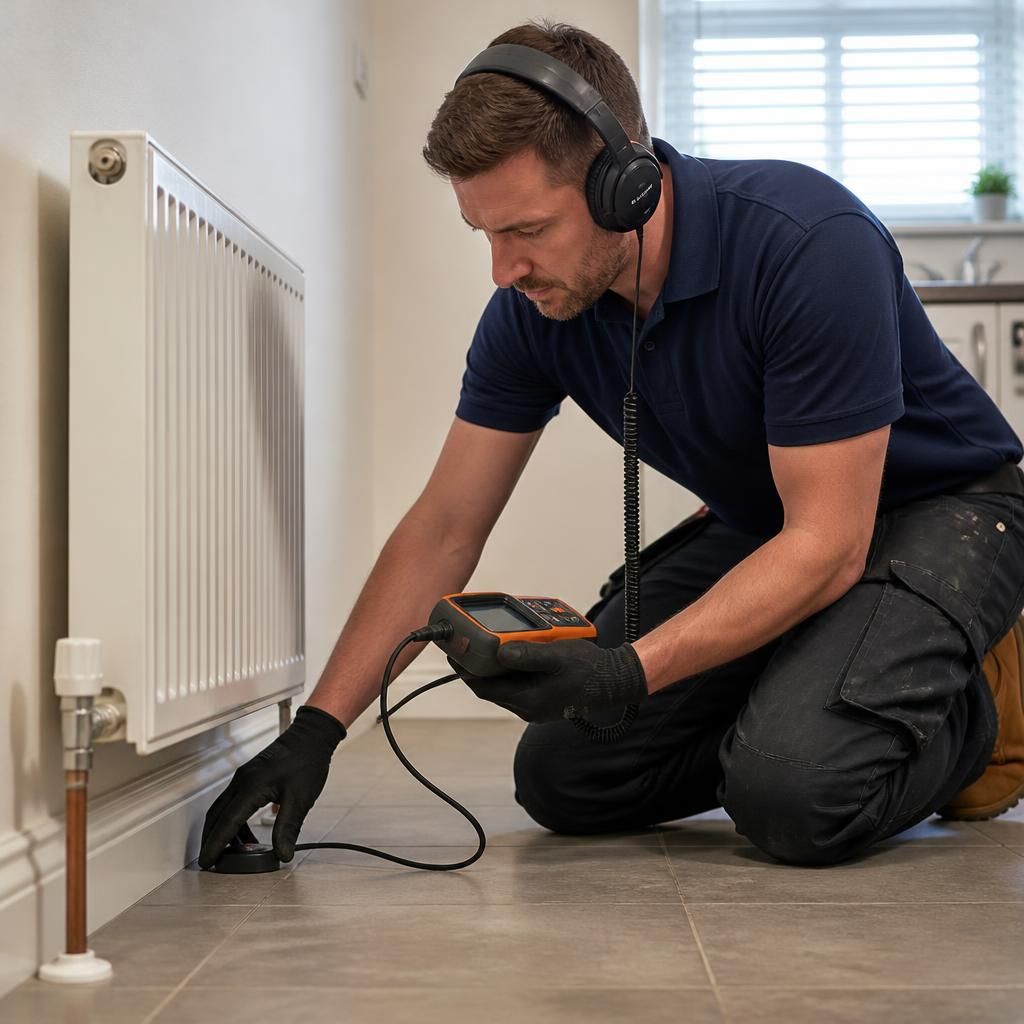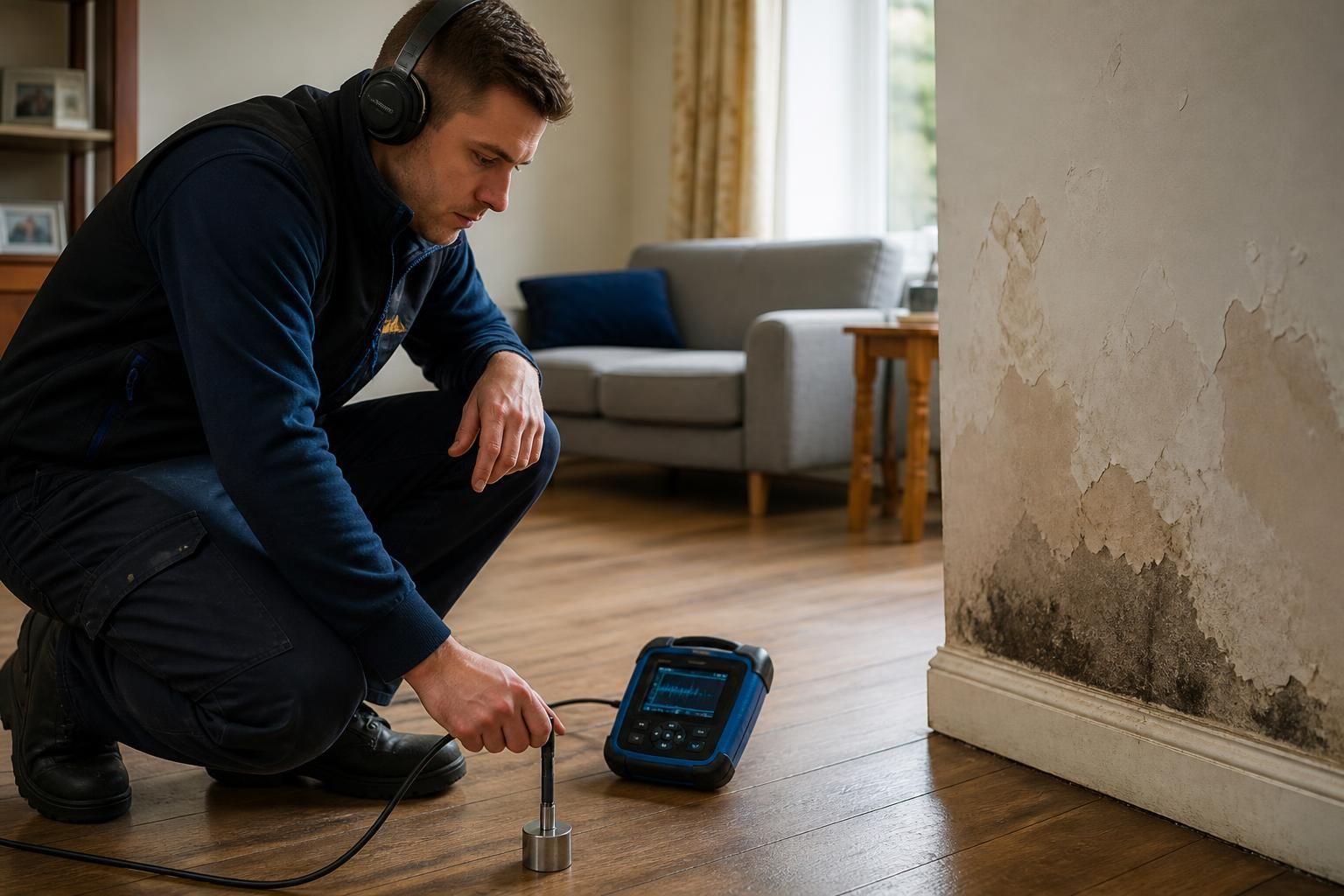
Arrange professional leak detection when there is a reasonable suspicion of water escaping but the source cannot be identified with a straightforward visual inspection. This is particularly important where the suspected leak may be concealed beneath flooring, behind a wall, within pipework or associated with a heating system, because delaying investigation can allow moisture to spread and make repairs more disruptive.
A professional assessment is sensible in the following situations:
- A water meter shows unexpected movement: Turn off taps and water-using appliances, then check whether the meter continues to register use. If it does, a concealed leak may be present.
- A visible leak has an uncertain source: Water can travel along pipework, joists and other building materials, so the point where it appears may not be where it began.
- The same area keeps becoming wet: Recurring moisture after drying or cleaning can indicate that the underlying fault has not been resolved.
- A previous repair has not solved the problem: Further testing can establish whether there is another leak, a related fault or a different source of moisture.
- You are planning building work: Detection before replacing flooring, plaster or fitted units can help avoid covering an unresolved plumbing fault and reduce the risk of damaging pipework during the work.
- You are responsible for a rented property: Landlords and tenants should report suspected leaks and arrange appropriate investigation rather than relying on cosmetic drying or repainting.
It is also worth arranging detection if a leak cannot be safely reached or if checking visible fittings has not provided an explanation. A competent plumber can assess the plumbing layout, establish which systems may be involved and test the relevant pipework. Depending on the circumstances, this may involve pressure checks, acoustic equipment, moisture assessment or thermal methods. The aim is to narrow down the location accurately before repair work begins, rather than removing materials without evidence.
Do not wait for a large visible escape of water before seeking help. Small leaks can gradually affect plaster, timber, flooring, insulation and furnishings. Persistent moisture may also contribute to deterioration and mould growth. Where water is close to electrical equipment, stop using the affected area if it is safe to do so and seek appropriate professional assistance. If water is actively escaping, shut off the internal stop tap where you can do this safely, then arrange plumbing support.
Professional leak detection is different from simply looking for a damp patch. A damp surface can result from a supply pipe, waste pipe, heating pipe, roof defect, condensation or water entering from outside. Testing helps distinguish plumbing-related moisture from other causes and prevents unsuitable repairs. It can also be useful when the visible symptoms are intermittent, as the fault may not be apparent during a brief inspection.
Before the appointment, note when the problem was first noticed, whether it changes when taps or heating are used, which rooms or fixtures are affected and whether any recent plumbing work has taken place. Avoid decorating, sealing or removing flooring around the suspected area until the cause has been assessed. These details can help the plumber select the relevant tests and reduce the risk of obscuring useful evidence.
Ideal Plumbing Services provides leak detection and related plumbing repairs for homes across Birmingham and the wider West Midlands. With over 20 years’ experience, the team can investigate suspected leaks and explain the recommended next step before repair work is undertaken. Ask for the testing approach and charges to be explained clearly, particularly where further access or remedial work may be required.