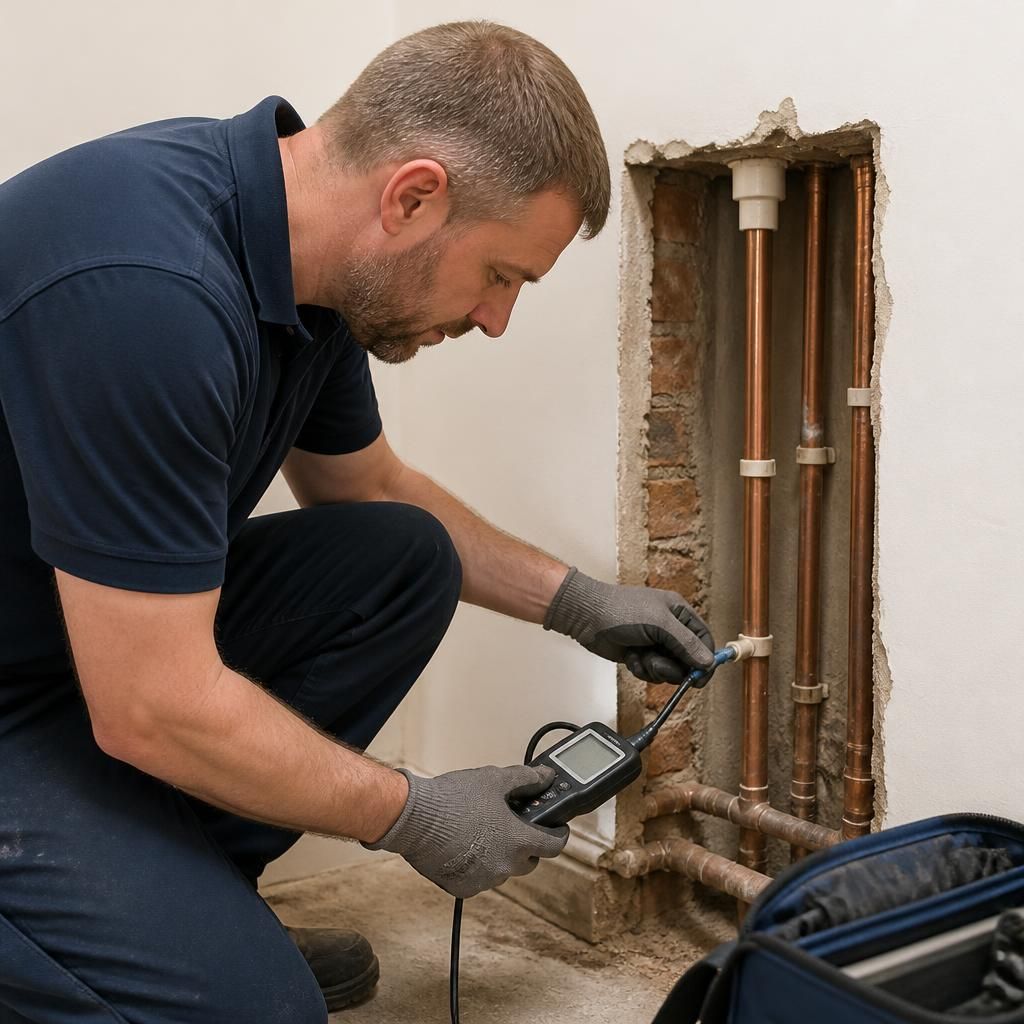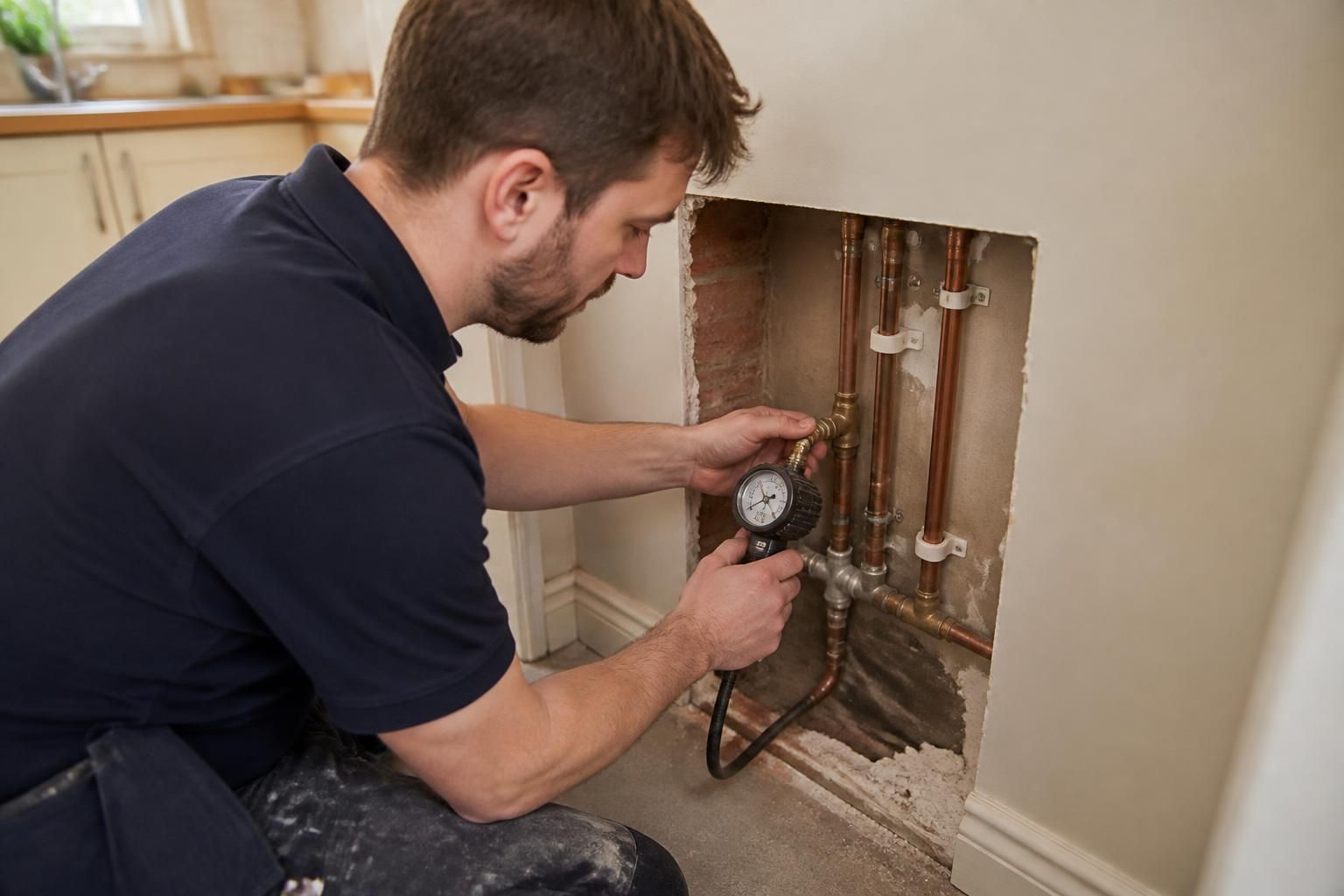
After a hidden water leak has been located, the next stage is to control the water, carry out the appropriate plumbing repair and check whether moisture has affected surrounding materials. Finding the visible source does not always mean the property has fully recovered, so the pipework and the affected area should be dealt with separately.
The plumber will normally establish the safest way to access the defective section. This could involve lifting a small area of flooring, removing part of a cabinet or opening a section of plasterboard. The amount of access required depends on the pipe material, the position of the joint or fitting and whether the damaged component can be removed without disturbing surrounding fixtures.
The repair itself may involve replacing a failed connector, renewing a section of pipe, resealing a joint or repairing a damaged valve. If the pipe is concealed within a wall or floor, the plumber should explain the work involved before access is created. Where the available evidence suggests a wider issue, such as deteriorated pipework or repeated joint failure, repairing only the immediate point may not be the most suitable long-term option.
Once the plumbing work is complete, the opened area may need to dry before it can be closed or redecorated. Flooring, plasterboard, insulation, skirting boards and cabinets can retain water after the leak has stopped. Damp materials may need to be removed, dried or replaced, depending on their condition. Closing a wet cavity too soon can trap moisture and contribute to staining, unpleasant odours, mould growth or further deterioration.
- Hard surfaces: These can often be cleaned and dried, provided they have not warped or become structurally damaged.
- Timber and laminate flooring: These may swell, distort or separate if water has remained underneath them.
- Plasterboard and insulation: Saturated materials may not be suitable for reinstatement and can require replacement.
- Units and fitted furniture: Damage to the base, back panels or fixings should be checked before everything is put back in place.
It is also sensible to keep a record of what was found and repaired. Photographs of the affected area, notes about the defective component and invoices for the plumbing work can help if a buildings or contents insurance claim is being considered. Insurance policies differ, so the policy provider should be contacted for instructions before damaged materials are discarded or extensive reinstatement begins.
In a rented property, the tenant should notify the landlord or managing agent and agree who will arrange access and any subsequent building work. A landlord may need to coordinate the plumbing repair with decorators, flooring contractors or a specialist drying company. Tenants should avoid concealing stains or carrying out permanent repairs themselves, as this can make it harder to establish the original cause and extent of the damage.
After the repair, monitor the area for returning damp patches, a musty smell, bubbling paint, changes in flooring or unexplained movement in the water meter when no water is being used. These signs can indicate retained moisture or another leak nearby rather than a failure of the completed repair. Continued symptoms should be investigated rather than covered with paint or sealant.
Finally, the plumber can explain any practical measures relevant to the installation, such as protecting exposed pipework from impact or freezing, checking accessible isolation valves and replacing ageing fittings during planned maintenance. The aim is not only to stop the immediate escape of water, but also to leave the plumbing system and the affected part of the property in a condition that can be safely maintained.