The disruption caused by an emergency electric shower repair depends mainly on the fault, the condition of the installation and how easily the relevant components can be reached. A straightforward component repair may affect only the shower area, while faults involving the electrical supply, water connections or surrounding wall may require more extensive investigation and reinstatement.
What happens during the repair
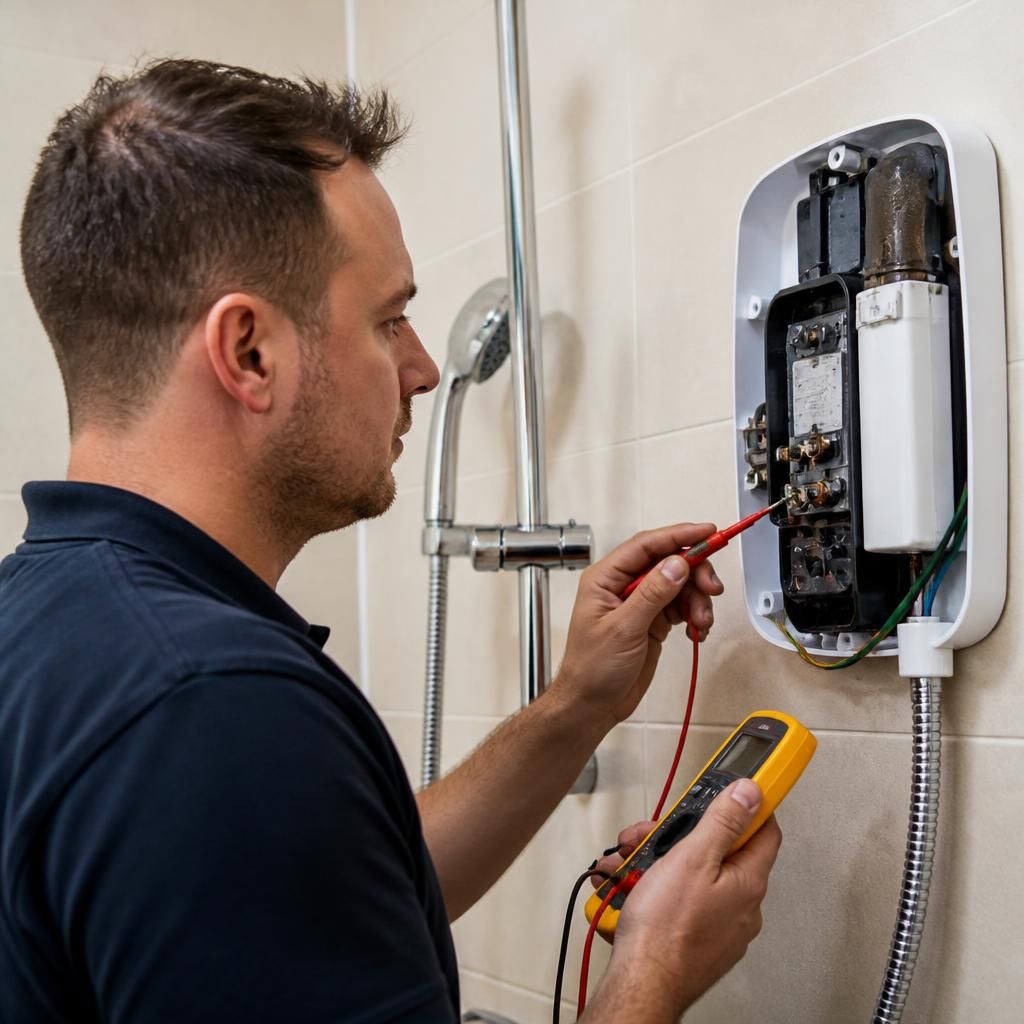
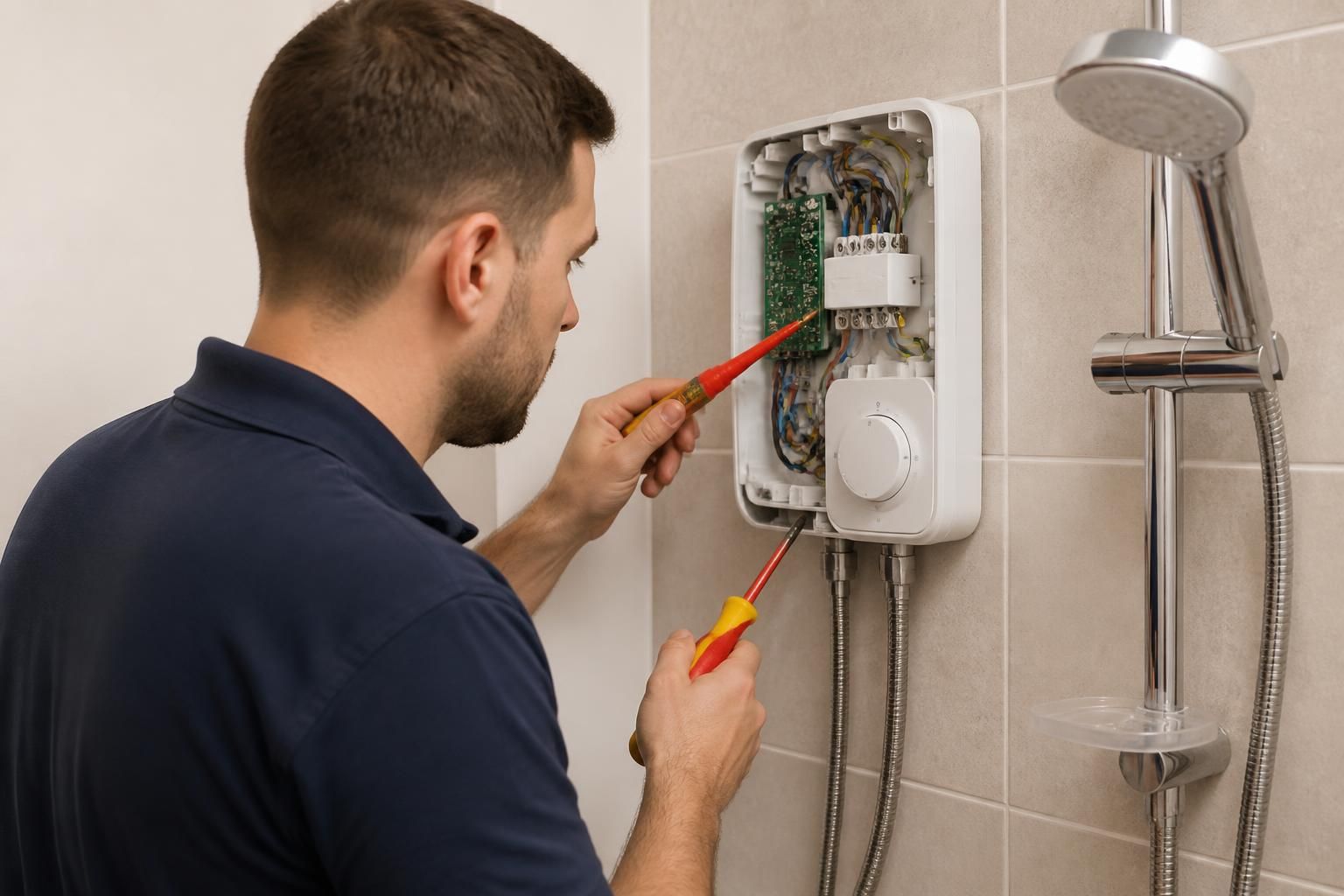
The plumber will normally begin by identifying the symptoms, such as no power, inconsistent temperature, reduced flow, leaks, unusual noises or a tripping circuit. The shower must be made safe before work starts. This can involve isolating the water supply and electrical circuit, removing the cover and carrying out checks on the incoming supply, internal components and connections.
Inspection and testing can create some temporary inconvenience because the shower area may need to remain clear and inaccessible while the work is under way. Towels, toiletries and nearby bathroom items may need to be moved to protect them from dust, water or contact with tools. Keeping the room accessible helps avoid unnecessary delays during diagnosis and repair.
Factors that can increase disruption
- Restricted access: A shower fitted tightly against a wall, enclosure or other bathroom fixtures can make removal and testing more involved.
- Old or damaged connections: Brittle cables, corroded terminals, worn isolator switches or degraded pipe connections may need attention before the shower can be tested safely.
- Problems behind finished surfaces: If inspection indicates an issue within a wall or beneath tiles, careful access may be needed. This can involve removing a small section of covering and arranging suitable making-good work afterwards.
- More than one fault: A shower that appears to have a single failure may also have a supply, flow or control problem. Testing each part prevents a replacement component from being fitted without resolving the underlying issue.
- Parts availability: If the correct replacement component is not available for the existing model, the repair may need to be planned around sourcing the part or assessing whether replacement is more appropriate.
Will the bathroom need to be emptied?
Usually, only the immediate working area needs to be cleared. The shower enclosure, bath or basin may remain in place, but access around the shower unit, pull-cord or isolation switch should be kept unobstructed. Where panels or tiles have to be removed, the affected area should be protected and the work discussed before any alteration is made.
Impact on water and electricity
During the repair, the electric shower should not be used. Depending on the installation, the water supply to the shower or the electrical supply to part of the bathroom may also need to be isolated. This does not necessarily affect the rest of the home's plumbing or electrical system, but the exact scope depends on how the supplies have been installed and whether a wider fault is present.
Electrical checks are particularly important because an electric shower combines a high-power electrical circuit with a water supply. A shower that appears to work intermittently should not be repeatedly switched on to test it. Signs such as scorching, a burning smell, buzzing, damaged insulation or repeated circuit tripping should be treated as reasons to stop using the appliance and seek qualified assessment.
What happens after the repair
Once the fault has been addressed, the installation should be checked for secure connections, correct operation, water flow and safe electrical performance. The shower may need to be run through different temperature or flow settings to confirm that the original problem has been resolved. Any covers, panels or accessible fittings should then be refitted correctly, with leaks and signs of overheating checked before the shower is returned to normal use.
For homeowners, landlords and tenants, it is useful to record what happened before the visit, including error indications, tripped switches, leaks and changes in temperature or flow. Photographs of visible damage can also help explain the problem. Tenants should inform the landlord or managing agent before authorising work that could affect fixed wiring, pipework, tiles or other parts of the property.
Ideal Plumbing Services provides electric shower repair support for residential customers in Birmingham and the wider West Midlands, with the work focused on identifying the cause, limiting unnecessary disturbance and leaving the installation safely tested.