Emergency electric shower repairs do not have a single fixed price. The total depends on the fault, the time needed to diagnose and repair it, the parts required, and whether the installation is safe and accessible. A reliable quote should separate the diagnostic or call-out charge, labour, parts and any additional electrical work before repairs are authorised.
What usually makes up the cost?
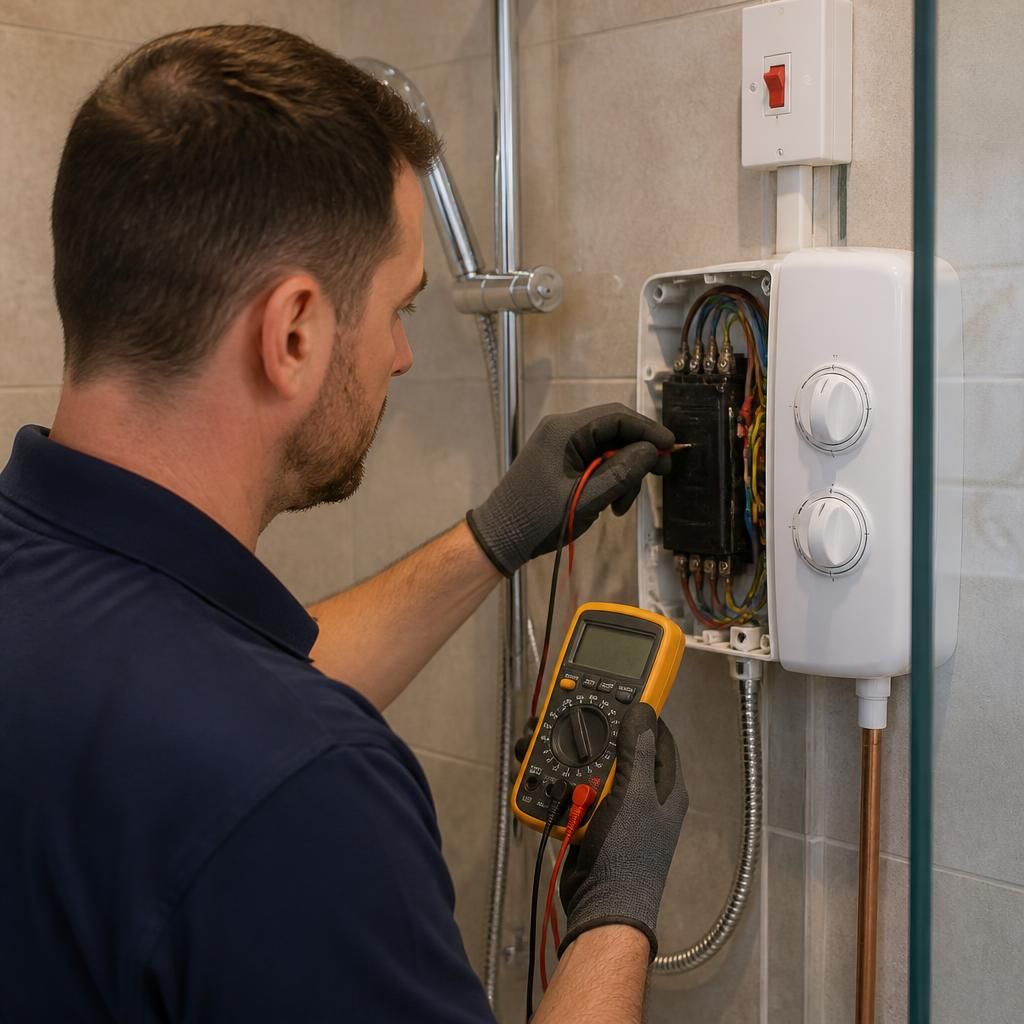
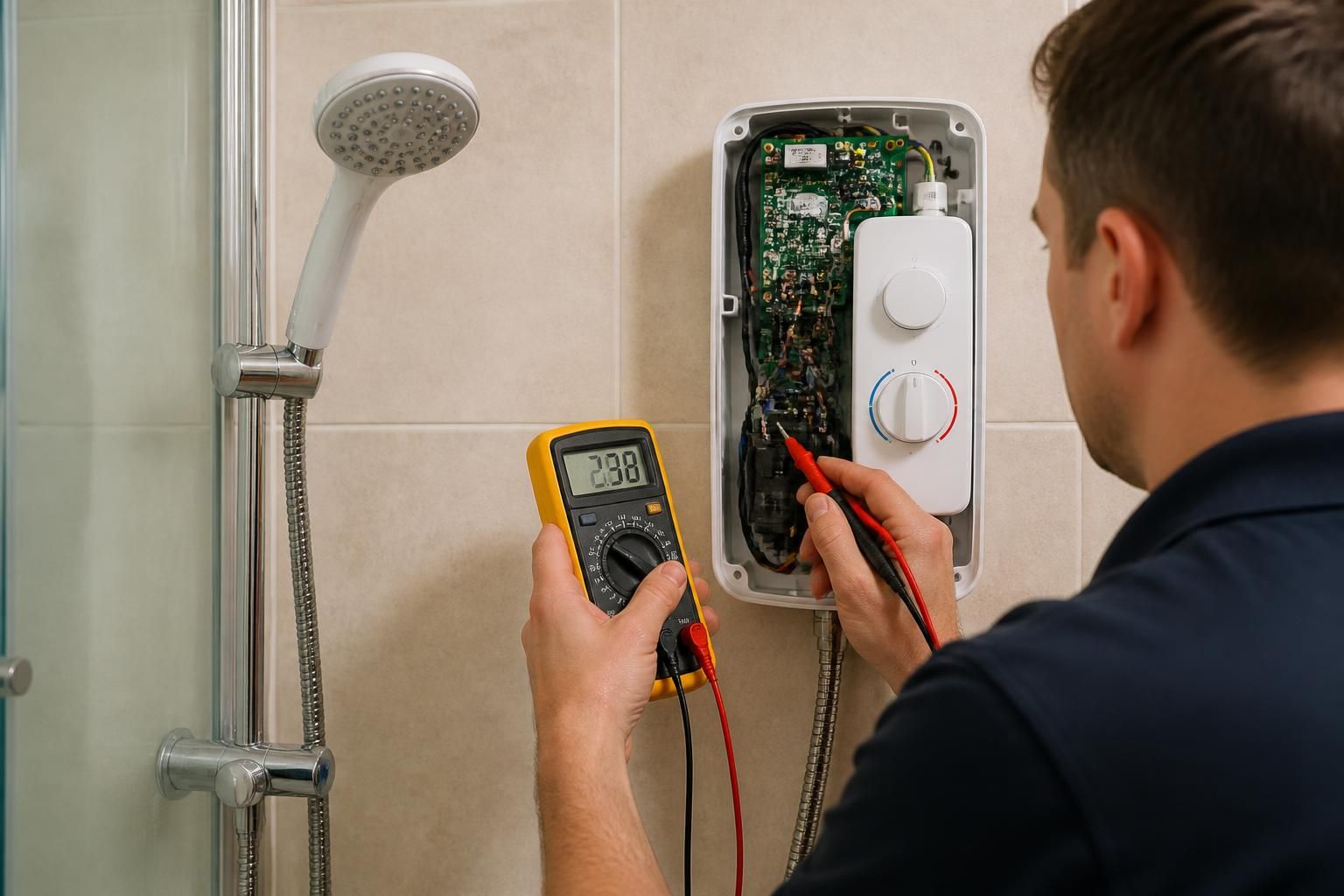
- Inspection and diagnosis: The plumber or qualified electrical professional needs to identify whether the problem is inside the shower, in the water supply, or within the electrical circuit. Some businesses charge separately for this assessment, while others include it within their repair pricing.
- Labour: Labour reflects the complexity of the repair and the time required to remove covers, test components, access pipework or wiring, and safely recommission the shower.
- Replacement parts: Common failed components include heating elements, thermostats, solenoid valves, microswitches and shower control parts. The price varies according to the shower model and whether the required component is readily available.
- Access: A shower that can be safely isolated and opened without removing surrounding tiles or fitted units is generally less involved to repair. Difficult access can increase labour if additional dismantling or reinstatement is needed.
- Electrical safety work: If testing identifies a damaged cable, unsuitable isolation switch, poor connection or another issue with the circuit, that work may need to be completed before the shower can be used safely. It should be treated as part of the repair assessment rather than ignored to keep the initial price lower.
Why the fault matters
A shower that has lost power may have a straightforward component failure, but it could also be affected by a tripped protective device, a loose connection or a fault in the supply circuit. Low water pressure, inconsistent temperature and a complete loss of heating can each point to different causes. A leak may involve the shower casing, inlet connection or nearby pipework. These faults require different amounts of testing and different parts, so a price based only on the symptom can be misleading.
Minor repairs are often more economical than replacing the complete unit when the shower casing, controls and electrical supply remain in good condition. Replacement may be considered when several major components have failed, the unit is obsolete, suitable parts are difficult to obtain, or the cost of repair is disproportionate to the condition and expected remaining service life of the shower. The decision should be based on the inspection rather than on age alone.
What to check before approving the work
- Ask whether the quoted amount includes diagnosis, labour, parts and testing after the repair.
- Check whether VAT is included where applicable.
- Ask what happens if the suspected fault is different once the shower has been opened.
- Confirm whether an additional charge applies if a replacement part has to be ordered or a second visit is needed.
- Request confirmation that the shower and its electrical protection will be tested before it is returned to use.
A clear written breakdown helps you compare repair with replacement and reduces the risk of approving work without understanding the likely total. It is also reasonable to ask whether the recommendation is based on a failed component, a safety concern or the general condition of the unit.
Safety considerations
Do not remove the shower cover or attempt to test internal wiring yourself. If the shower is tripping the electrics, producing a burning smell, making unusual buzzing noises, showing signs of scorching or leaking near electrical components, stop using it and isolate the circuit only if you can do so safely. Continuing to use a faulty electric shower can worsen the damage and create an electrical hazard.
Ideal Plumbing Services provides electric shower fault diagnosis and repair for residential customers in Birmingham and the West Midlands. The recommended repair and its cost should be explained after the installation has been assessed, with any necessary replacement or safety work identified before it begins.