Preparing for an electric shower repair means making the area safe, recording useful information and ensuring the plumber can inspect the shower and its associated controls without obstruction. Good preparation helps distinguish between a fault in the shower unit, a water-supply problem and an electrical issue elsewhere in the installation.
Make safety the priority
- Do not use the shower if there is a burning smell, smoke, sparking, a damaged casing, exposed wiring or water entering electrical parts.
- Do not remove the shower cover, test internal components or attempt to tighten electrical connections. Electric showers contain mains-voltage parts, and internal work should be carried out by a suitably qualified professional.
- Keep children and other household members away from the shower until it has been assessed.
- If the fault is associated with a leak, avoid touching electrical equipment while standing on a wet floor. Only operate valves or electrical controls if they are clearly accessible and safe to use.
Prepare useful information
Write down the shower’s make and model if this information is available on an external label, instruction booklet or installation paperwork. Do not remove the casing to find it. It is also useful to have details of the property’s recent plumbing or electrical work, any known water-supply issues and whether the shower has been repaired or serviced previously.
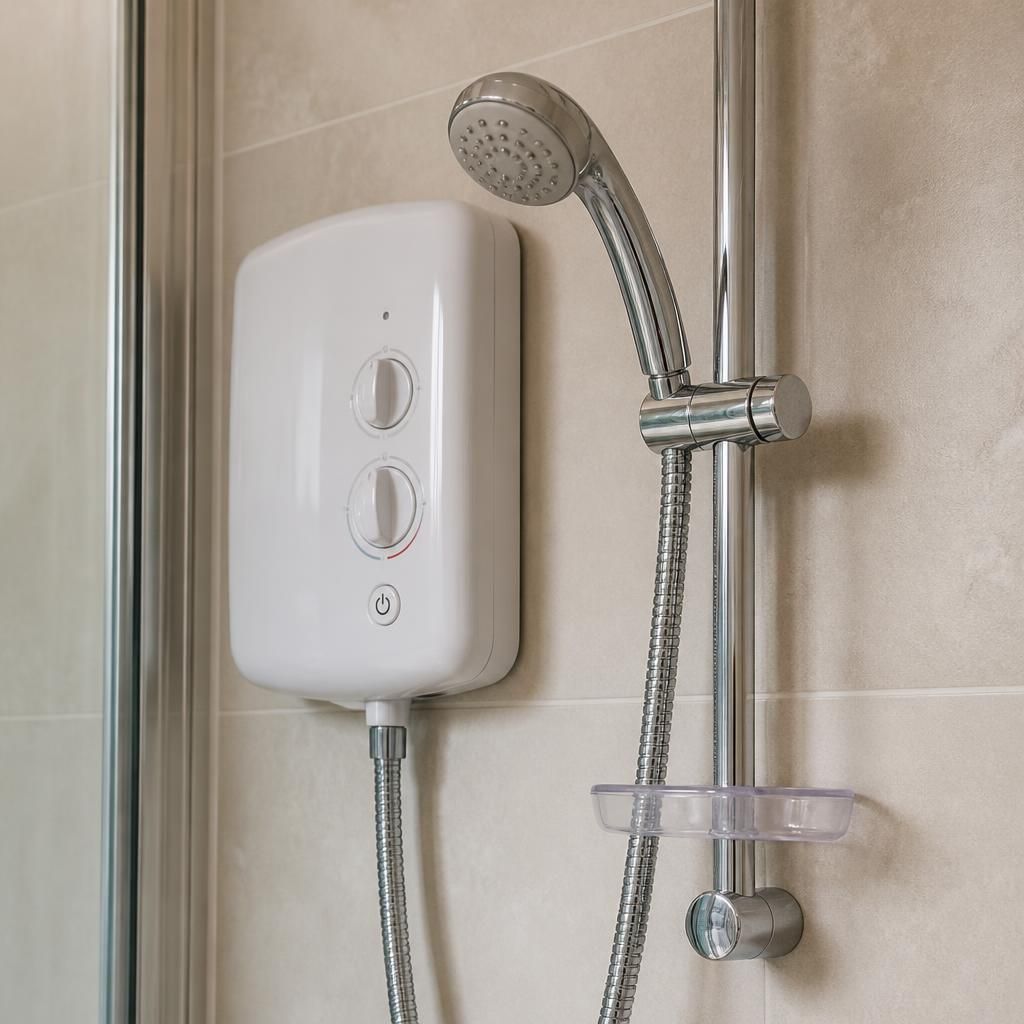
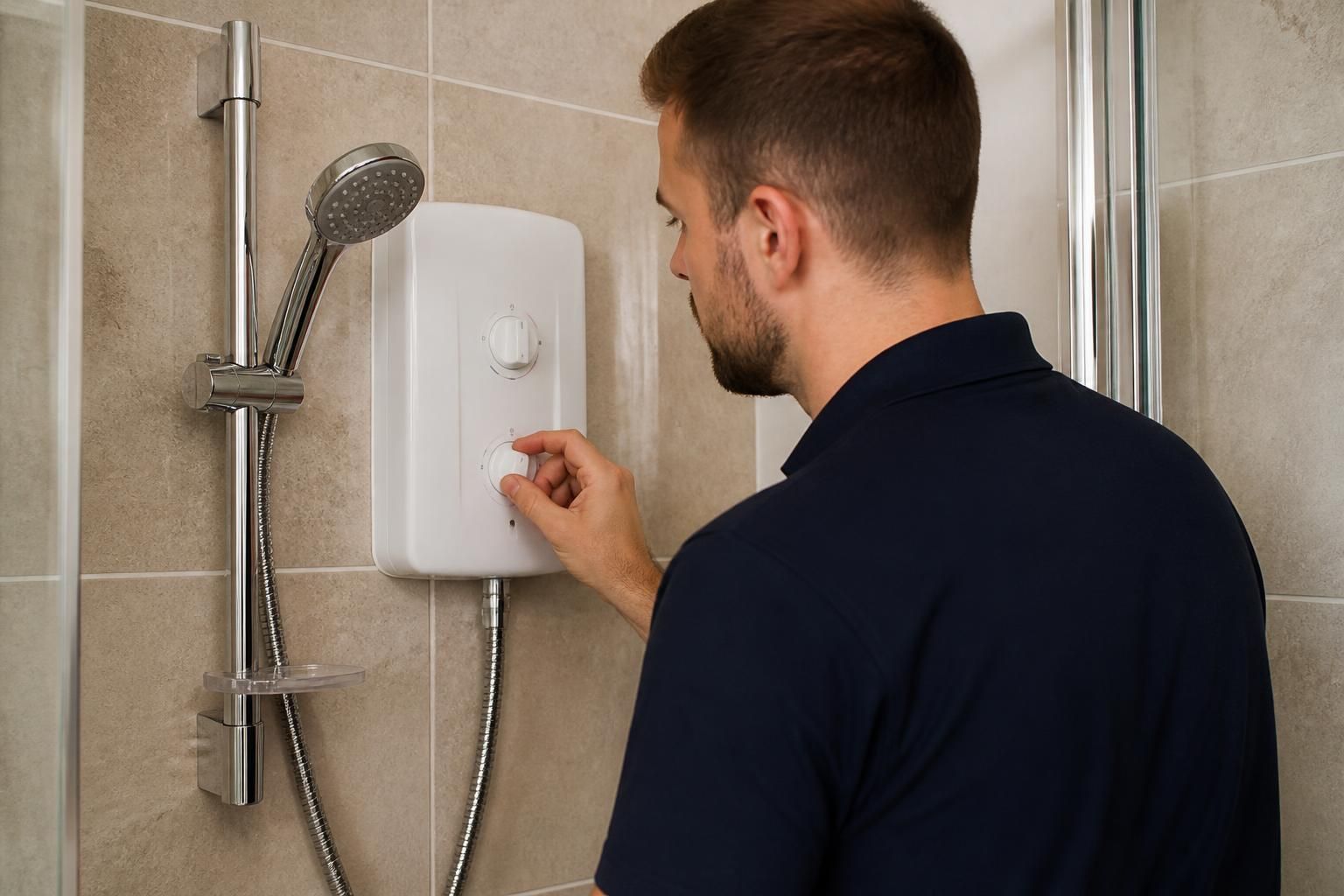
Take a photograph of the shower and its visible controls if this can be done safely. A clear image may show the type of unit, control arrangement and any visible damage. Do not take photographs inside the casing or touch the installation to do so.
Make the working area accessible
- Remove toiletries, shower accessories and loose items from around the unit.
- Keep the bathroom floor as dry as possible and move mats, laundry and other belongings away from the work area.
- Make sure the consumer unit, electrical isolation point and relevant plumbing valves can be reached if the plumber needs to inspect them.
- Tell the plumber about concealed pipework, recent bathroom alterations or areas where drilling or access may be restricted.
Do not dismantle fixed panels or bathroom fittings before the visit. The plumber can advise whether access panels need to be removed and whether doing so could affect waterproofing, tiling or the surrounding installation.
Have property and installation details ready
For a rented property, check whether the landlord or managing agent needs to approve the repair and have their contact details available. The plumber may also need information about the age of the shower, the date of the bathroom installation and whether the electrical supply has been altered. If the shower is covered by a manufacturer or installation warranty, keep the relevant documents available and avoid unauthorised repairs that could affect its terms.
What the plumber may need to check
An electric shower repair may involve inspection of the unit, water inlet, shower hose and handset, isolation arrangements, cable connections and the protective electrical equipment serving the shower. The plumber may need to carry out electrical safety checks and confirm that the supply and water flow are suitable for the unit. These checks can identify whether repairable components are at fault or whether a wider installation issue needs attention.
Keep any questions ready, including whether the fault is likely to require a replacement component, whether the shower can remain in service after the repair and whether any follow-up work is recommended. Ask for an explanation of the identified fault and any work proposed before authorising additional repairs.
If there is active water ingress, visible electrical damage or evidence of overheating, state this when arranging the visit and do not operate the shower while waiting for professional advice. Avoiding further use and providing accurate information gives the plumber a safer starting point for assessing the installation.