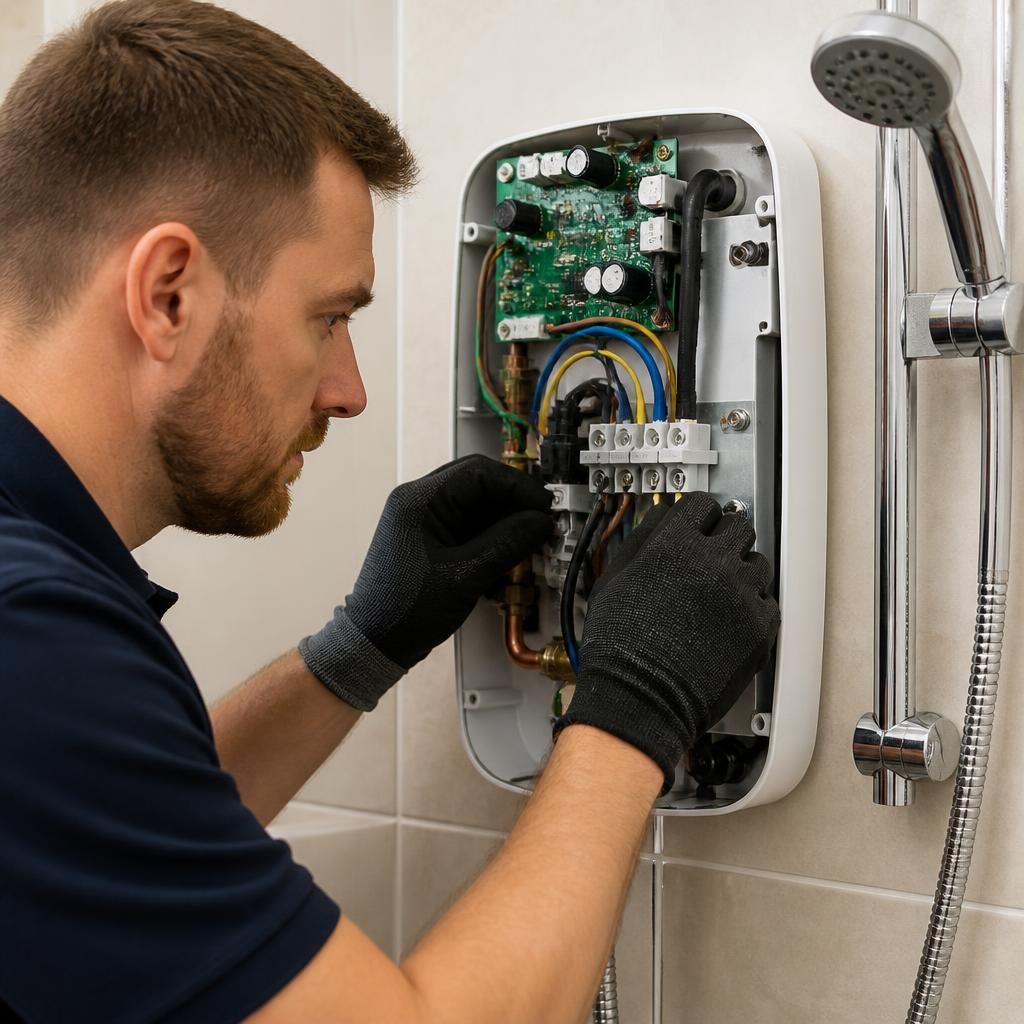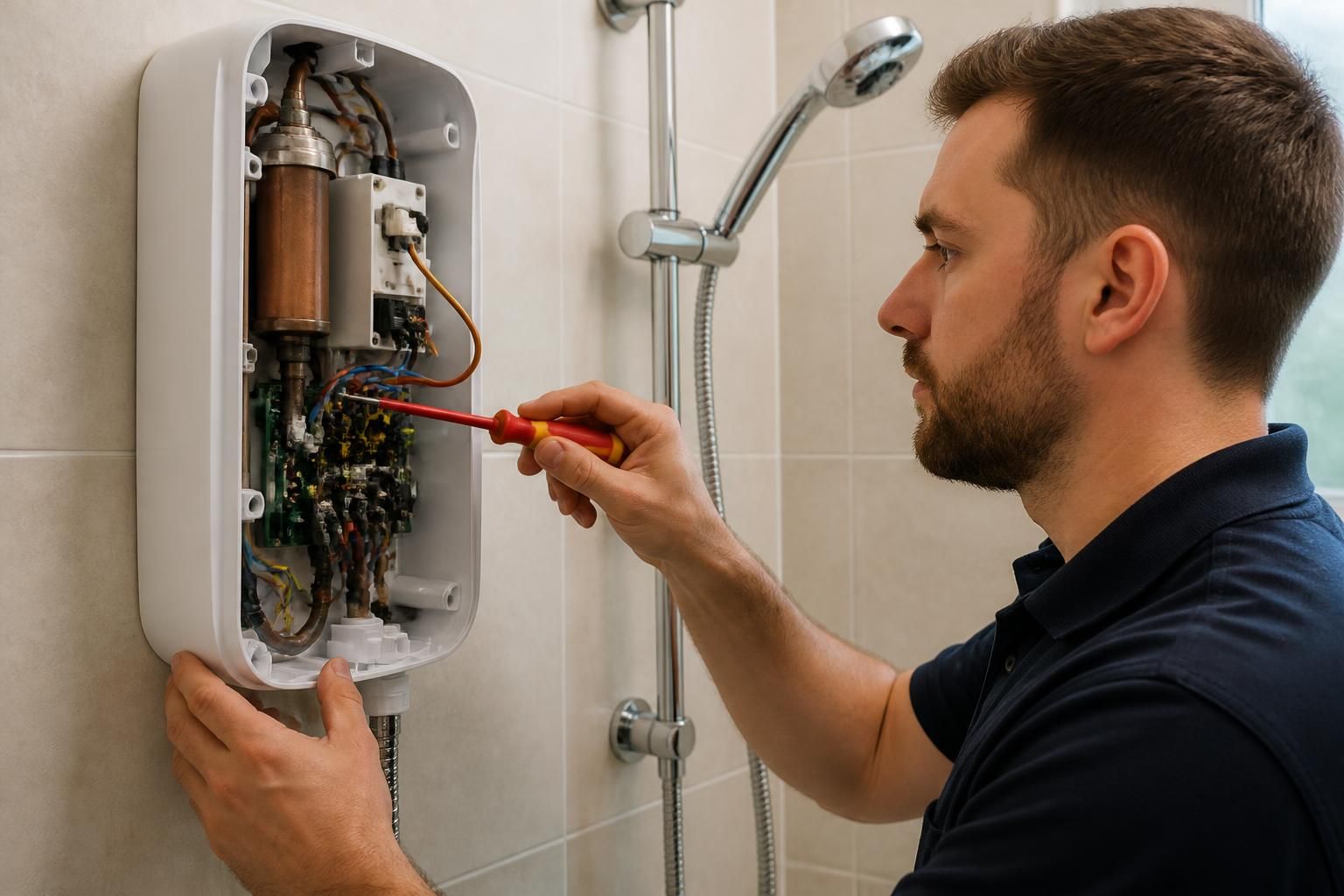
Replacement is generally the better option when an electric shower cannot be returned to safe, dependable operation at a reasonable repair cost. The decision should be based on the condition of the whole unit, not just the fault that is visible at the time. A qualified plumber or electrician can assess the shower, its electrical supply, water connections and installation before recommending repair or replacement.
Repair is usually appropriate when:
- the fault can be traced to a single serviceable component, such as a control, solenoid valve, microswitch or heating element;
- the casing, wiring terminals and internal connections are in sound condition;
- the unit operates safely once the failed part has been changed;
- replacement parts are suitable and available; and
- the shower’s output and controls remain suitable for the household’s needs.
A repair may therefore be sensible where the shower has otherwise been dependable and the underlying installation is correctly protected. The engineer should also check whether the fault has been caused by another issue, such as restricted water flow, a poor connection, a tripped protective device or a problem with the shower cable. Replacing one component without identifying the underlying cause can lead to another failure.
Replacement becomes more practical when the cost and uncertainty of continued repairs outweigh the value of keeping the existing unit. This can happen when several parts are deteriorating, the shower has developed faults in different areas, or a previous repair has not provided a lasting solution. A replacement is also worth considering where the available parts are obsolete, difficult to source or no longer supported by the manufacturer. In those circumstances, repairing the immediate symptom may leave the shower vulnerable to further problems.
The condition of the electrical installation is just as important as the shower itself. Signs such as heat damage, burnt terminals, discoloured cable, a damaged pull cord, repeated tripping or evidence of water reaching electrical components require the shower to be isolated and assessed before it is used again. The protective devices, cable size, isolation switch, earthing and bonding should be checked as part of the work. A new shower must not simply be connected to an unsuitable existing installation.
Water performance can also influence the decision. Poor temperature control, fluctuating heat, weak flow or failure to maintain a steady supply may result from a faulty component, but can also indicate restrictions, unsuitable water pressure or an installation problem. If those conditions are not addressed, fitting another shower may not resolve the complaint. Diagnosis should establish whether the issue lies within the appliance or elsewhere in the system.
When comparing the options, ask for the assessment to distinguish between the immediate repair and any recommended remedial work. Consider the part, labour, testing and the possibility of further age-related faults rather than comparing only the price of a component with the purchase price of a new unit. Replacement may offer a clearer long-term solution where repair would require several parts or repeated visits, while a straightforward, properly tested repair may avoid unnecessary replacement.
There are also practical reasons to replace a shower even when repair is technically possible. A newer unit may provide controls that better suit the users, a more appropriate power rating or improved compatibility with the existing water supply. However, the replacement must be selected for the property’s electrical capacity and water conditions. The installer should confirm that the circuit and protective arrangements are suitable before fitting it.
For a rented property, the tenant should report the fault to the landlord or managing agent rather than arranging an alteration without permission. The landlord can then approve the repair or replacement and ensure that any electrical work is completed and documented appropriately. Homeowners should keep records of the assessment, parts fitted and test results, particularly where the shower forms part of a wider bathroom electrical installation.
Before deciding, stop using the shower if there is a burning smell, visible damage, unusual noise, leaking near electrical parts, repeated loss of power or an inability to control the temperature safely. Do not remove the cover or attempt to bypass a safety device. An assessment by a suitably qualified professional will establish whether repair is proportionate or whether replacement is the safer and more reliable course.