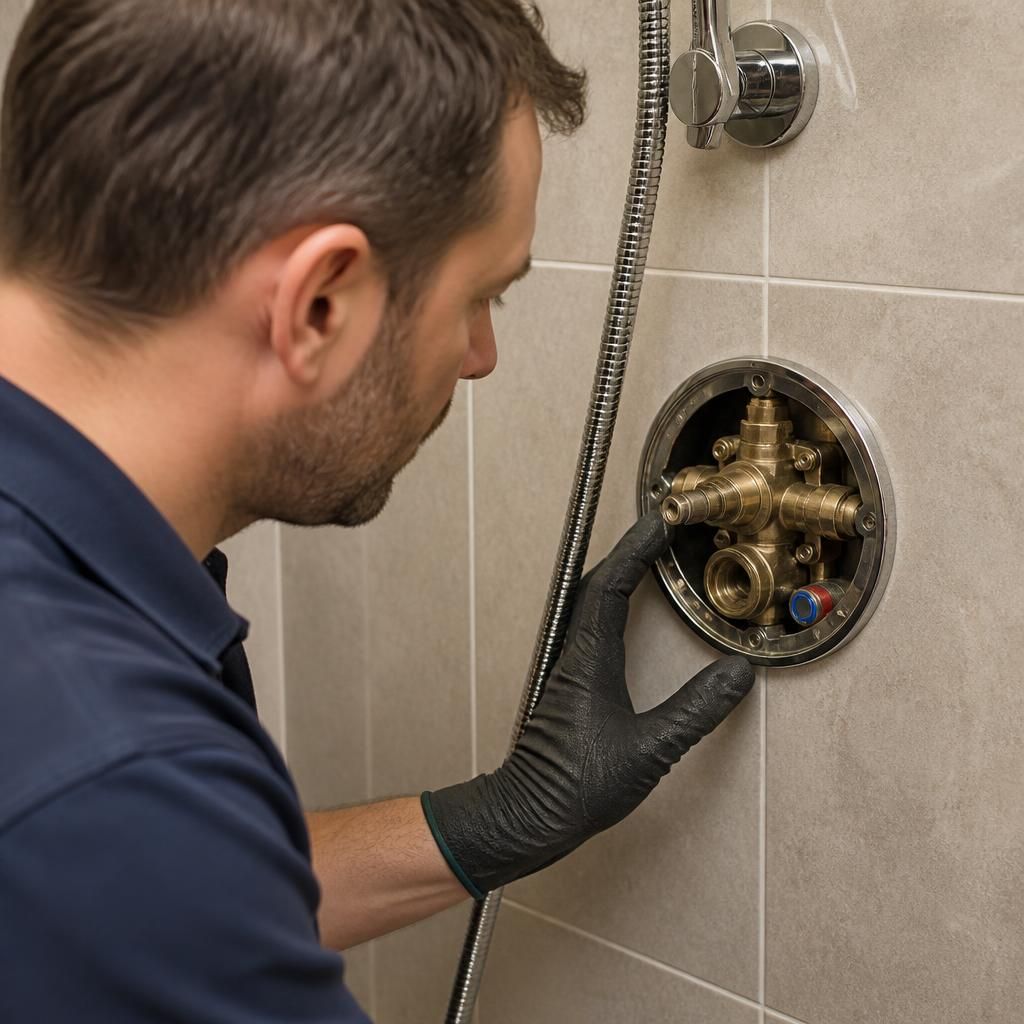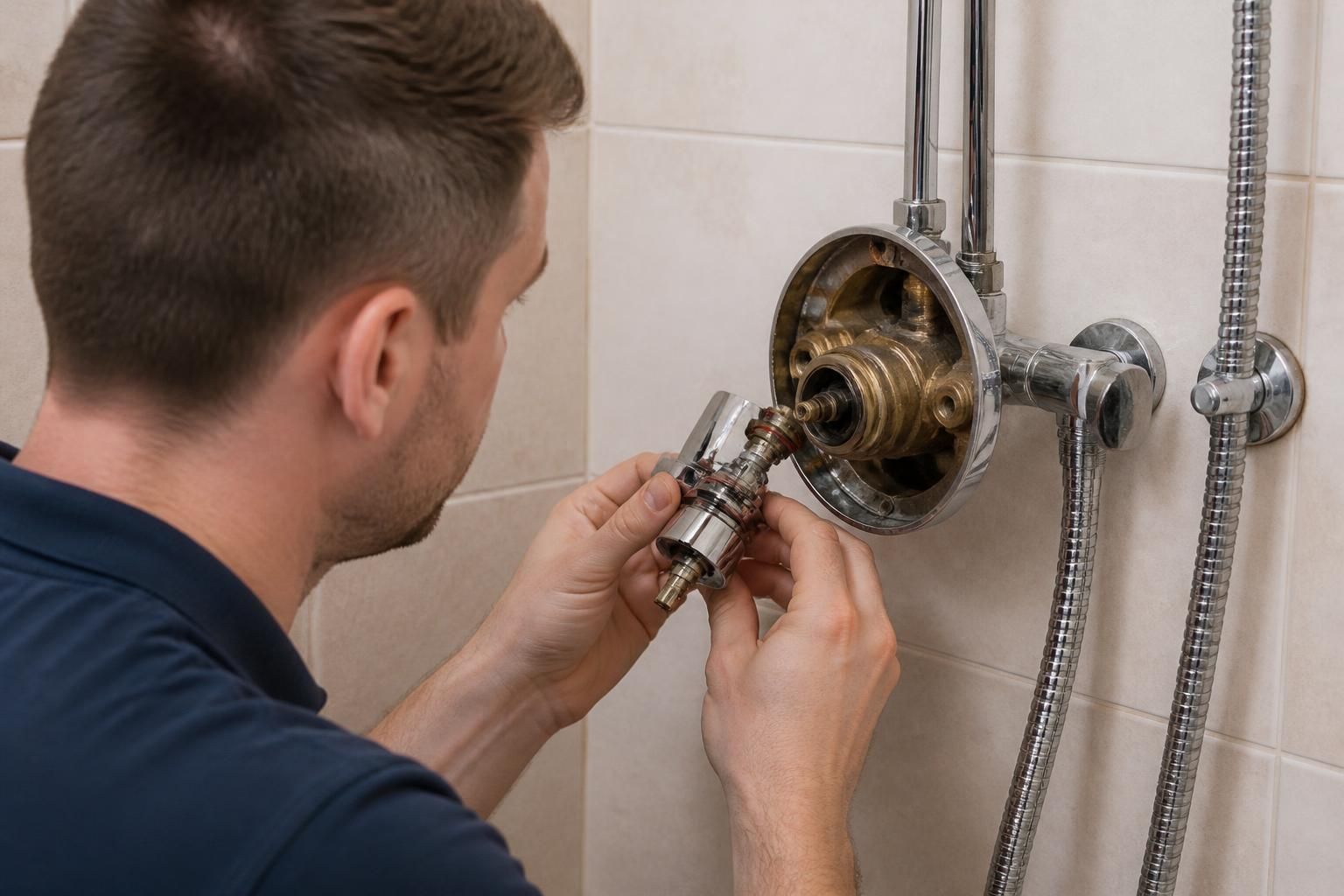
An exposed shower valve is generally suitable for component-level repair because the working parts can be accessed without opening the wall. The repair may involve removing the handle and trim, servicing the cartridge or thermostatic element, replacing seals, or correcting a connection while retaining the existing valve body and external pipework.
The first step is to identify whether the fault is mechanical, hydraulic or related to the water supply. Common repairable faults include:
- Dripping from the shower outlet: often associated with a worn cartridge, valve seat, washer or seal.
- Temperature that fluctuates: may result from a worn thermostatic cartridge, restricted strainers, unbalanced supplies or changes in hot-water performance.
- A stiff or difficult control: can be caused by scale, damaged internal components or a deteriorated spindle seal.
- Water escaping around the controls: commonly points to failed O-rings, gland seals or a problem where the spindle passes through the valve body.
- Leaks at the pipe connections: may be resolved by renewing sealing components or correcting the joint, provided the connection itself is serviceable.
With an exposed valve, a plumber can usually inspect the controls, unions, inlet connections and surrounding fittings directly. This makes it possible to distinguish a faulty replaceable part from a problem with the valve body or the installation. Testing should include the shower at different temperature and flow settings, alongside checks for leaks when the controls are operated.
Replacement parts must match the valve's design and dimensions. A cartridge that appears similar may have a different length, spline pattern, temperature-control arrangement or flow path. Thermostatic valves also need suitable strainers and correctly functioning hot and cold supplies. Fitting an incompatible part can leave the shower leaking, difficult to control or unable to regulate temperature properly.
Repair is less straightforward where the valve has severe scale contamination, damaged threads, distorted connections or internal wear that prevents a replacement component from sealing. In these cases, repeatedly changing seals or cartridges is unlikely to provide a dependable result. The condition of the surrounding pipework also matters, particularly where movement or corrosion has placed stress on the valve.
Do not force a seized handle or continue using a shower that is leaking into the wall or around a connection. Isolating the water supply, where this can be done safely, can limit further damage while the fault is assessed. A leaking exposed valve should be examined before parts are ordered, as the visible symptom does not always identify the failed component.
Ideal Plumbing Services can assess exposed shower valves in homes, rented properties and other residential settings across Birmingham and the West Midlands. The inspection can establish whether a targeted repair is appropriate, which parts are required and whether the existing installation is suitable for continued use.