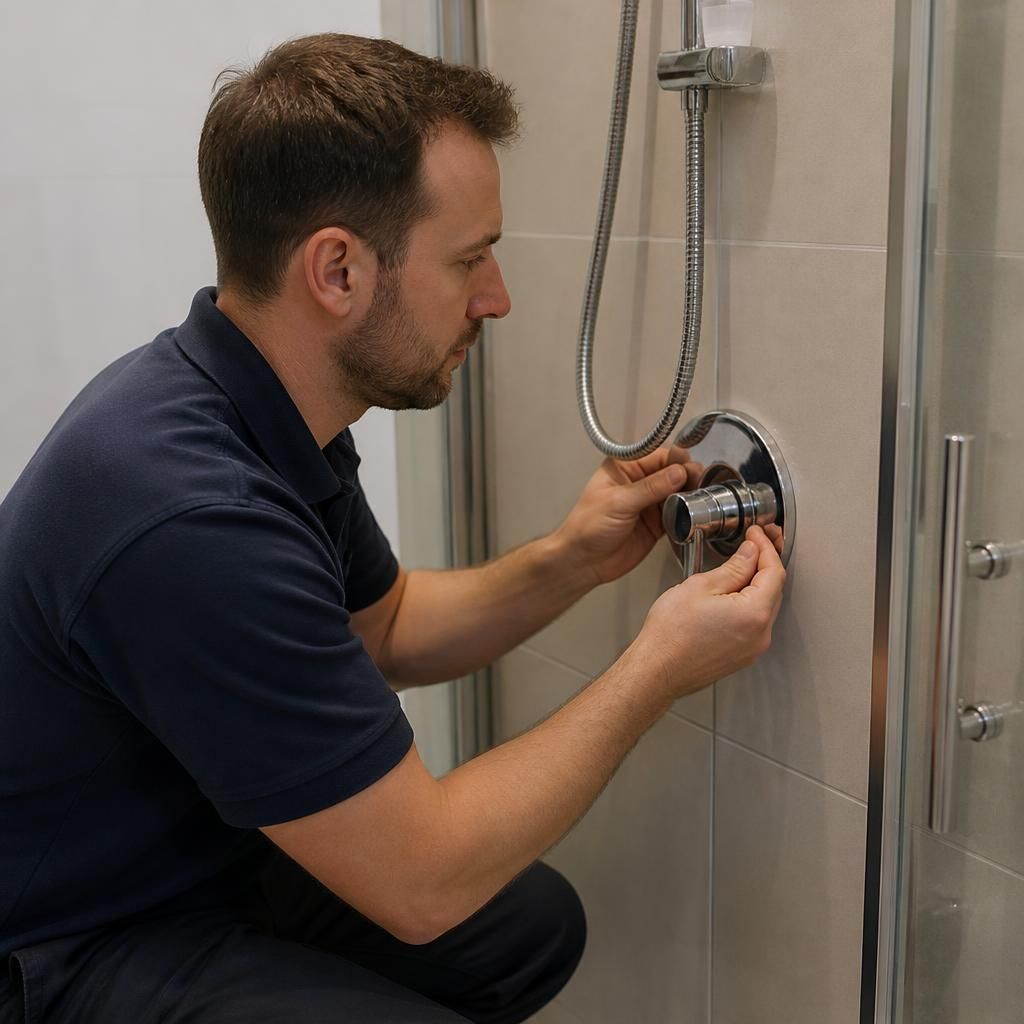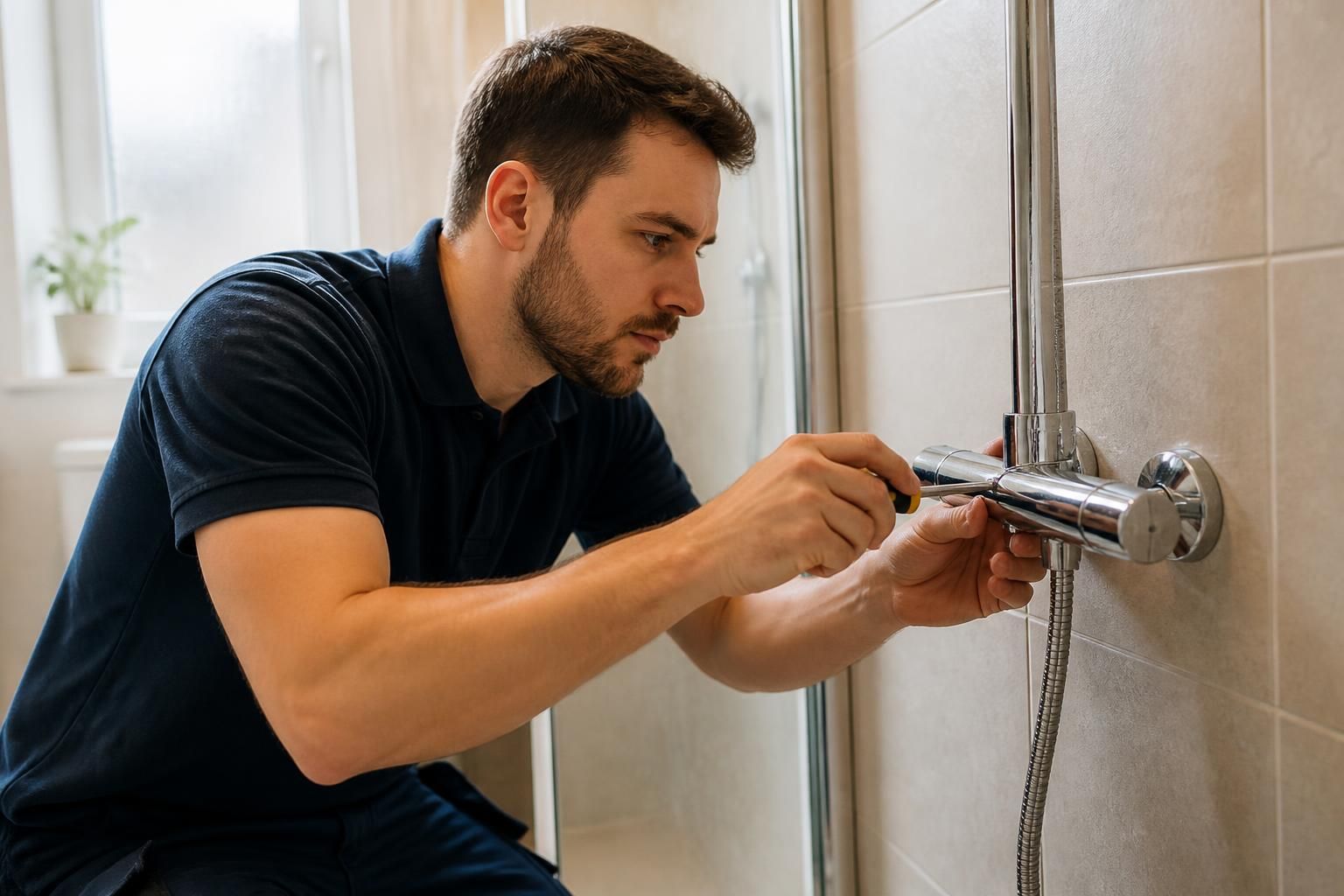
In a rented property, a shower valve repair should normally be organised through the person responsible for the property’s plumbing rather than commissioned independently by the tenant. The tenancy agreement and the cause of the fault are important when deciding who arranges the work and who pays for it.
Check the tenancy agreement first. The agreement may explain how plumbing faults must be reported, whether the landlord uses a nominated contractor, and which minor repairs fall to the tenant. A landlord or letting agent may also need to approve the repair before a plumber attends, particularly where the work involves opening a wall, removing tiles or changing part of the shower installation.
Report the symptoms clearly. A useful report should state whether the shower is leaking, difficult to turn, stuck at one temperature, producing inconsistent water temperatures or failing to shut off fully. Include photographs or a short video if it is safe to do so. Details such as water escaping from the handle, trim plate or pipe connections can help distinguish a worn cartridge from a failed seal or concealed leak.
Tenants should avoid dismantling the valve without permission. Shower valves can include thermostatic cartridges, flow controls and small seals that are easily damaged during removal. An attempted repair can also make it harder to establish whether the original fault was due to normal wear or accidental damage. Do not continue using the shower if water is entering the wall, ceiling or electrical fittings.
Responsibility may change if the tenant caused the damage. Normal deterioration of a fixed shower fitting is generally considered a property maintenance issue, while impact damage, unauthorised alterations or forcing a seized control may be treated differently. The tenancy agreement and evidence about the fault will usually be considered before a charge is assigned.
Once approval has been given, a plumber can assess whether the valve can be repaired in place. Common work includes replacing a cartridge, renewing seals, correcting a loose connection or repairing the control mechanism. If the valve body is cracked, badly corroded or incompatible with the existing pipework, replacement may be more appropriate. A repair should not be selected solely because it is the smallest visible job; the underlying cause and the condition of connected components also matter.
For landlords and agents, keeping a written record of the report, inspection and completed work is useful. The record can confirm what was found, identify any parts replaced and show whether further investigation is recommended. Tenants should retain copies of their messages and any permission received, especially if the repair affects fixtures, finishes or access to other parts of the property.
Ideal Plumbing Services can assess shower valve faults for rented homes across Birmingham and the wider West Midlands. The inspection can help landlords, agents and tenants understand whether a repair is suitable and what information should be recorded before work goes ahead.