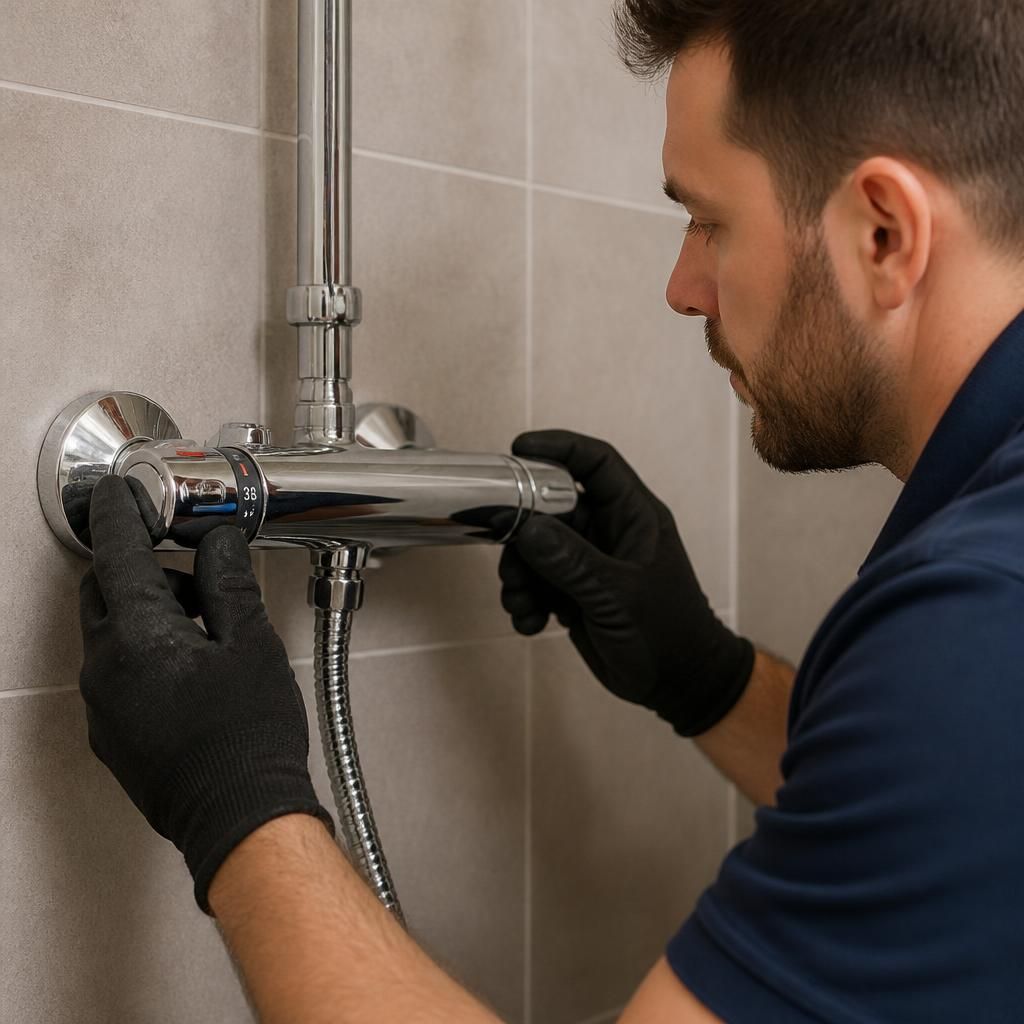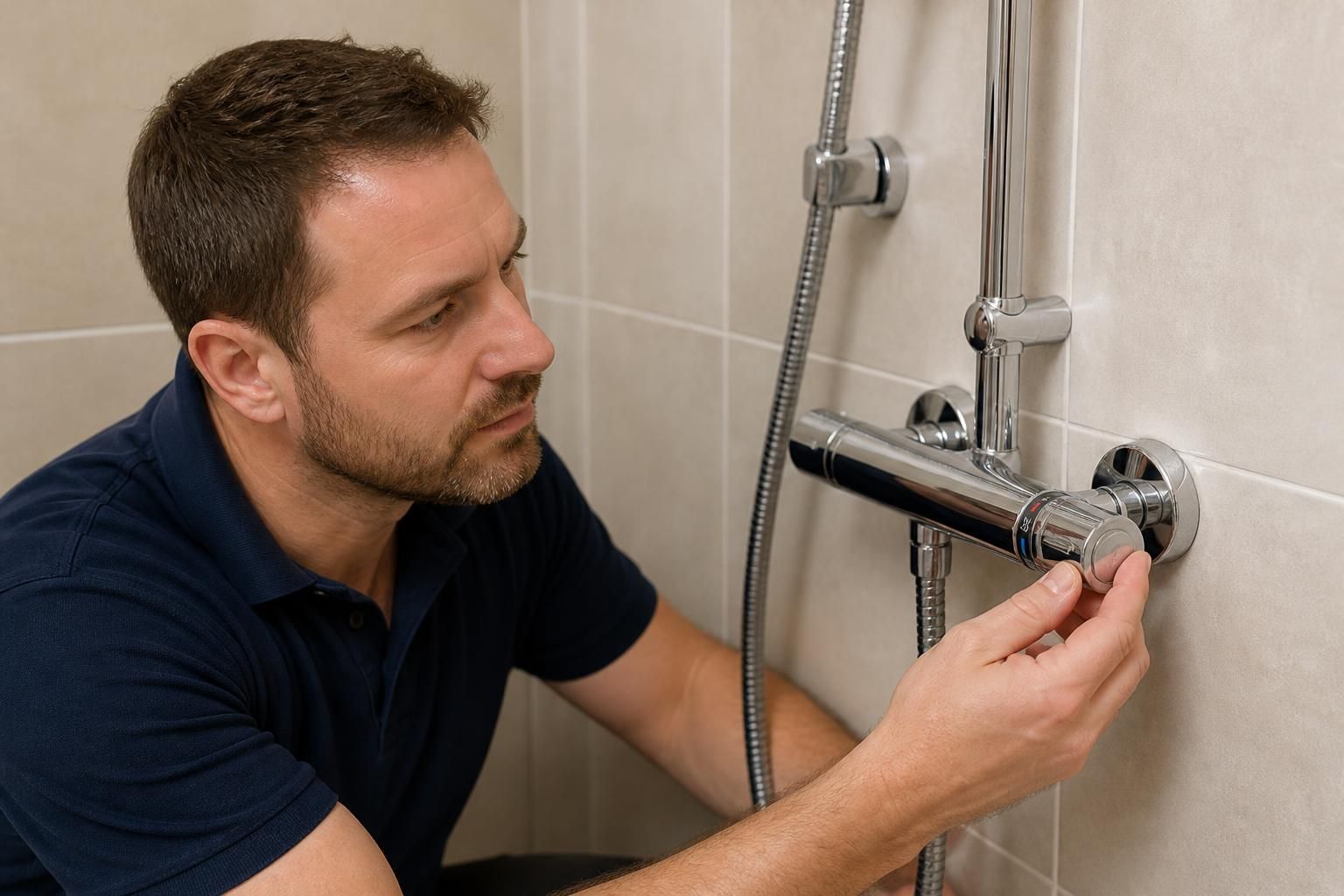
The clearest indication that a thermostatic shower valve needs repair is a persistent fault in how it regulates or balances the water supply, especially when the problem remains after checking the shower’s basic settings and other taps. A plumber can test the valve, its internal cartridge and the connected filters or check valves to establish whether the fault is within the mixer or elsewhere in the property’s plumbing system.
Look for changes in the control setting. On a correctly operating thermostatic valve, the temperature markings should provide a reasonably consistent reference point. The water may take a short time to settle after the shower is turned on, but the selected setting should then correspond broadly with the temperature delivered. A valve may need attention if:
- the temperature no longer matches the numbered or marked settings;
- the temperature control turns but has little or no effect;
- the shower takes an unusually long time to stabilise;
- the water becomes noticeably hotter or colder when another fitting is used; or
- the shower stops regulating correctly after the water supply has been interrupted.
These symptoms can point to a worn or obstructed thermostatic cartridge, restricted inlet filters, a failed non-return valve or a problem with the valve’s internal seals. Limescale and debris can prevent moving parts from responding accurately, while wear can reduce the cartridge’s ability to balance hot and cold water as pressure changes.
Check whether the fault is limited to the shower. If hot water is absent from several taps, the issue may involve the hot-water system or the property’s supply rather than the shower valve itself. If other outlets work normally but the shower remains unreliable, the mixer becomes a more likely source. A plumber will also consider whether the hot and cold feeds have suitable pressure and whether a restriction in one inlet is affecting the valve’s operation.
Inspect for signs of a leak. Moisture around the valve body, water emerging from a joint, or continued water flow after the shower has been switched off can indicate damaged seals, connections or internal components. Do not remove the valve cover or loosen pipework while the supply is pressurised. Water behind a wall or around a concealed valve can cause damage that is not immediately visible, so the shower should be isolated and assessed if a leak is suspected.
Do not ignore a scalding risk. A thermostatic valve is intended to help prevent unsafe temperature changes, but it cannot do so reliably when its regulating parts are damaged or obstructed. If the shower delivers unexpectedly hot water, isolate it where possible and avoid using it until the cause has been checked. This is particularly important in homes used by children, older people or anyone who may find it difficult to react quickly to a temperature change.
A simple external check can help describe the problem to a plumber. Note whether the fault occurs every time or only after another tap, toilet or appliance is used; whether it affects the whole shower or only one outlet; and whether the issue began after plumbing work, a supply interruption or cleaning of the shower head. Do not force the controls or dismantle the cartridge, as this can damage the valve or make the fault harder to diagnose.
Repair is often considered when the valve body and pipe connections remain sound but an internal component, filter, seal or cartridge is faulty. Replacement of the complete mixer may be more appropriate if the body is damaged, heavily corroded, incompatible with the existing pipework or no longer capable of being serviced. The correct option depends on the valve design, access to its parts and the condition of the surrounding plumbing.
Ideal Plumbing Services can inspect thermostatic shower valve faults for homeowners, landlords and tenants in Birmingham and across the West Midlands. A proper assessment should identify the underlying cause rather than treating only the visible symptom, helping determine whether cleaning, a component repair or a replacement valve is the most suitable solution.