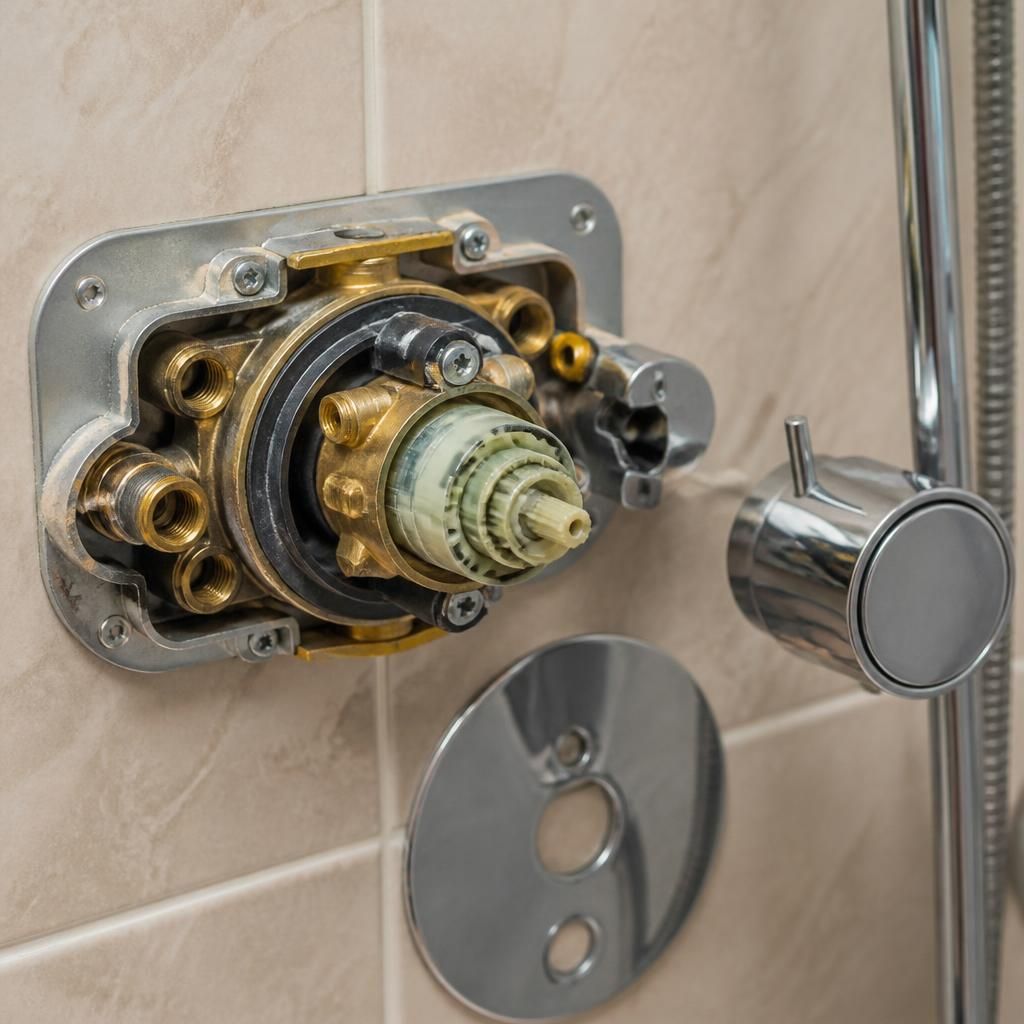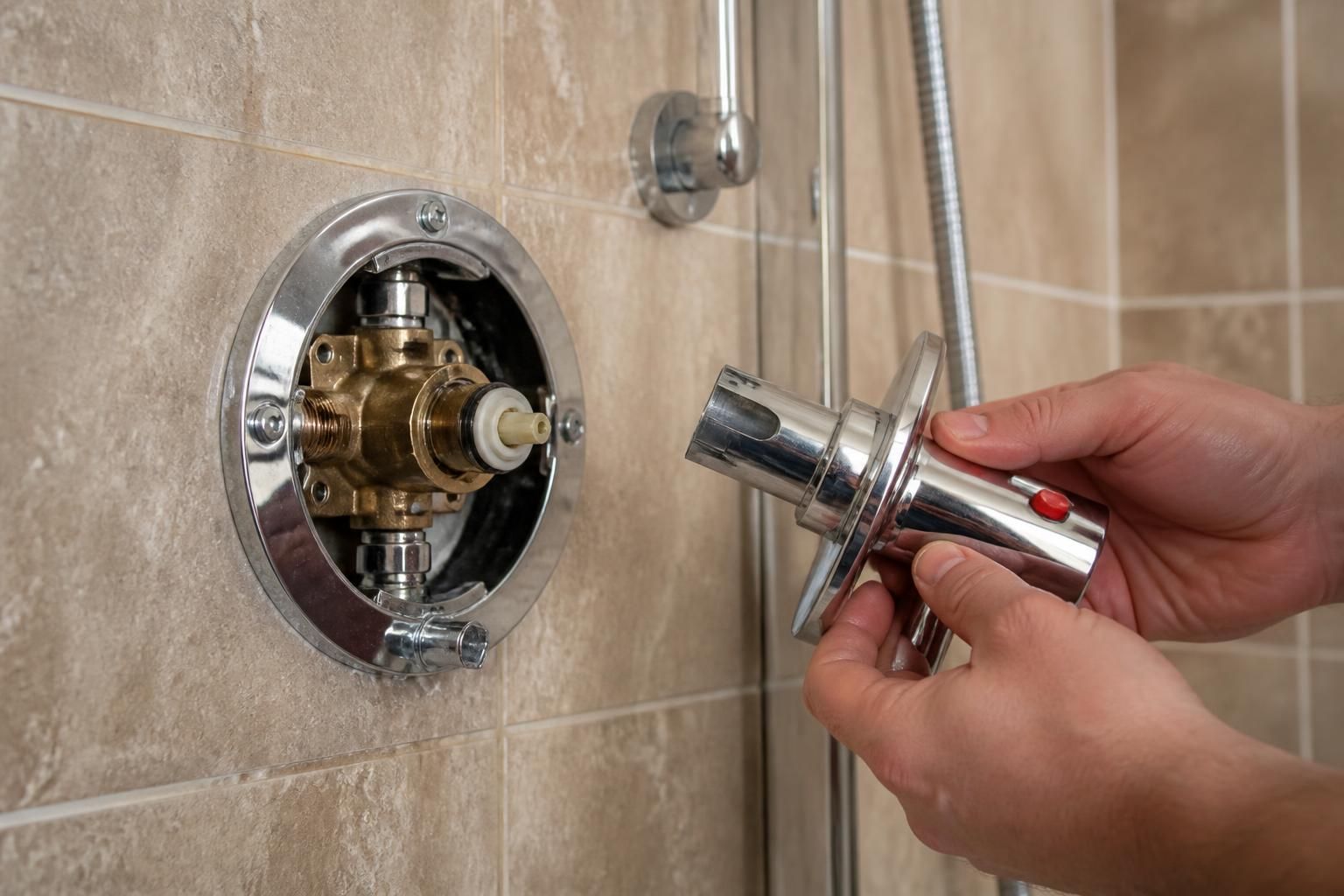
There is no single standard price for an emergency shower valve repair. The final cost is usually determined by the fault, the type and condition of the valve, the parts needed, and how easily the plumber can reach the fitting. A professional should diagnose the problem before confirming whether repair is practical and what the work will cost.
What an emergency shower valve repair price may include
- Inspection and fault diagnosis: The plumber may need to test the hot and cold supplies, check the valve mechanism and identify whether the problem is internal or caused by another component.
- Labour: This covers removing covers or handles, isolating the water supply, dismantling the valve where possible and carrying out the repair.
- Replacement parts: A worn cartridge, seal, washer, retaining clip or control component may be enough to restore the valve. Parts costs vary according to the valve design and what is available.
- Access: A surface-mounted valve is generally easier to work on than a valve behind tiles, an access panel or a wall. Difficult access can increase the time required and may affect the total charge.
- Testing and finishing: Once the repair is complete, the valve should be tested for leaks, temperature control and correct water flow. If tiles, panels or sealant have to be disturbed, making good may be a separate consideration.
Repair or replacement makes a significant difference
A repair is often suitable when the valve body is sound and the fault is limited to a replaceable internal part. For example, a dripping outlet, stiff control or inconsistent temperature may result from a worn cartridge or damaged seal. Replacing that component can be less costly than replacing the complete fitting.
Full replacement may be more appropriate if the valve body is cracked, heavily corroded, obsolete or damaged beyond economical repair. It can also be considered where compatible internal parts are no longer available. The price then includes the new valve as well as removal, installation, connection checks and testing. Changing the valve may also involve alterations to pipework or surrounding finishes, depending on the existing installation.
Why the fault is not always obvious
Water around a shower does not always mean that the valve itself has failed. The source may be a connection, shower hose, outlet, diverter, seal or pipe concealed behind the wall. A valve that appears to be faulty may also be affected by poor supply pressure or an imbalance between the hot and cold feeds. Diagnosing the source first helps prevent paying for the wrong part or replacing a serviceable valve.
Temperature problems need particular care. A thermostatic valve can lose accurate control because of a damaged cartridge, restricted filter, scale or an issue with the incoming supplies. The appropriate repair depends on the result of testing rather than on the symptom alone.
Questions to ask before approving the work
- Is the quoted amount for diagnosis, repair or complete replacement?
- Are parts included, and will the plumber explain if an alternative part is required?
- Could additional work be needed to reach a concealed valve?
- Will the shower be tested for leaks and temperature control after the repair?
- Are any making-good or finishing works excluded from the plumbing price?
A clear written explanation should distinguish the confirmed repair from optional or potentially necessary further work. If the valve cannot be repaired safely, the plumber should explain why replacement is recommended rather than presenting it as the only option without inspection.
Before the appointment, avoid forcing a stiff handle or dismantling the valve. If water is leaking, isolate the shower supply or the main water supply where it is safe to do so, and keep electrical equipment away from standing water. Ideal Plumbing Services can assess the fault, explain the available repair or replacement options and provide a transparent price based on the actual installation.