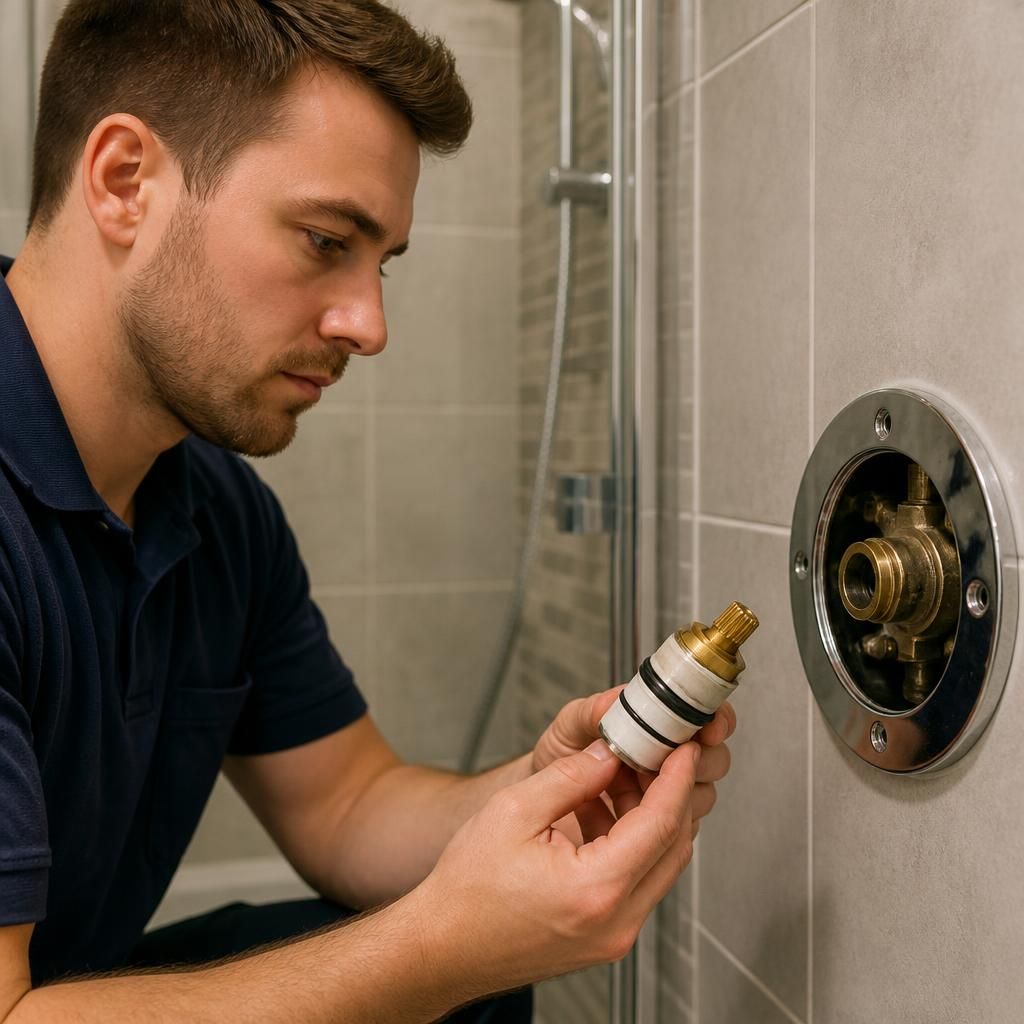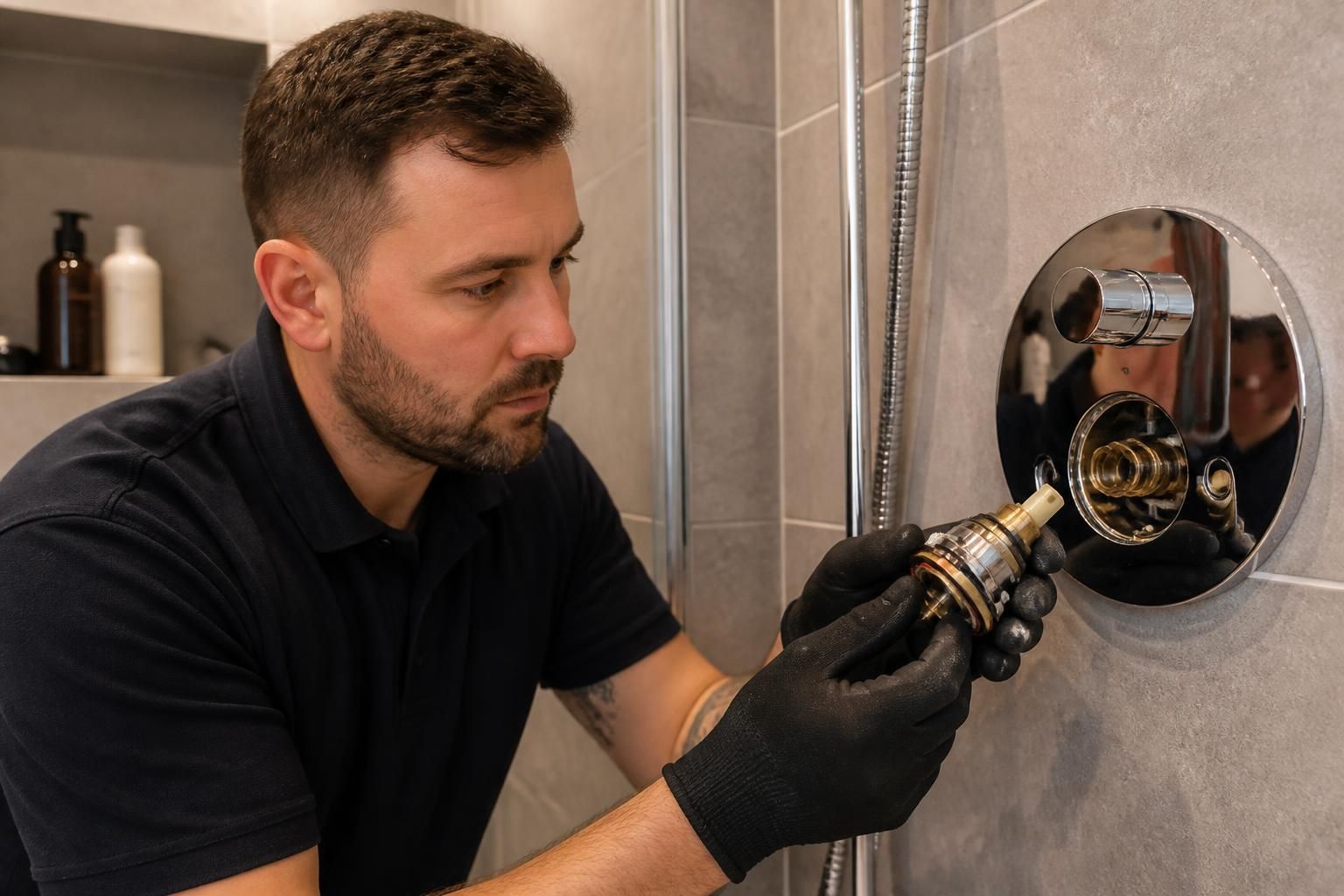
The main disruption from an emergency shower valve repair is usually the temporary loss of use of the shower, together with the need to keep the bathroom area clear while the fault is assessed and repaired. The effect on the rest of the home depends on how the shower is supplied, whether the valve can be reached without disturbing the wall, and whether the repair reveals damage behind the fittings.
Before work begins, the plumber will normally establish the symptoms and identify the type of valve involved. A shower that will not control temperature, will not shut off fully, or is allowing water to pass when it should be closed may have an internal component failure. A leak around the controls or outlet can also point to worn seals, loose connections or deterioration within the valve body. Confirming the source matters because water appearing around the controls may have travelled from a nearby connection.
The bathroom may need to remain clear of toiletries, towels, bath mats and removable storage. This gives safe working access and reduces the risk of items being damaged by water or tools. If the shower is over a bath, the bath surface may be protected before the controls are handled. A shower enclosure can make access more restricted, particularly where doors, screens or nearby fittings limit the working position.
Whether the rest of the water supply is affected depends on the plumbing arrangement. Some showers have a dedicated service valve or isolation point, allowing work to be carried out without interrupting taps elsewhere in the property. In other installations, the supply may need to be isolated more broadly while connections are checked. The plumber should explain which outlets will be unavailable and restore the supply carefully once the repair is complete.
There are several reasons why a repair may take more preparation than expected:
- Restricted access: a tight enclosure, fixed screen or unusually positioned control can make it harder to remove components safely.
- Corroded or seized fittings: older connections may require careful handling to avoid damaging adjoining pipework.
- Concealed pipework: the fault may not be fully accessible from the front of the valve, so further investigation may be needed.
- Damaged surrounding surfaces: previous leaks may have affected grout, sealant, plasterboard or cabinetry near the shower.
- Non-standard installation: alterations or repairs carried out in the past can make the layout different from a typical arrangement.
Where the valve can be serviced from the front, the work normally avoids removing large areas of wall or bathroom furniture. If access behind the finished surface is unavoidable, the plumber should identify the likely extent of opening-up before proceeding. Removing a small access panel is different from disturbing tiles or a waterproofed shower wall, and any making-good requirements should be understood separately from the plumbing repair itself.
During the repair, normal bathroom use may be restricted because water must remain controlled and the working area must not be disturbed. It is sensible to avoid using the affected shower until the plumber has checked the connections and confirmed that the controls are operating correctly. If the shower shares a supply with another outlet, that outlet may also need to remain unused during testing.
Once the repair is complete, the important checks include correct on-and-off operation, stable temperature control, secure connections and the absence of leaks while the shower is running. The surrounding sealant and trim should also be checked where they have been removed. These checks help distinguish a completed repair from a temporary reduction in visible symptoms.
To reduce avoidable disruption, move loose items out of the bathroom, provide clear access to the shower and tell the plumber about any known isolation points or previous leaks. If the property is rented, the tenant should also follow the landlord or managing agent’s procedure for authorising repairs, especially where tiles, panels or other finishes may need to be disturbed.
Ideal Plumbing Services provides emergency shower valve repairs for homes across Birmingham and the wider West Midlands. The service is relevant where a shower has become unusable, is leaking at the controls or cannot maintain safe, consistent temperature control, with the repair approach determined by the valve design and the access available.