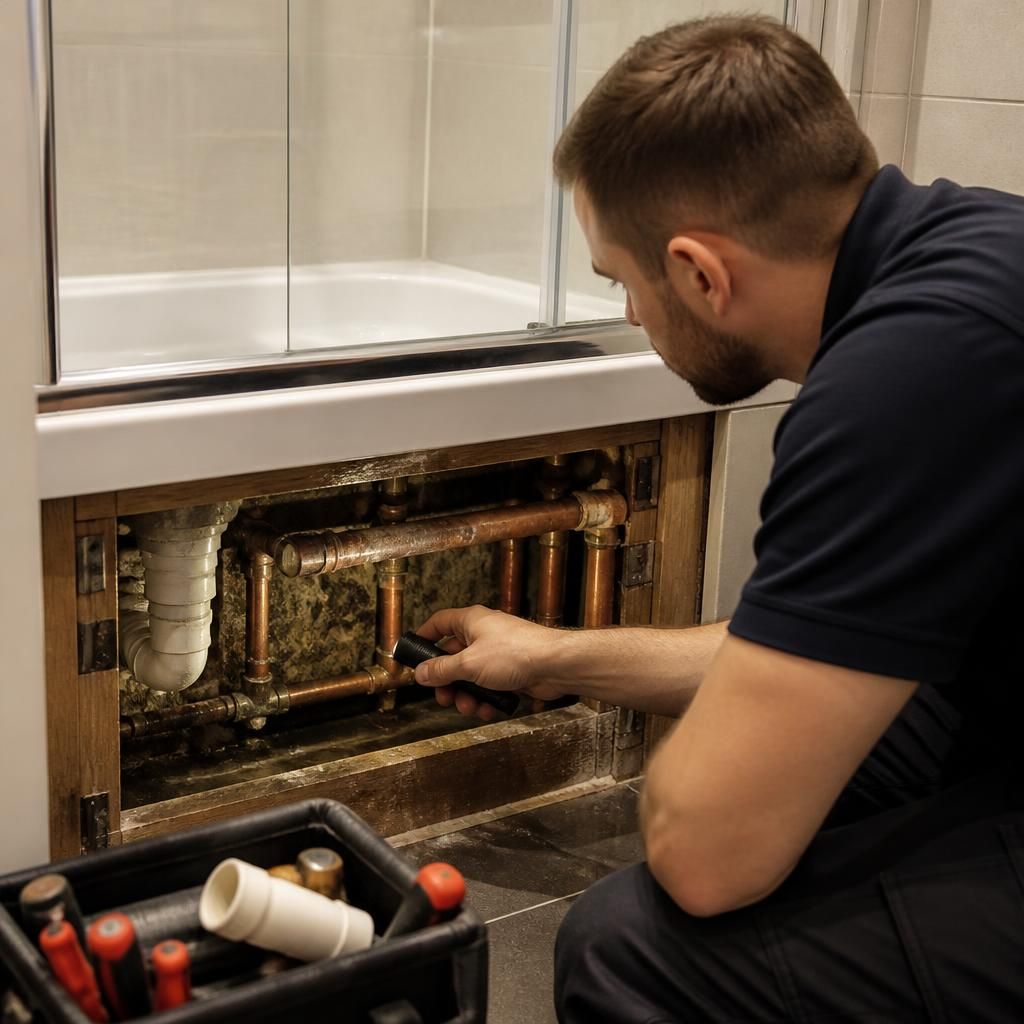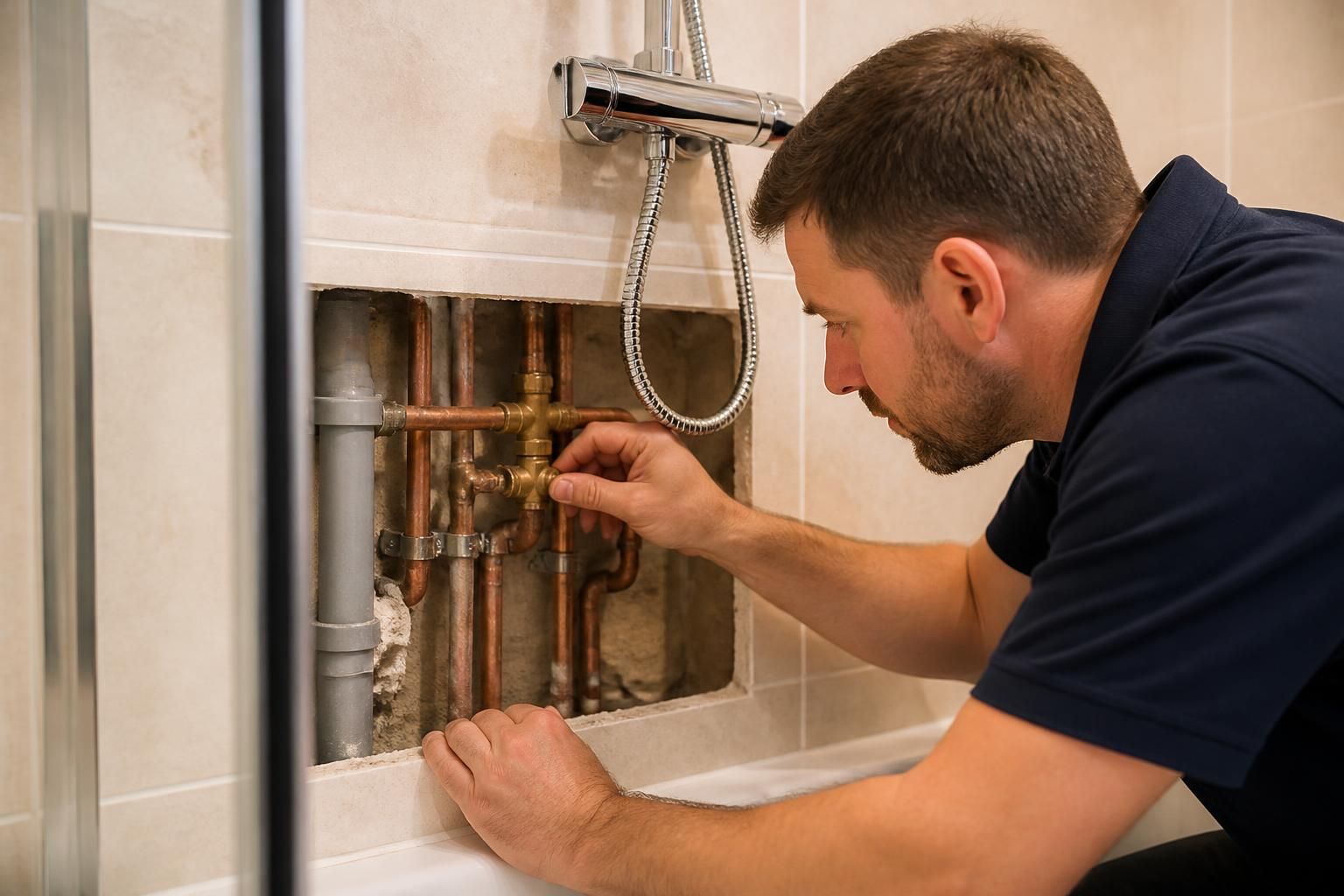
Emergency shower repair in Birmingham is priced according to the fault and the work needed to put it right. A minor replacement, such as a damaged hose, seal or shower head, will usually involve fewer costs than a concealed pipe leak, failed electric shower component or valve fault requiring access behind a wall or tiled surface. An accurate price can only be confirmed after the shower and surrounding plumbing have been assessed.
The main elements that can affect the cost are:
- Inspection and fault diagnosis: The plumber needs to identify whether the problem is coming from the shower unit, valve, connections, pipework or waste outlet. A visible drip does not always show where the leak begins.
- Labour and access: Straightforward work on an exposed fitting is generally less involved than a repair in a confined space or behind tiles, panels or boxing. Additional preparation may be needed where fittings cannot be reached safely without removing part of the surrounding finish.
- Replacement parts: The price depends on which component has failed. Possible items include cartridges, thermostatic valves, seals, connectors, hoses, shower heads, isolation valves and parts within an electric shower.
- Water damage: If the leak has affected plasterboard, flooring, cabinetry or other areas, the plumbing repair may need to be followed by drying, removal of damaged materials or separate building work. These costs are distinct from fixing the original shower fault.
- Electrical safety work: An electric shower may need additional checks if it is tripping, overheating, losing power or showing signs of damage. The electrical supply must be isolated safely before work begins, and the repair may be more involved than replacing a standard shower fitting.
A repair assessment should establish whether the shower can be restored by replacing one component or whether several parts have deteriorated. For example, changing a seal may resolve a small connection leak, whereas a worn valve cartridge can require removal of the control assembly and testing afterwards. A leak that returns after tightening a fitting may indicate damaged threads, a split connection or movement in the pipework rather than a loose joint.
In some cases, repairing an older or badly damaged shower is less practical than replacing the affected unit. The relevant comparison is not only the price of the replacement itself, but also the labour, compatibility of the existing connections, condition of the surrounding wall and whether the same fault is likely to recur. A professional should explain both options where they are reasonably available, rather than treating replacement as the only solution.
Before approving the work, ask for a clear breakdown covering the diagnosis, labour, parts, access work and any making-good requirements. It is also sensible to confirm whether the quoted amount includes VAT, disposal of removed parts and testing after the repair. If the final cost may change once the shower is opened or concealed pipework is exposed, the circumstances should be explained before additional work is carried out.
For a rented property, the person arranging the repair may need to follow the tenancy agreement or landlord’s maintenance procedure. Tenants should report active leaks and electrical symptoms promptly, while landlords and property managers should keep a record of the fault, inspection findings and authorised work.
Ideal Plumbing Services assesses shower faults for homeowners, landlords and tenants in Birmingham and the wider West Midlands, with recommendations based on the condition of the fitting, the source of the problem and the work required to complete a sound repair.