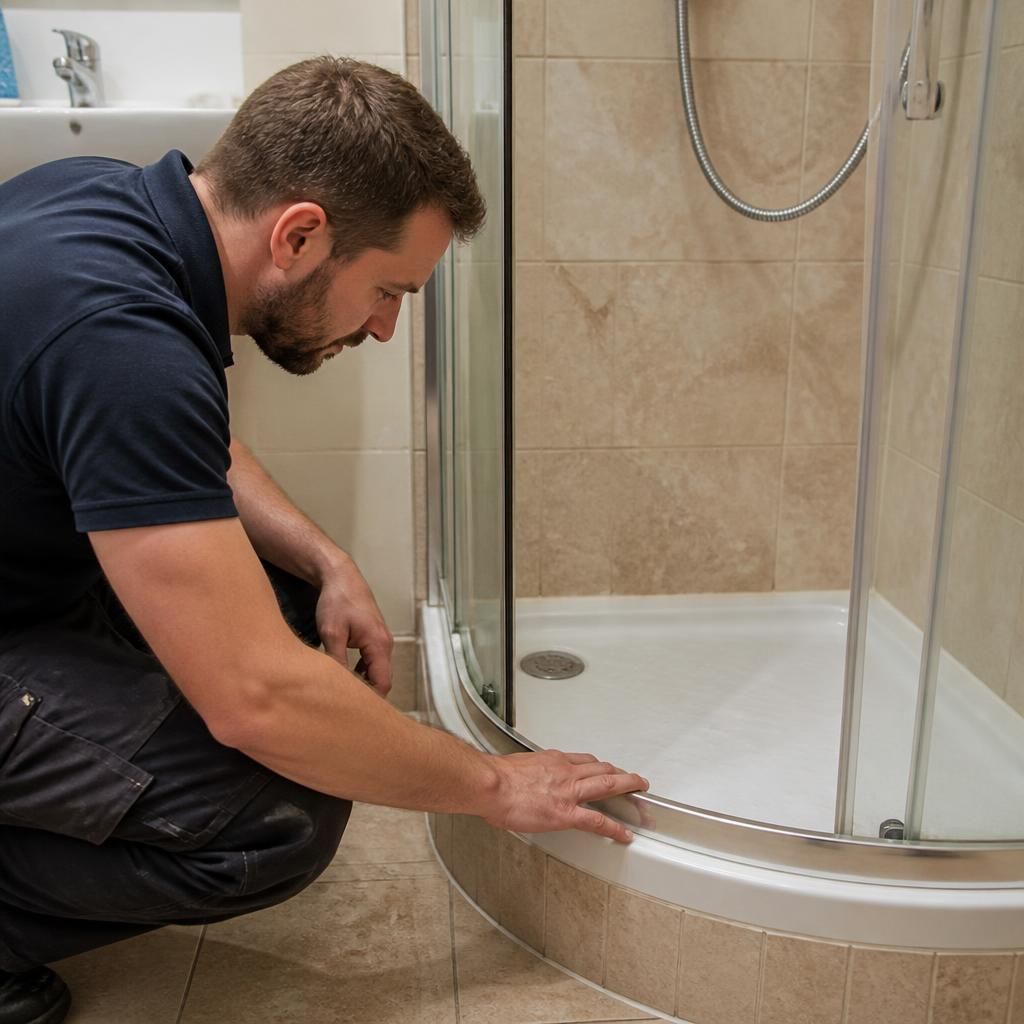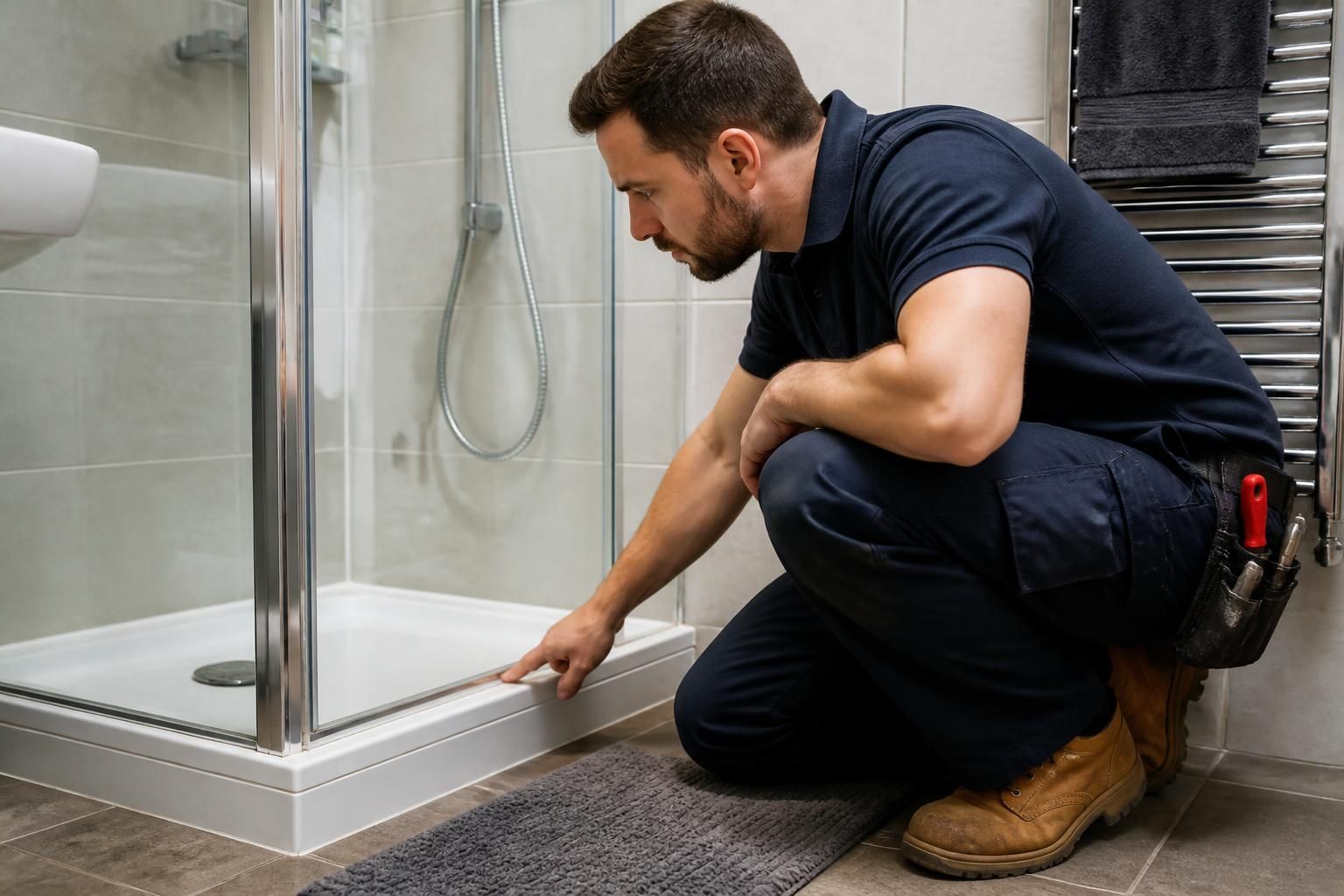
Yes. Stop using the shower until it has been assessed, because continued use can increase water damage and may make an electrical fault more hazardous. This applies even if the problem appears minor or the shower still operates normally.
Why continued use can cause further damage
A shower leak may be concealed behind wall panels, beneath a tray or around pipe connections. Running the shower can allow water to travel into plasterboard, flooring, insulation and adjoining rooms. Prolonged moisture can also contribute to mould, damaged finishes and deterioration of fittings.
Where water has reached electrical components, using the shower introduces an additional risk. Electric showers, pumps, switches and nearby sockets should not be inspected, opened or dried by removing covers unless this is done by a suitably qualified professional. Do not touch electrical equipment with wet hands or stand in pooled water while attempting to investigate the fault.
What to do before the repair
- Keep everyone in the property away from the shower until the source and extent of the problem are clear.
- Move toiletries, bath mats and other belongings away from wet areas where this can be done without stepping into unsafe water.
- Use towels or a suitable container to limit the spread of water only if doing so does not bring you close to electrical equipment or unstable fittings.
- Note when the problem occurs, such as during use, after the shower is switched off or when another water outlet is running.
- Take clear photographs of visible water, staining, damaged sealant, fittings and affected flooring. These can help explain the issue to the plumber and may be useful for a landlord or insurer.
If the shower is in a bathroom with an electrical fault, do not rely on the appliance switch alone if there is any doubt about its condition. Avoid using nearby electrical items and seek professional advice about making the area safe. If water is close to wiring, the consumer unit, sockets or other electrical equipment, an electrician may also need to assess the installation.
Should you use the shower if the leak seems to have stopped?
No. A leak can stop temporarily when pressure changes, a fitting dries or the shower is not running, while the underlying defect remains. Testing it again can release more water into an enclosed or hidden area. Leave the shower unused until the suspected cause has been inspected and the necessary repair has been completed.
A plumber will normally need information about the symptoms, when they occur and any visible damage. The inspection may involve checking the shower fittings, waste, supply connections, seals and surrounding surfaces, depending on where the water appears. Do not assume that the most visible damp patch identifies the source, as water can travel away from the failed connection.
After the repair, the shower should only be returned to use when the affected components have been checked and the area is safe. If moisture has entered surrounding materials, drying and follow-up checks may be needed in addition to repairing the original leak.