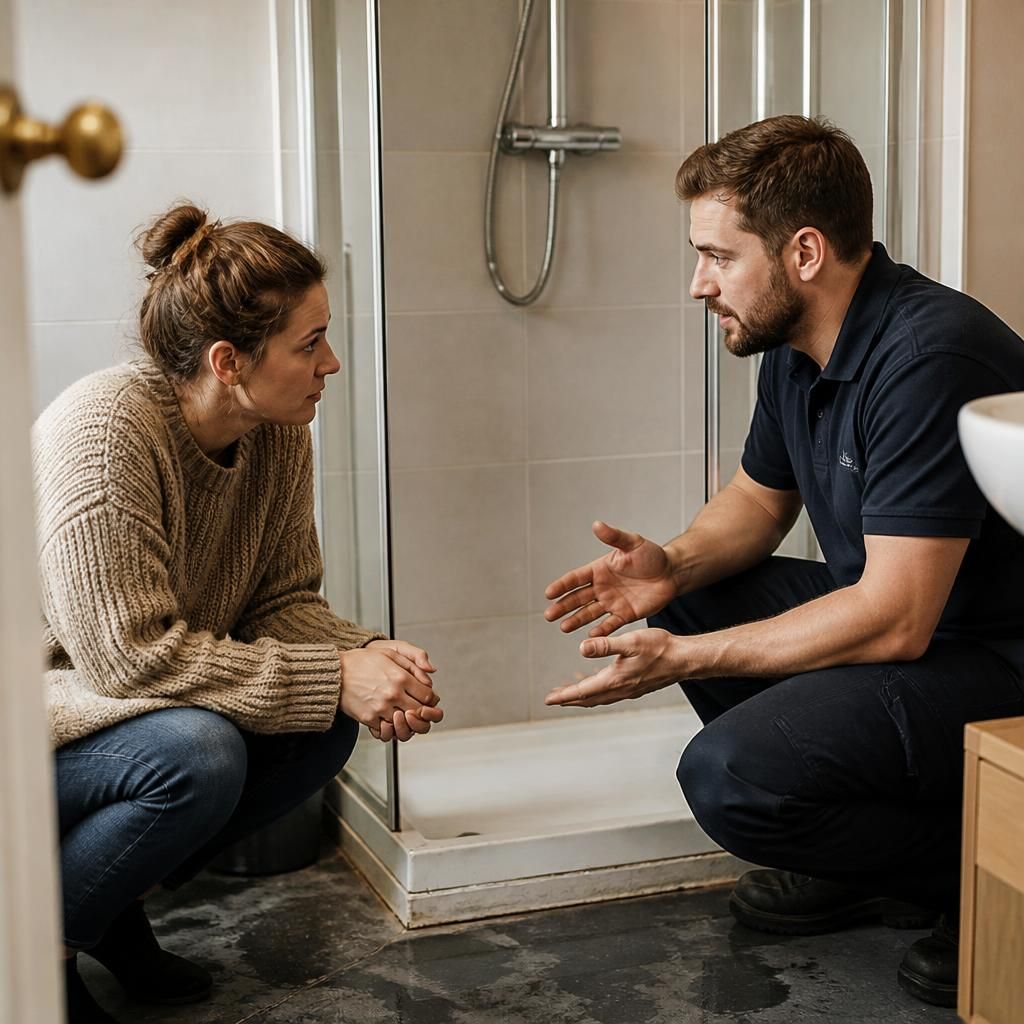
In a rented home, the landlord or managing agent normally arranges an emergency shower repair where the shower formed part of the property and the fault is due to wear, a defective component or a problem with the plumbing or fixed installation. The tenant’s main responsibility is to notify the appropriate person, provide access and take reasonable steps to limit further damage.
The landlord is usually responsible when:
- the shower is leaking because of a failed pipe, valve, seal, connection or fitting;
- the shower has stopped working through normal deterioration;
- water is escaping into walls, ceilings or flooring;
- an electric shower has developed a fault within the fixed installation, subject to the need for suitably qualified electrical work; or
- the repair concerns plumbing or heating installations that the landlord provides with the property.
For most residential tenancies in England, a landlord’s repairing obligations generally cover the property’s installations for water, sanitation and heating. The precise position can depend on the tenancy agreement, the type of accommodation and whether the fault affects a shared or private installation.
The tenant may be responsible where:
- the damage resulted from deliberate or careless misuse;
- the tenant or a visitor damaged the shower fitting;
- an item belonging solely to the tenant was installed without the landlord’s agreement; or
- the tenancy agreement clearly assigns a minor maintenance task to the tenant.
A tenant would not normally be expected to diagnose the hidden cause or carry out a complex repair. For example, a cracked shower tray, concealed leak or failed valve may look like a simple fitting issue but can require the surrounding area to be inspected before the correct repair is chosen. A landlord cannot fairly treat ordinary wear and tear as tenant damage simply because the tenant was using the shower when the fault occurred.
The usual reporting process is:
- Tell the landlord, letting agent or property management contact using the method specified in the tenancy agreement.
- Describe what has happened, where the water is appearing and whether the shower can still be isolated.
- Send clear photographs or video if this can be done safely, particularly where there is visible staining, pooling or damage.
- Follow any reasonable instructions about access and keep records of messages, dates and appointments.
If the landlord uses a managing agent, the agent may arrange the contractor even though the landlord remains responsible for ensuring that the repair is dealt with. A tenant should not normally instruct a costly permanent repair independently and then assume reimbursement, unless the landlord has authorised it or there is a genuine need for immediate action to prevent serious damage. The tenant should ask for written authority where practicable and retain invoices and evidence of the fault.
Where water is actively escaping, the tenant should stop using the shower and, if it can be done safely, isolate the local water supply. If water is near switches, sockets or an electric shower, the tenant should avoid touching wet electrical equipment and use the property’s safe isolation procedure. The landlord should be told that the issue may involve both water damage and an electrical risk.
The urgency of the repair depends on the consequences rather than simply whether the shower has stopped working. A leak into a ceiling, loss of safe washing facilities, exposed wiring, or water reaching other parts of the building should be reported as an emergency. A shower with a minor cosmetic defect may follow the ordinary repair process, but it should still be recorded before the defect worsens.
When a plumber attends, the inspection should establish whether the source is the shower fitting, supply pipework, waste connection, tray, sealant or a concealed section of the installation. The findings can help distinguish a landlord repair from damage attributable to misuse. If the cause cannot be confirmed immediately, the tenant should ask what temporary measures have been taken and what further access or specialist inspection is required.
If a landlord does not respond appropriately after being notified, the tenant can keep a complete written record and seek guidance from the local council’s private sector housing team, a tenants’ advice service or a solicitor. Rent should not usually be withheld or repairs commissioned at the tenant’s expense without proper advice, as doing so can create a separate dispute.
For landlords and agents, arranging a qualified plumbing inspection helps identify the source before authorising replacement parts or making a decision about liability. Ideal Plumbing Services provides residential plumbing and emergency repair support for landlords, tenants and homeowners in Birmingham and the wider West Midlands, with findings that can assist with deciding the appropriate remedial work.