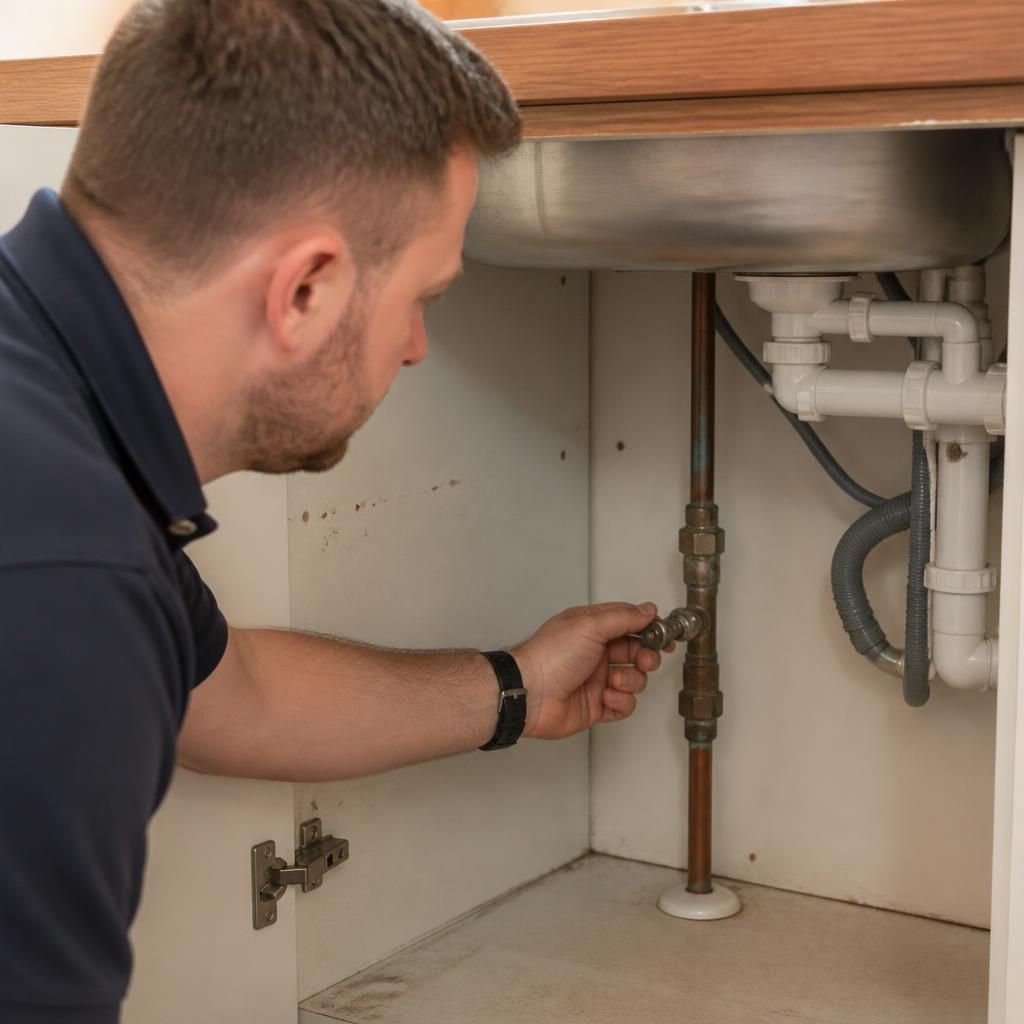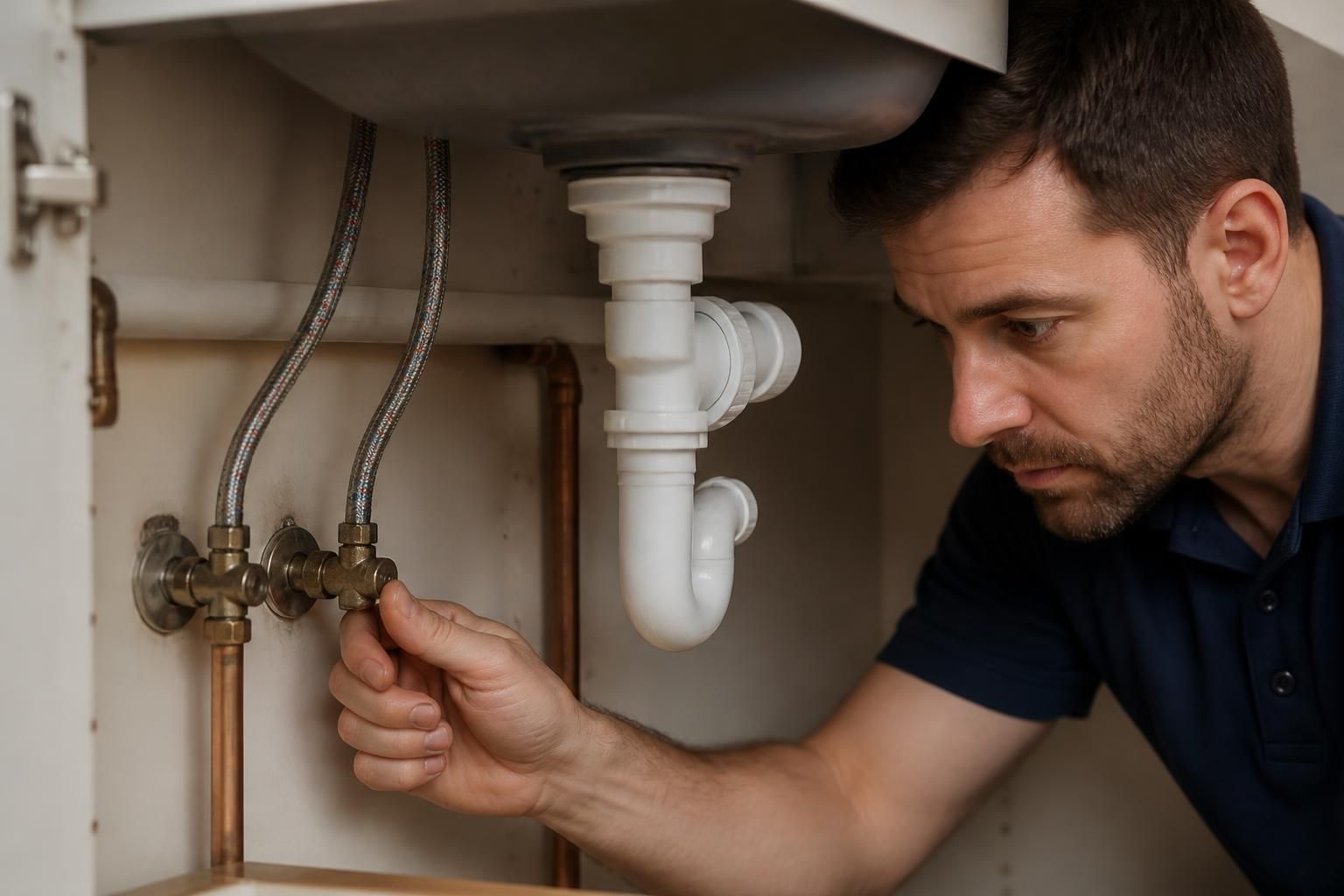
A failed isolation valve is usually a separate fault from the leaking tap, so it does not automatically mean that the tap must be replaced. The important requirement is to control the water supply safely before removing the tap, repairing its internal parts or changing the valve itself.
The first step is to identify where the supply can be isolated. A tap may have a small isolation valve on its supply pipe, but the whole branch can sometimes be shut off at the property’s main stopcock or at another accessible valve. A mixer tap may have separate hot and cold supplies, meaning both sides need to be controlled before work begins.
If the local valve is seized, damaged or passing water when closed, a plumber can assess whether it should be freed, repaired or replaced. A valve that turns but does not stop the flow may have an internal failure. Water escaping from the valve spindle, compression joint or pipe connection can also indicate that the valve itself needs attention rather than the tap.
Once the supply has been controlled, the tap fault can be diagnosed separately. Common repairable faults include:
- Worn washers or seals: these can allow water to drip from a traditional tap.
- A damaged cartridge: this is common in many mixer taps and may cause dripping, poor temperature control or difficulty shutting off the flow.
- Worn O-rings: these can allow water to escape around the handle or spout.
- Loose or damaged connections: these may cause leaks beneath the tap or around the flexible supply hoses.
In some situations, the safest method is to isolate the water elsewhere and drain the relevant pipework before disconnecting the tap. This may be necessary where the valve cannot be closed fully or where the pipework does not include a suitable local isolation point. The exact method depends on the property’s plumbing layout and whether the tap is supplied from a mains-fed or stored-water system.
Replacing the isolation valve and repairing the tap can often be completed as related but separate tasks. A suitable replacement valve must match the pipe size, connection type and available space. The connection should then be checked for leaks after the water is restored, while the tap is operated several times to confirm that it shuts off correctly.
Do not force a seized valve or loosen a tap connection while the pipe is still pressurised. If the main stopcock is difficult to operate, cannot be found, or fails to stop the water, contain the leak as far as possible and arrange professional plumbing assistance. This is particularly important where water is reaching electrical fittings, cupboards, flooring or other parts of the property that could be damaged.
Ideal Plumbing Services can investigate the faulty isolation valve and the leaking tap as separate components, explaining whether repair, valve replacement or a complete tap replacement is the most appropriate option. A clear assessment helps avoid replacing a tap when the main problem is the supply valve, while also identifying cases where corrosion or damage makes repair impractical.