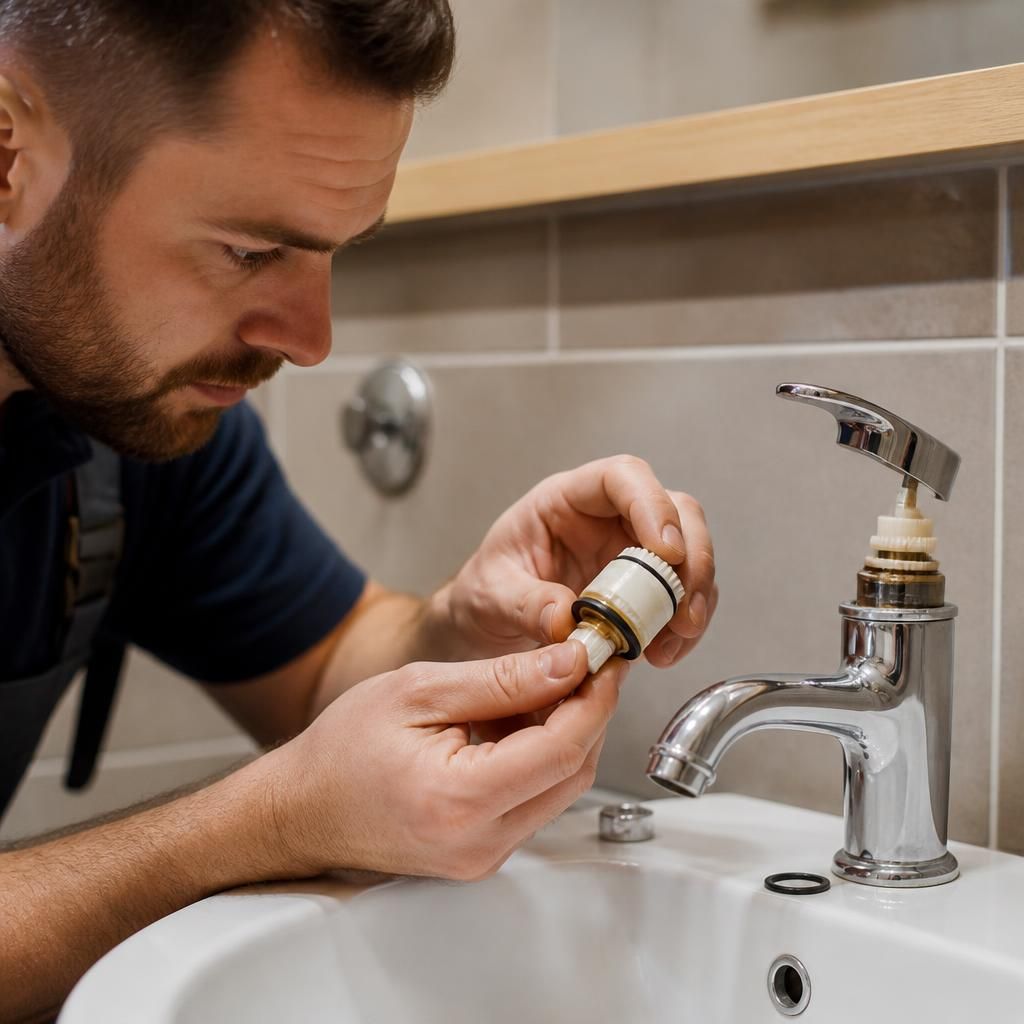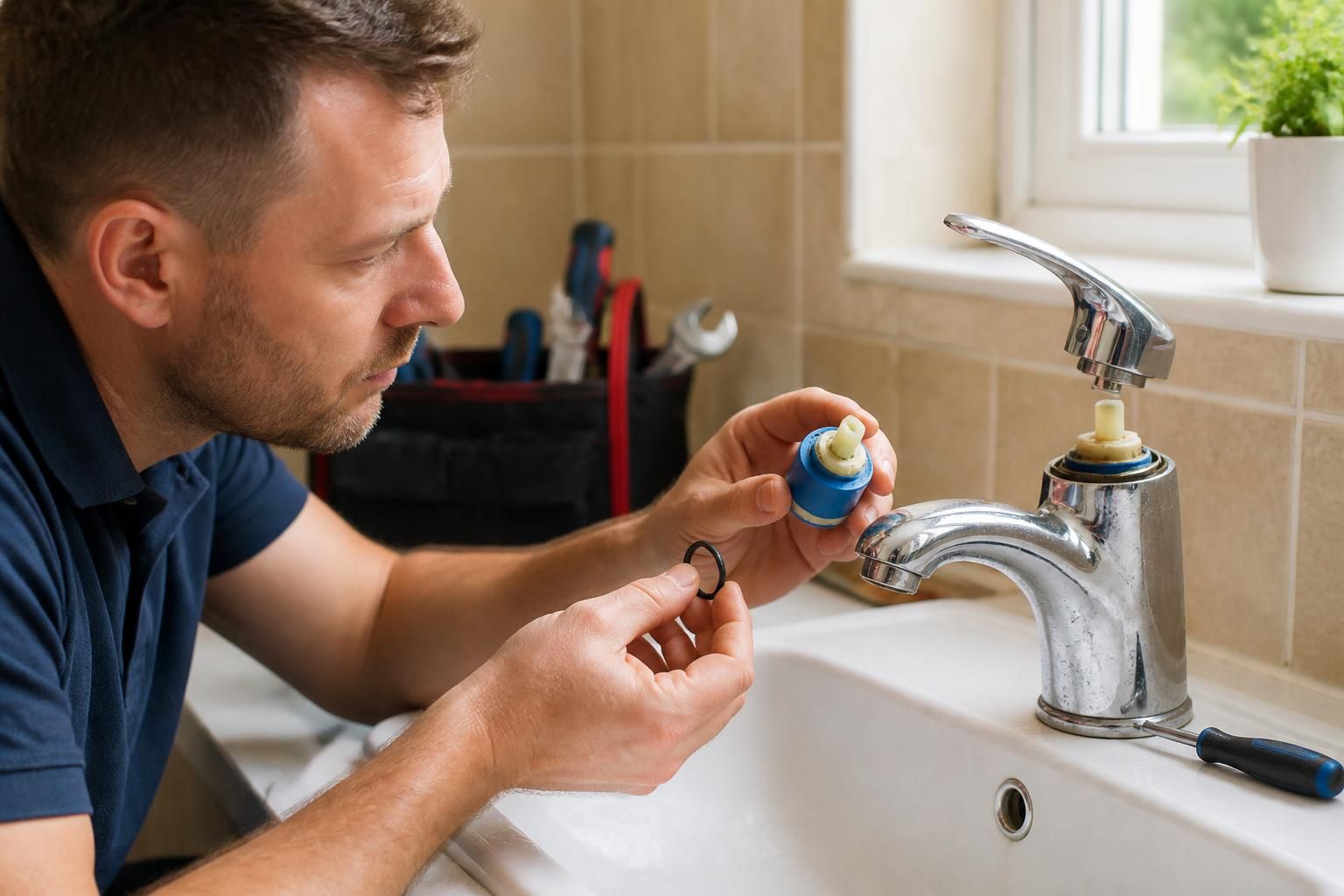
In most cases, water escaping around a tap handle indicates a fault within the handle assembly rather than a need to replace the complete tap. The precise repair depends on whether the leak occurs only while the tap is running, continues when it is closed, or comes from the joint between the handle and the tap body.
What a handle leak can indicate
- A leak that appears when the tap is turned on may be caused by pressure escaping through the spindle area or a damaged internal seal.
- Water that remains around the handle after the tap is closed can indicate deterioration inside the operating mechanism.
- A loose handle may allow water to reach the fitting, although tightening it is only appropriate if the handle itself is the problem.
- On a mixer tap, the handle may operate a cartridge, while separate hot and cold taps may use different internal valves. These require different replacement parts and repair methods.
Simply tightening the handle is not a universal solution. Excessive force can damage the fixing screw, strip the handle or place additional stress on the tap body. A cloth around the fitting can help identify where the water starts, but the tap should not be dismantled while it is still connected to a pressurised water supply.
How the repair is assessed
- The water supply is controlled to prevent further leakage during the inspection.
- The handle, cover and retaining components are examined for movement, corrosion or damage.
- The plumber checks the spindle or cartridge area and inspects nearby seals and connections.
- The failed part is removed and compared with the replacement to confirm compatibility.
- After reassembly, the tap is operated several times and checked for leaks with the water running and turned off.
A handle leak does not automatically mean that the whole tap needs changing. Repair is usually suitable when the tap body is sound and the relevant internal part can be removed without damaging the fitting. Replacement may be considered if the body is cracked, severely corroded, distorted or no longer able to hold its internal components securely. It may also be more practical where the mechanism has failed repeatedly or compatible parts are no longer available.
What to do before a plumber arrives
- Place a container or towel beneath the fitting to protect the worktop, basin or surrounding cabinet.
- Use the tap's isolation valve if it operates correctly and can be turned without force.
- If the local valve cannot stop the water, the property's main stop tap may need to be used.
- Do not continue operating a loose handle or apply sealant around it, as this can conceal the source of the leak and make inspection harder.
- Keep water away from electrical sockets, appliances and exposed wiring. If water is reaching electrics, switch off the relevant circuit only if it is safe to do so.
A leaking handle is more urgent when the flow is increasing, the tap cannot be isolated, water is entering a cupboard or wall, or the leak is close to electrical equipment. Ideal Plumbing Services provides residential plumbing repairs for homeowners, landlords and tenants in Birmingham and across the West Midlands, including assessment of handle leaks and associated water damage risks.