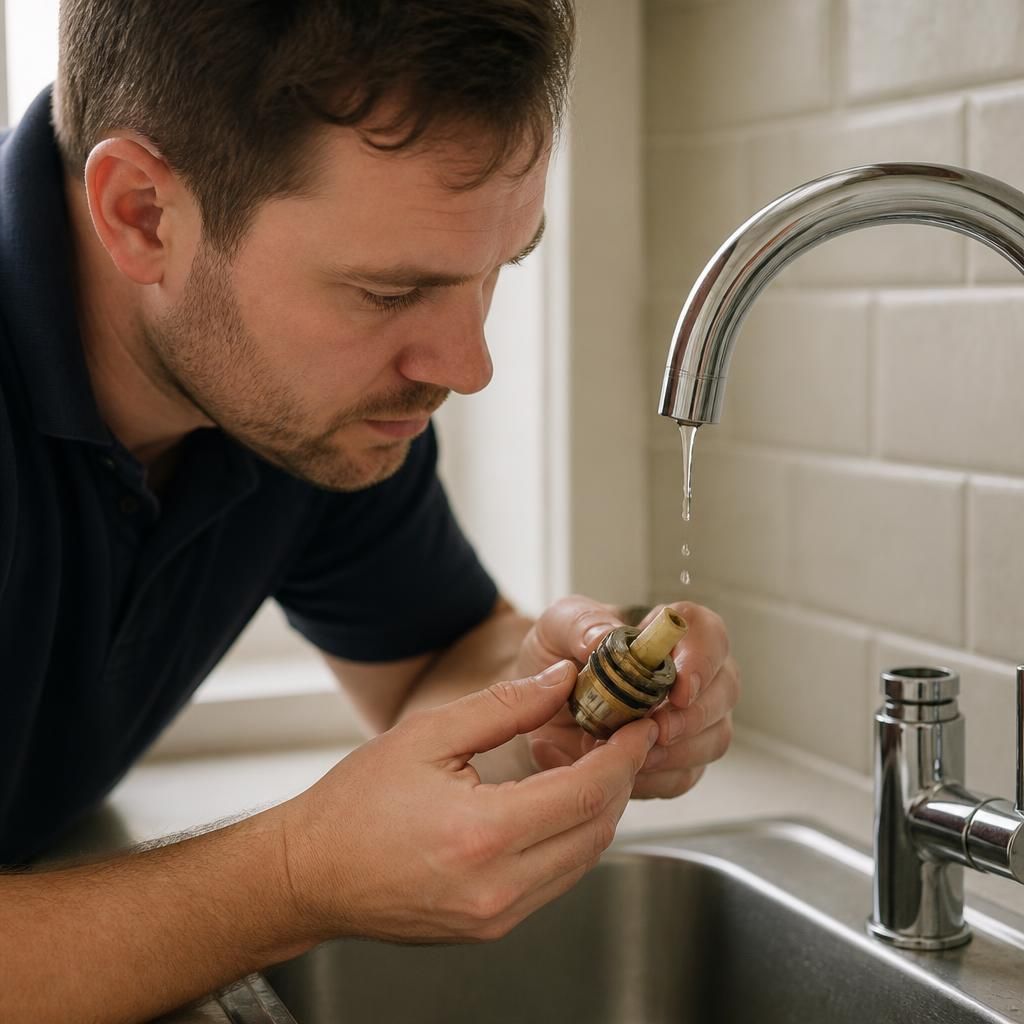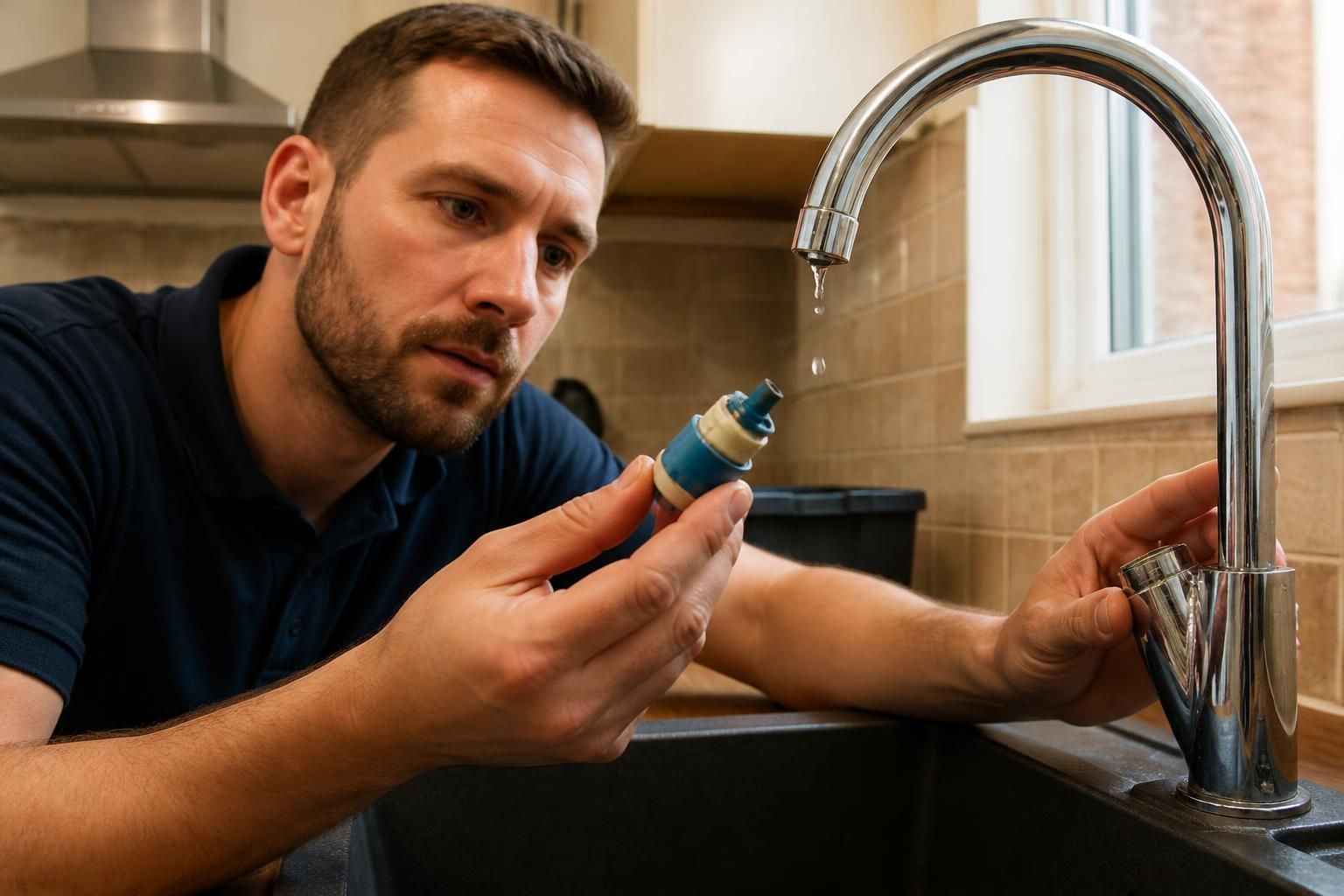
A tap that continues dripping usually needs its internal shut-off mechanism and sealing surfaces inspected, cleaned or renewed. Emergency tap repair can address the fault without replacing the complete tap when the main body is sound and the damaged part is accessible.
The first step is to identify exactly where the water is escaping. A drip from the spout usually indicates that the tap is not closing fully. Water from around the handle, beneath the body or at a pipe connection points to a different fault and requires a different repair. Correct diagnosis matters because tightening visible parts will not resolve a worn internal component, and excessive force can damage the tap or its connections.
A plumber will normally:
- Isolate the water supply to the tap, where this can be done safely.
- Remove the handle and access the operating mechanism.
- Inspect the internal sealing faces, moving parts and surrounding fittings for wear, debris or corrosion.
- Clean suitable components or fit compatible replacement parts.
- Reassemble the tap, restore the supply and check that it closes properly without leaks from the spout, handle or connections.
Persistent dripping can result from mineral deposits, a damaged valve seat, corrosion, a loose retaining part or an operating mechanism that no longer moves correctly. A tap may also appear to be repaired while continuing to drip if dirt remains on a sealing surface or if the replacement part is the wrong type. Different tap designs use different internal arrangements, so the replacement part must match the tap rather than simply being a similar-looking item.
Repair is more likely to be suitable when the tap body is secure, the connections are in good condition and replacement parts can be fitted accurately. Complete replacement may be recommended where the body is cracked, heavily corroded, distorted or difficult to service, or where several parts have deteriorated together. The decision should consider the condition of the surrounding pipework as well as the dripping itself; fitting a new tap will not correct a damaged supply connection.
Until the fault is dealt with, close the tap gently and use its isolation valve if it operates correctly. Do not force the handle past its normal stopping point, as this can worsen internal damage. If the local valve cannot be used, the main stopcock may be needed to control the water supply, provided it can be operated safely. Place a container or cloth beneath any external leak to protect the cabinet or worktop, but do not treat this as a permanent solution.
Professional assessment is particularly important when the drip is accompanied by water around the tap base, dampness inside a cupboard, a seized control, staining, or signs that the surrounding fittings are corroded. These symptoms can indicate a wider leak rather than a simple dripping spout. Ideal Plumbing Services can assess the tap, explain whether a repair is practical and complete the appropriate repair or replacement for the installation.