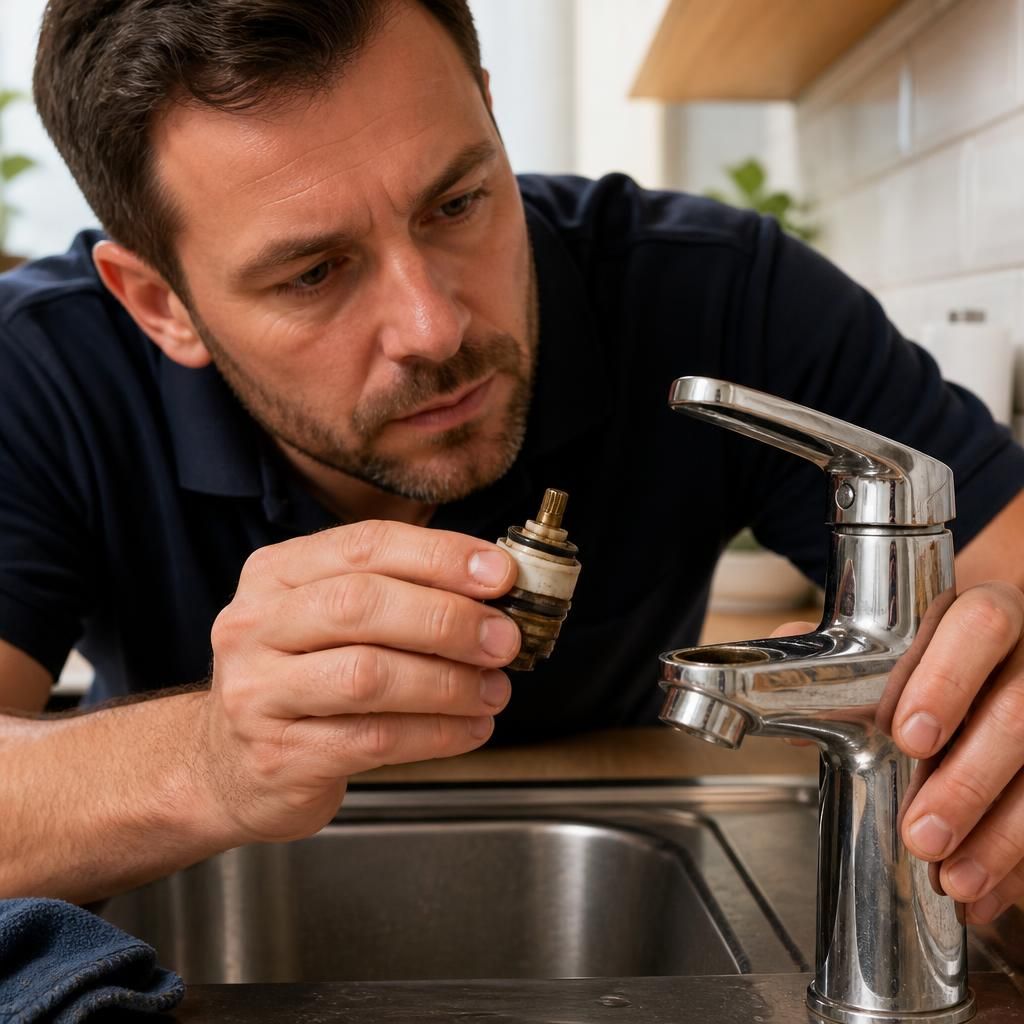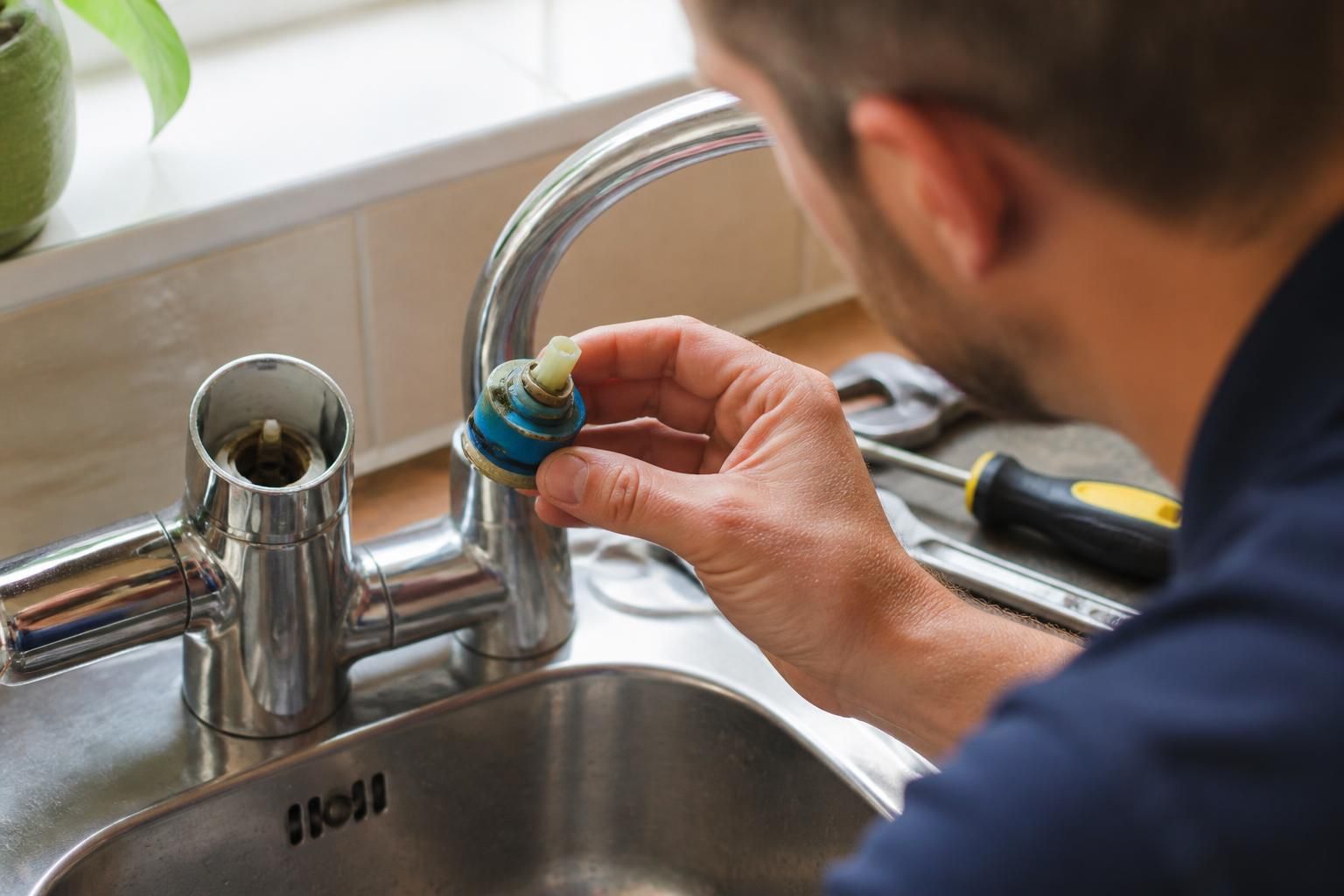
The deciding factor is the condition of the mixer tap’s internal working parts and body. A plumber can often restore a leaking mixer tap by servicing the faulty component rather than removing the complete fitting, provided the tap can be safely isolated and the replacement part is available.
What is usually inspected first?
- Leak from the spout: Water that continues to flow after the handles are closed commonly indicates a worn cartridge, valve or internal sealing surface.
- Leak around a handle: This may point to a damaged O-ring, spindle seal or loose connection beneath the handle.
- Leak at the base: Water appearing where the spout meets the tap body can be caused by worn seals around the swivel spout.
- Leak beneath the sink: The source may be a flexible connector, fixing connection or tap-tail seal rather than the mixer mechanism itself.
Identifying the exact source matters because water can travel along the tap body or worktop before it becomes visible. Replacing the wrong seal may stop the visible symptom temporarily while leaving the underlying fault unresolved.
How a non-replacement repair is carried out
- The water supply is isolated and the tap is opened to release residual pressure.
- The handles, cover caps or retaining screws are removed carefully so that decorative parts are not damaged.
- The cartridge, valve, seal or O-ring is inspected for wear, distortion and contamination.
- The internal seating surfaces and accessible passages are cleaned before the new component is fitted.
- The tap is reassembled and tested with both hot and cold supplies operating.
- The plumber checks the spout, handles, connections and the area beneath the sink for further seepage.
Some mixer taps use a ceramic cartridge, while others use a different valve arrangement. Even taps that look similar can require different components, so the fitting’s design and dimensions need to be checked before a part is selected. Taking the old component or accurate measurements helps avoid fitting an incompatible replacement.
When repairing the existing tap may be unsuitable
A repair becomes less appropriate when the tap body has deteriorated around the cartridge housing, threaded connections are damaged, or the internal parts cannot be removed without risking further damage. A replacement may also be considered where a discontinued design has no suitable service parts, or where several separate faults are present at the same time. In those circumstances, replacing one seal may not provide a durable solution.
The condition of the surrounding sink or worktop should also be considered. A persistent leak may have affected the fixing area, cabinet base or seal beneath the tap. These areas should be dried and checked after the plumbing repair, as continuing dampness may indicate that water is still escaping from a connection rather than the tap spout.
What to do before the repair
- Close the tap handles and place a container or towel beneath any visible leak.
- Remove items from the cupboard below the sink so the source can be seen safely.
- Use the local isolation valves only if they turn freely and can be operated without force.
- If water is escaping heavily and the tap cannot be isolated, use the property’s main stopcock if you know where it is and can operate it safely.
- Do not overtighten the handles, as this can damage the valve or make the eventual repair more difficult.
When a leaking mixer tap is assessed by an experienced plumber, the practical choice is usually based on the fault, the availability of a compatible component and the condition of the complete fitting. Ideal Plumbing Services provides emergency tap repair and plumbing repairs for homeowners, landlords and tenants, with the work explained before the repair proceeds. A clear assessment helps determine whether servicing the existing mixer tap is sensible or whether replacement is the more reliable option.