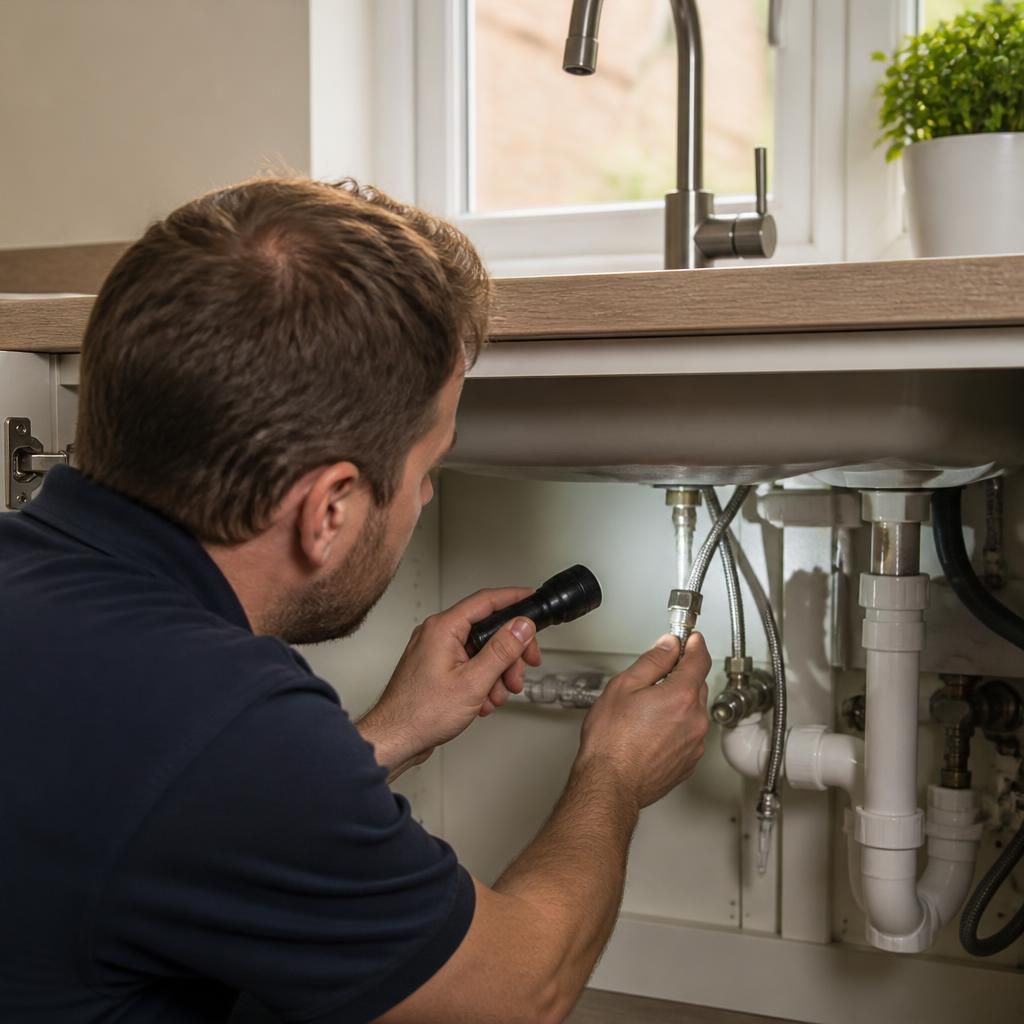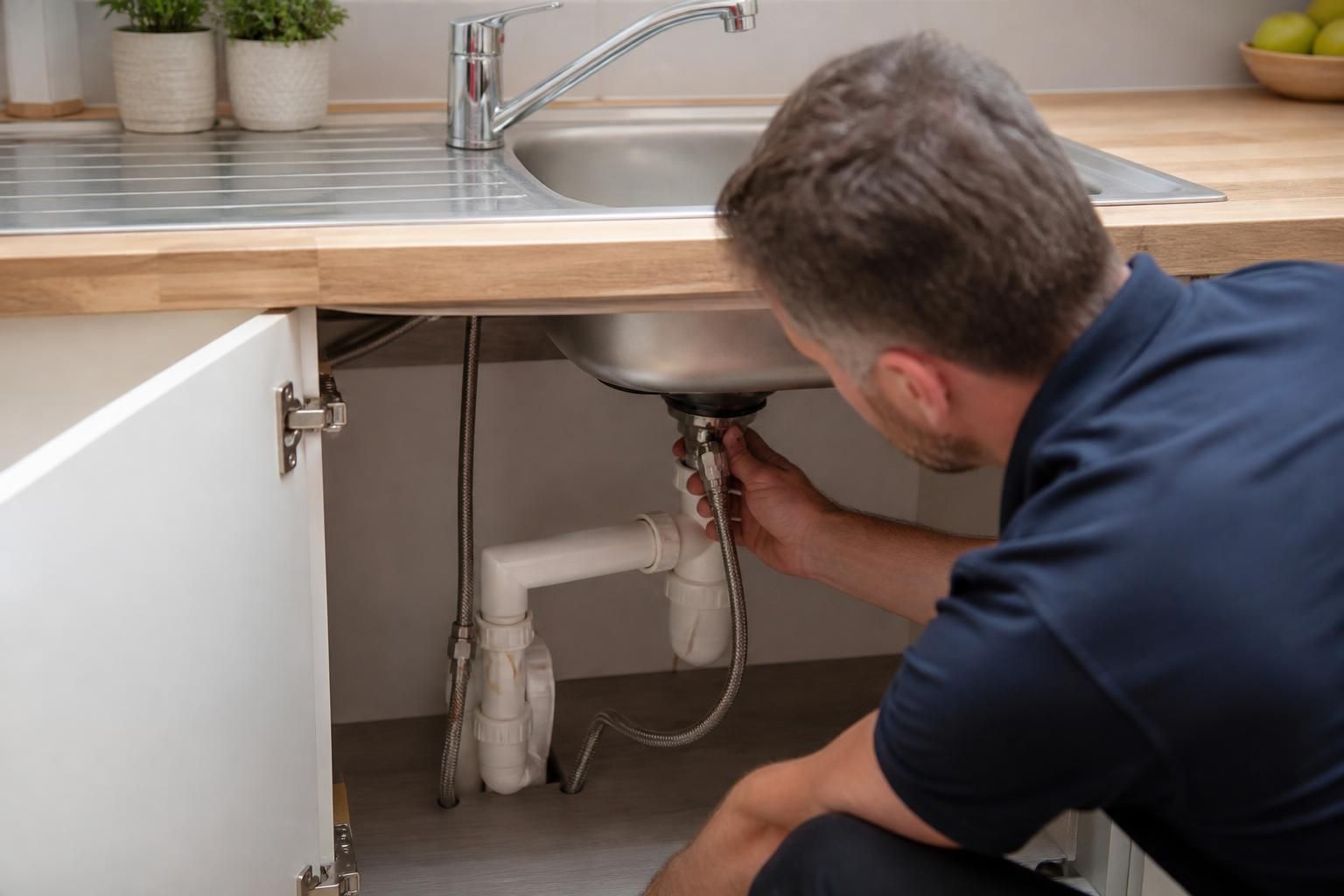
In most cases, a kitchen tap can be repaired in position, provided the fixing and pipe connections can be reached from inside the cupboard beneath the sink. The sink itself usually stays in place while the plumber isolates the water supply, removes the relevant tap component and tests the repair.
The amount of access beneath the sink is often more important than the sink’s size. A clear cupboard, flexible supply hoses and a tap secured with a standard mounting nut generally allow the work to be completed without disturbing the worktop or sink. A tap with a removable handle, spout or cartridge can also usually be serviced from above once the water supply has been isolated.
Removing the sink may become necessary where the tap’s retaining nut is inaccessible, heavily corroded or fixed tightly against the underside of the basin. Some older installations have rigid pipework, cramped fittings or sealant around the tap base, making it difficult to remove the tap safely in its installed position. A deep sink, integrated appliance or fixed storage unit can create similar access problems.
A plumber will normally assess the installation before deciding whether removal is required. The process may include:
- Turning off the appropriate isolation valves and checking that the water has stopped.
- Inspecting the tap body, connections, mounting arrangement and surrounding seal.
- Checking whether the faulty part can be removed through the tap opening or from beneath the sink.
- Protecting the cabinet and disconnecting the supply hoses if access is needed below.
- Replacing the defective component or the complete tap where individual repair is not practical.
- Restoring the water supply and checking for leaks while operating the tap.
Trying to force a seized fixing nut can damage the tap, pipework, basin or worktop. It can also disturb a connection that was not originally leaking. For this reason, a professional should establish where the retaining load and water connections are located before applying tools.
Sink removal is more likely when the tap is mounted through a thick worktop, the fixing hardware cannot be reached, or the installation has been altered over time. If the sink does need to be lifted, the plumber should first disconnect the waste and water connections and check how the basin is sealed and supported. The sink can then be refitted with suitable sealing and the connections tested.
Before arranging the repair, it is useful to clear the cupboard and note where the isolation valves are located. Photographs of the tap from above and below can help a plumber understand the fitting, although the final decision depends on an inspection. Ideal Plumbing Services carries out kitchen tap repairs for homeowners, landlords and tenants in Birmingham and the West Midlands, including installations where restricted access makes the repair more involved.