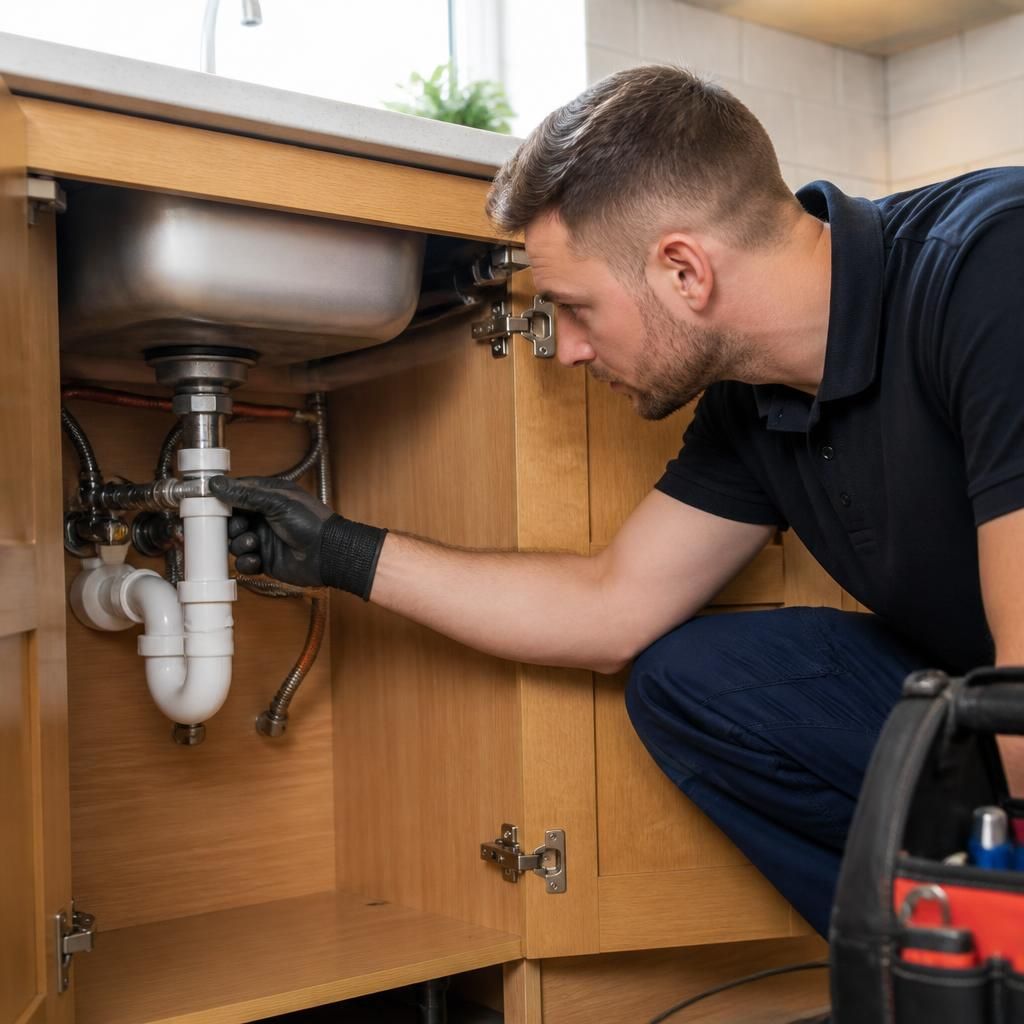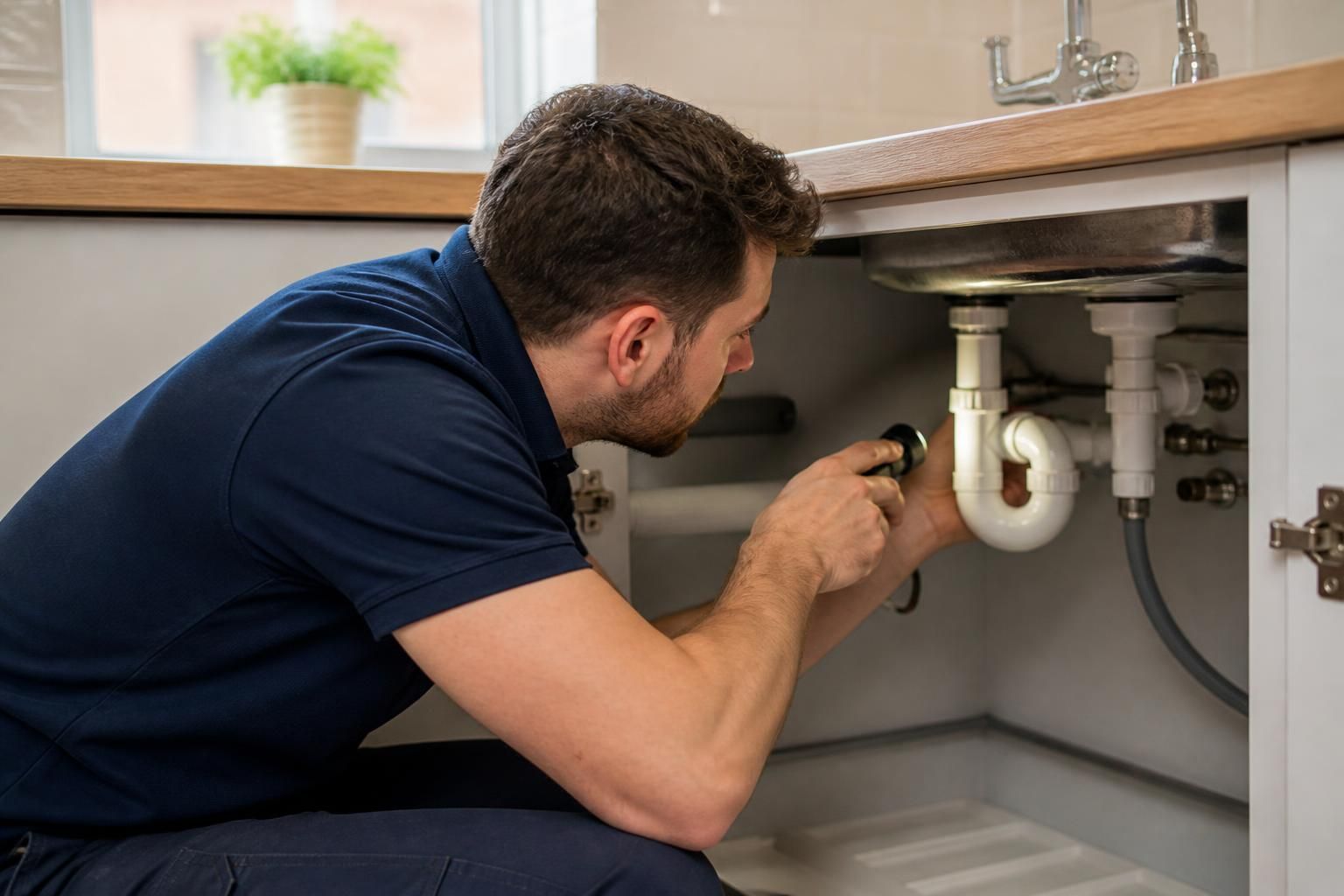
For most kitchen tap faults, the practical impact is confined to the sink and the cupboard beneath it rather than the wider kitchen. A plumber will normally work with the contents of the sink and under-sink unit moved aside, while protecting the surrounding surfaces from residual water and tools.
The amount of work depends on the failed component. A worn washer, cartridge, hose or connection may be dealt with at the tap or immediately below it. Where the tap body, flexible hoses or securing nut are damaged, more of the under-sink area may need to be cleared to allow safe access. Stiff or corroded fittings can make removal more involved, particularly in older installations.
During the repair, the kitchen tap cannot be used while its connections are being worked on. If the isolation valve operates correctly, the interruption can generally be limited to the tap itself. A problem with the valve, pipework or stopcock may require a wider section of the cold or hot water system to be isolated until the fault is made safe.
Most repairs do not require the sink or worktop to be removed. Removal is considered only where the fixing arrangement cannot be reached from below, the tap is firmly seized in place, or the surrounding installation prevents the damaged part from being safely detached. This can add preparation and reinstatement work, so the plumber should explain the proposed approach before starting.
Additional disruption may result if water has reached the cabinet, flooring or nearby fittings. In that situation, the immediate priority is to stop the leak, remove standing water and check for visible damage. Wet items may need to be taken out of the cupboard so the area can dry properly and any deterioration can be assessed.
A typical repair process involves:
- Checking the tap, hoses, isolation valves and visible pipe connections.
- Identifying whether the fault can be repaired or whether a component needs replacing.
- Protecting the sink unit and removing only the items needed for access.
- Isolating the relevant water supply and carrying out the repair.
- Testing the tap and connections for leaks before putting the cupboard back into use.
To keep disruption manageable, clear cleaning products and stored items from beneath the sink before the appointment, keep the area around the tap accessible and mention any previous leaks or attempted repairs. For rented properties, tenants should also follow their landlord or managing agent’s reporting procedure where required.
Ideal Plumbing Services provides kitchen tap fault diagnosis and repair for homeowners, landlords and tenants in Birmingham and across the West Midlands, with the work focused on resolving the defect while limiting unnecessary disturbance to the surrounding kitchen.