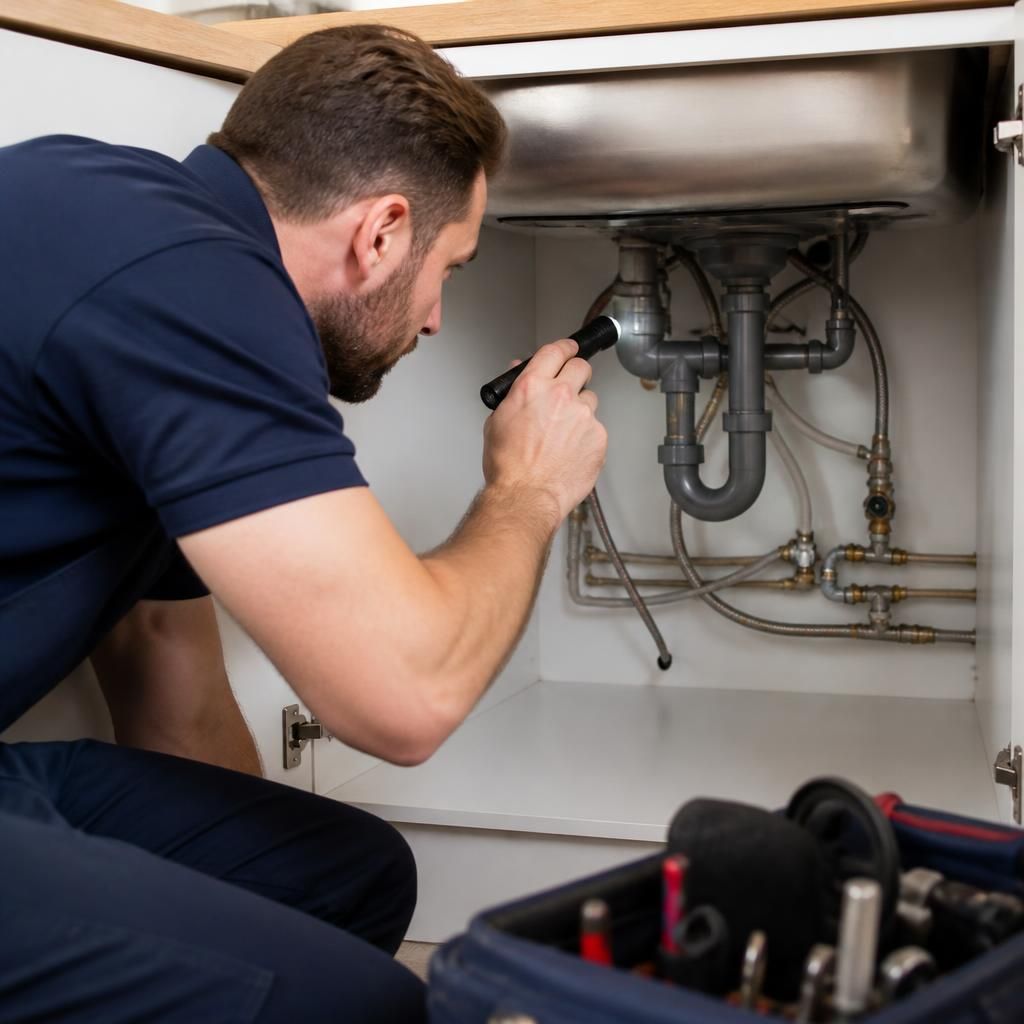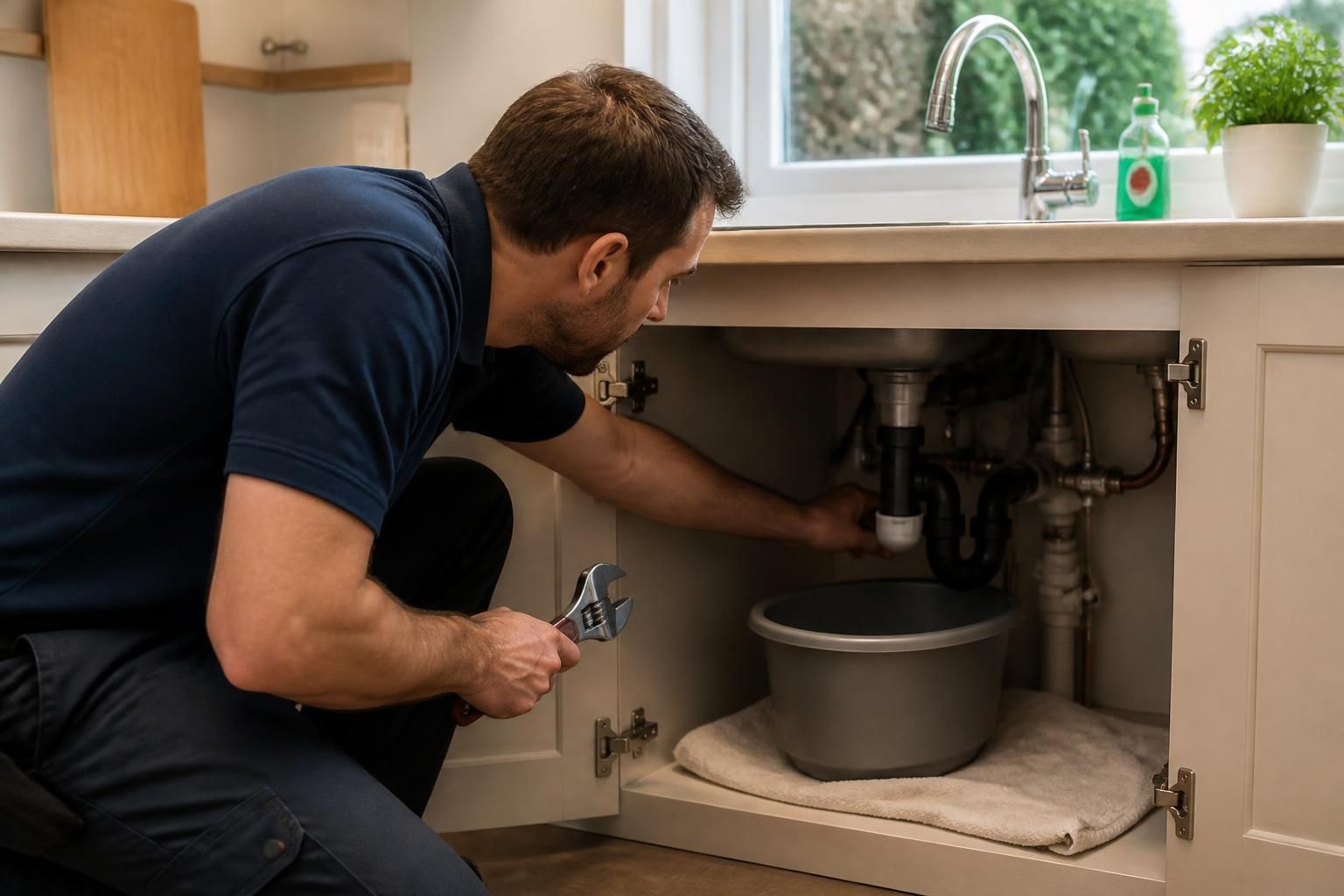
Before a plumber arrives for an emergency kitchen tap repair, make the area safe, stop using the affected fittings and collect useful information about the fault. These steps help prevent further damage and give the plumber a clearer starting point without risking injury or making the repair more difficult.
Check where the water is coming from
Without touching the fitting, look at the point of escape. Water may be coming from the spout, around the tap base, beneath the sink, or from a flexible connector. Note whether it leaks continuously or only when the tap is turned on. If the leak changes when the hot or cold side is used, record that too. A brief photograph or video can be useful if the leak stops before the plumber examines it.
Do not attempt a temporary repair with force or chemicals
Avoid tightening nuts aggressively, removing the tap, applying sealant or dismantling the cartridge unless you are qualified to do so. Excessive force can damage the tap, threaded connections or worktop, while sealant can obscure the fault and make proper repair more difficult. Do not use drain cleaner for a tap leak; it will not fix the supply fitting and may create a chemical hazard beneath the sink.
Do not continue using the kitchen tap or sink while waiting. If the dishwasher or another appliance is connected beneath the sink, avoid operating it until the source of the leak has been assessed, particularly if water is close to its hose or electrical connection.
Take precautions around electricity
Water near sockets, an under-sink appliance, a dishwasher connection or electrical cables requires extra care. Do not touch switches, plugs or appliances with wet hands, and do not reach into a wet cupboard to unplug anything. If there is an immediate electrical risk, keep people away from the area and contact a suitably qualified professional. Never enter standing water to reach a switch or consumer unit.
Prepare useful information
- Explain whether the problem is a dripping tap, a steady flow, a loose fitting, unusual noise or difficulty operating the handle.
- State whether the tap supplies hot water, cold water or both.
- Describe any recent work, such as a tap installation, plumbing alteration or change to the worktop.
- Have details of the property available, including access instructions and the location of the kitchen.
- If you are a tenant, inform the landlord or managing agent and follow the tenancy arrangements for authorising repairs, unless there is an immediate risk of serious water damage.
Make the inspection easier
Keep children and pets away from the kitchen and avoid placing tools or household items around the sink unit. If the plumber needs to inspect the pipework, waste or connections, they may need to open the cupboard and examine the surrounding fittings. Keep any removable panels or stored items available rather than discarding them, and tell the plumber if the leak has affected the cabinet, worktop or flooring.
Once the plumber arrives, describe what happened in the order it occurred and show any photographs or videos you took. Do not conceal water damage before it has been inspected, as staining, swelling or dampness can help identify how long the leak has been present and whether further checks are needed after the tap repair.