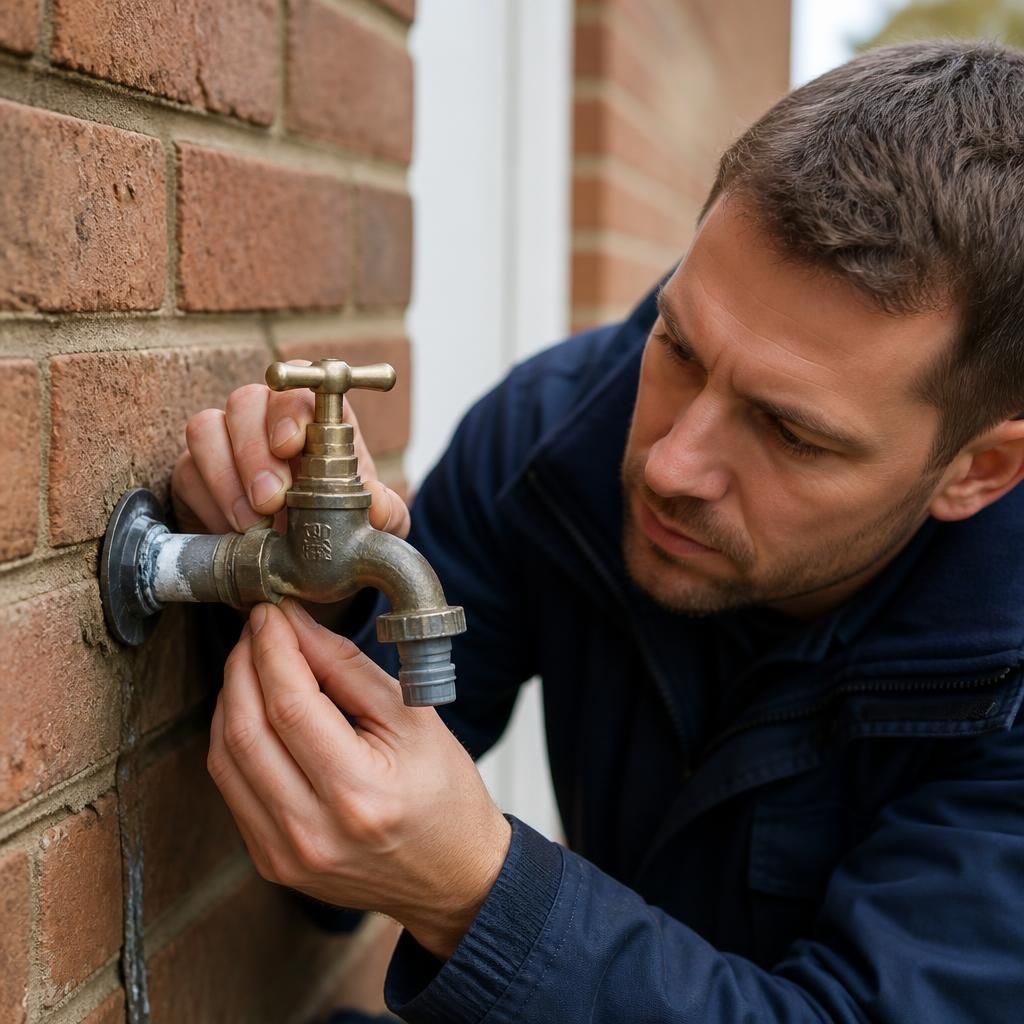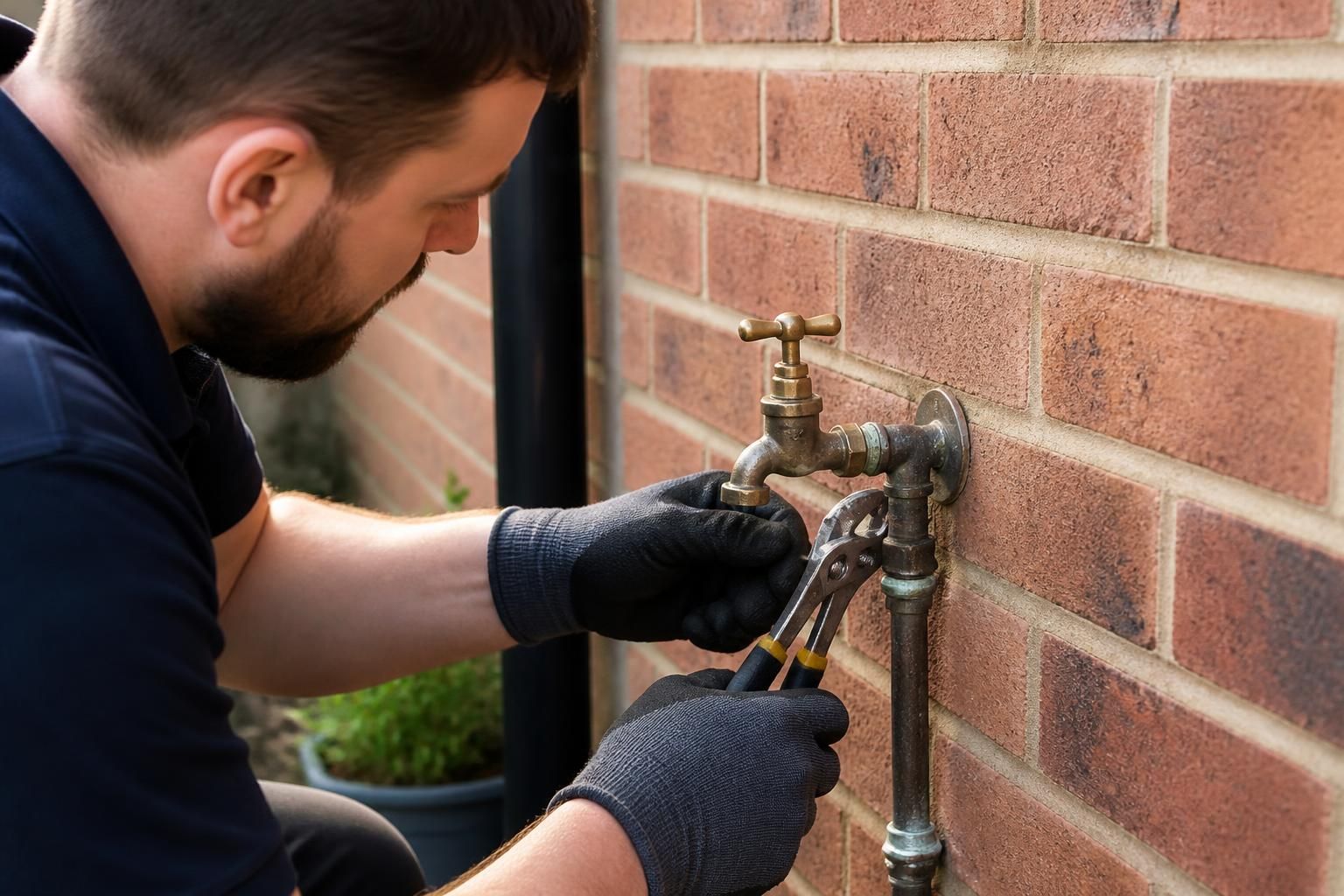
The key distinction is between a failed replaceable component and damage to the tap body or connected pipework. If the main body remains sound and the threaded connections can be safely opened, an outdoor tap can usually be restored by servicing or replacing the relevant internal part rather than removing the complete fitting.
A plumber will normally begin by isolating the water supply and checking whether the fault is coming from the tap itself, the connection behind it or the pipework leading to it. The tap may then be dismantled to inspect the spindle, washer, seals, cartridge or other internal components. Cleaning away scale or debris and fitting a correctly sized replacement part can resolve a tap that will not shut fully, is difficult to turn or leaks around the handle.
- Leak from the spout: this commonly points to a worn closing component inside the tap. Servicing the mechanism may restore a proper seal.
- Leak around the handle: the seal around the spindle may have deteriorated or the packing may need attention.
- Leak at the threaded joint: the connection may need to be taken apart, cleaned and resealed, provided the threads and adjoining fitting are undamaged.
- Restricted flow: scale or debris may be affecting the outlet or internal passage. Cleaning can help where the metalwork has not been seriously affected.
- Loose fitting: movement may be caused by a failed fixing or a connection that needs tightening, although excessive force can damage the pipe behind the wall.
Repair is less suitable when the tap body is split, heavily corroded, distorted or stripped internally. A crack can allow water to escape under pressure even after a washer or seal has been changed. Similarly, damaged threads may prevent a reliable connection, while a leak from concealed pipework or the wall entry point may require access to the pipe rather than work on the tap alone.
Outdoor taps need particular care because the pipework is exposed to low temperatures, movement and repeated seasonal use. If water has frozen inside the fitting, forcing the handle or connection can turn a minor internal fault into a damaged body or pipe joint. The tap should be isolated before any attempt is made to loosen it, and the surrounding pipework should be checked for movement or signs of splitting.
A sound repair should address the cause as well as the visible drip. This may include checking the isolation valve, confirming that the tap is firmly supported, examining the wall penetration and testing the connection once the water is restored. Simply tightening the handle or applying sealant around the outside may conceal the symptom without stopping the underlying leak.
For a straightforward fault, keeping the existing tap can be sensible where its body, threads and support remain in good condition. Replacement is generally more appropriate when several parts have failed, corrosion prevents dismantling, the fitting is no longer mechanically secure or the pipework itself has been compromised. A Birmingham plumber can inspect the fitting and explain whether a component-level repair is technically sound or whether replacing the assembly would provide the more dependable result.