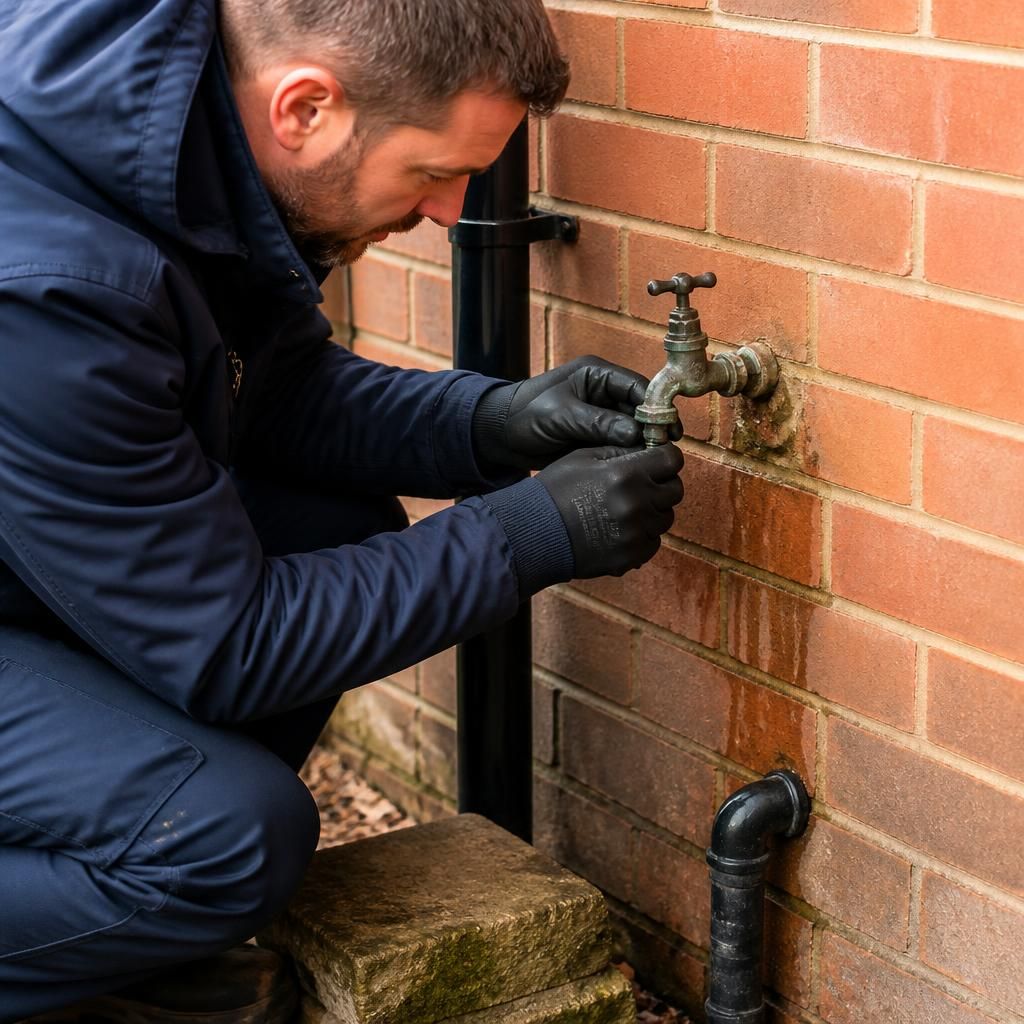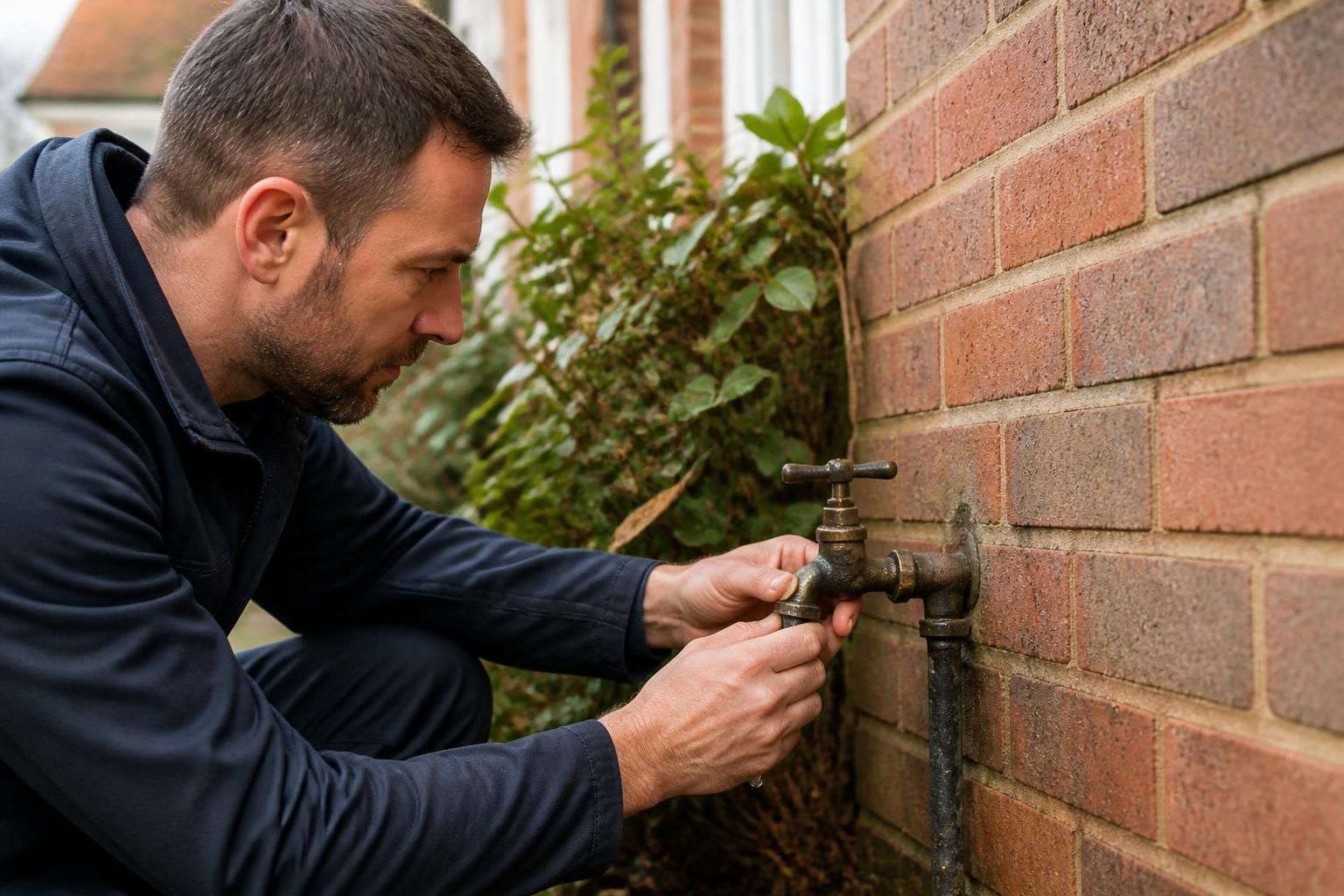
The cost of emergency outdoor tap repair is usually determined by the fault itself, the parts needed and the amount of work required to reach the tap or its connecting pipework. A straightforward repair may involve replacing a washer, valve or seal, while a more serious leak can require replacement pipework, frost protection work or a new outdoor tap.
Common factors that affect the final price include:
- Type of fault: dripping outlets, leaking joints, seized handles and damaged isolation valves require different repairs.
- Parts required: a small internal component may cost less than a complete tap, connector, isolation valve or section of pipe.
- Accessibility: pipework behind cabinets, inside walls, beneath paving or in a confined space can take longer to inspect and repair.
- Water damage: if the leak has affected brickwork, flooring, cupboards or other areas, additional remedial work may be needed beyond the plumbing repair.
- Condition of the existing installation: corroded fittings, poorly supported pipework or an absent isolation valve can make the repair more involved.
A plumber will normally identify the source of the leak, check the tap and nearby connections, isolate the water supply where necessary, and determine whether repair or replacement is the more practical option. The visible drip is not always the point of failure: water can travel along pipework or enter the wall where the tap passes through the external surface.
Repair is often suitable when the tap body, wall plate and connecting pipe are in sound condition. Replacement may be more appropriate where the tap is badly corroded, cracked, difficult to operate or repeatedly develops leaks. Replacing a worn tap can also be sensible if dismantling it would risk damaging older fittings.
Before work starts, ask for the price to be explained in terms of the inspection, labour, parts and any additional access work. It is also useful to confirm whether removing damaged fittings, making good access points and testing the repaired installation are included. A clear quotation should identify any work that is recommended but not essential, so you can distinguish the immediate repair from preventative improvements.
If the outdoor tap is leaking heavily, turn off its isolation valve if one is fitted and place a container beneath the leak where safe to do so. Do not force a seized valve or continue using a damaged tap, as this can worsen the fault or cause a connection to fail. For a property with no accessible isolation valve, a plumber can assess the wider supply and advise on a suitable replacement arrangement.
For landlords and tenants, the repair cost may also depend on responsibility under the tenancy agreement and whether the damage resulted from accidental damage, inadequate protection or general wear. Keep photographs of the tap, surrounding area and any visible damage, and report the issue through the appropriate property-management process before authorising non-essential work.
Ideal Plumbing Services provides leak detection, emergency plumbing and outdoor tap repairs for homes across Birmingham and the wider West Midlands. The team can assess the fault, explain the available repair options and provide a clear understanding of the work involved before proceeding.