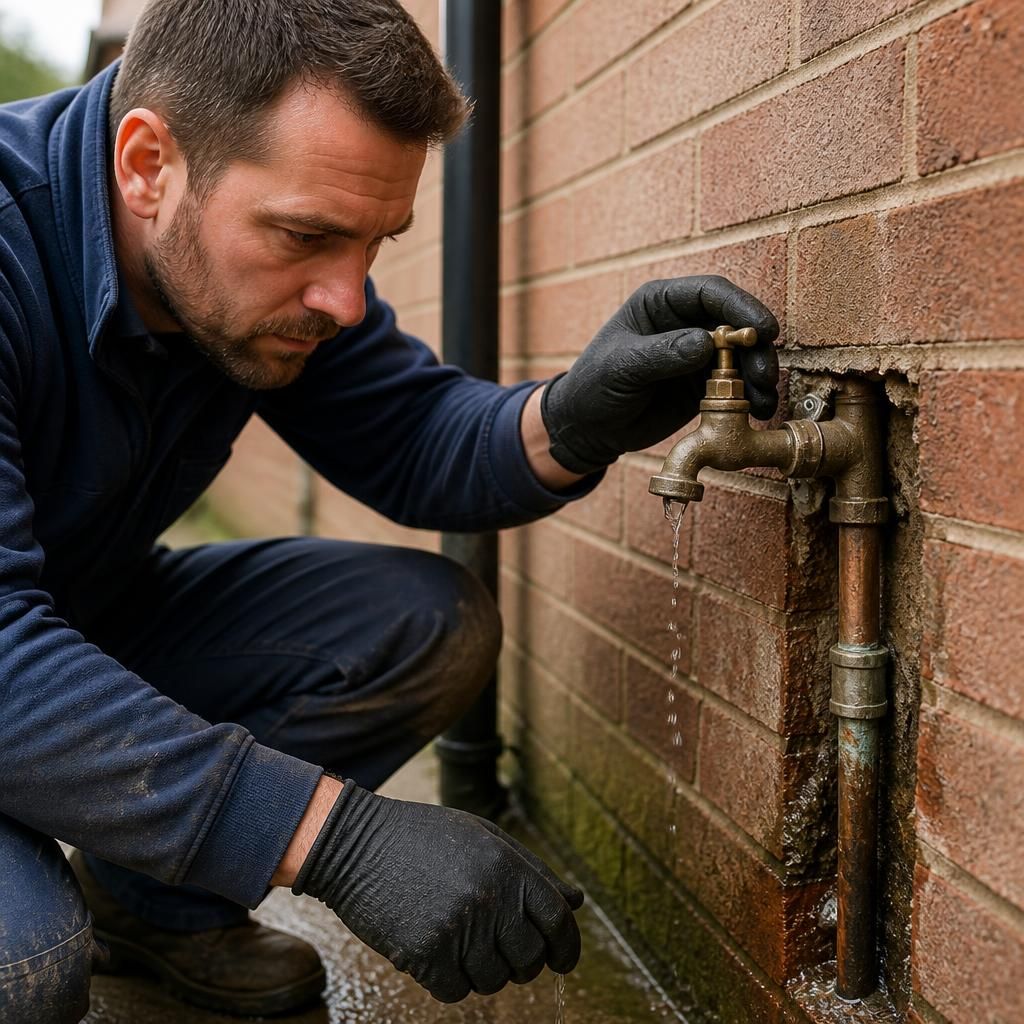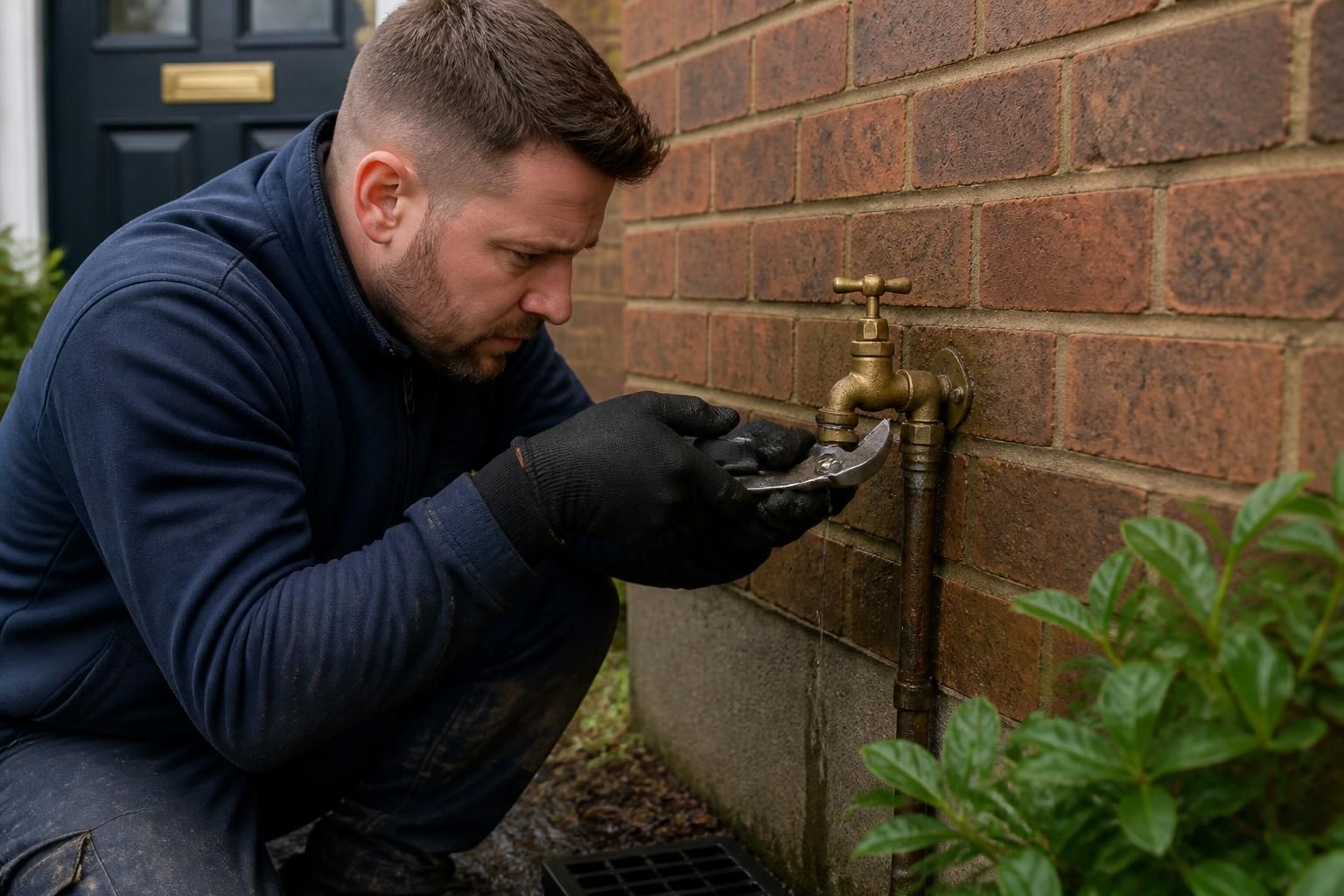
Emergency outdoor tap repair is usually a low-disruption plumbing job when the fault is confined to the tap, its visible fittings or the short section of pipe leading to it. The main inconvenience is normally restricted to stopping the water supply, working in the immediate area and keeping the tap out of use until the repair has been tested.
The level of disruption depends less on the word “emergency” and more on where the failure has occurred. A leaking tap body or loose connection can often be dealt with at the fitting itself. By contrast, a burst supply pipe beneath paving, a failed internal isolation valve or water escaping through a wall can require more investigation and access.
What happens during the repair
- The plumber assesses where the water is coming from and checks whether it is safe to work on the fitting.
- The relevant water supply is isolated. If there is no separate isolation valve for the outdoor tap, access to the property’s main stopcock may be needed.
- Standing water is allowed to drain before the connection is opened.
- The faulty part is repaired or removed, and the surrounding connection is checked for damage, corrosion or movement.
- The supply is restored gradually so the repair can be checked under pressure.
- The area is inspected for continuing leaks and any water left around the tap is cleared as far as practical.
For a straightforward fault, this process generally affects only the water supply while the work is being carried out. You may need to avoid using the outdoor tap, and nearby access may be restricted while tools and replacement parts are in use. Furniture, stored items, plant pots or other objects close to the tap may need to be moved first.
Situations that can increase disruption
- No accessible isolation valve: The plumber may need to work from the main internal stopcock, which temporarily affects the property’s wider water supply.
- Pipework inside a wall: If moisture is entering brickwork, plaster or an internal cupboard, the source may need to be traced before the visible tap is repaired. Limited access through a panel or finish may be necessary.
- Buried or concealed pipework: A leak below paving, decking or ground cannot always be repaired from the tap head. Lifting a small area may be required to reach the damaged section.
- Severe corrosion: Old fittings can be difficult to loosen without damaging adjacent pipework. This may turn a simple component change into a wider repair.
- Frozen or burst connections: Cold-weather damage can affect more than the tap itself. Once the fitting thaws, hidden splits may become visible and require additional work.
- Water damage: If water has reached a wall, floor or stored belongings, the plumbing repair may be completed before drying, cleaning or building work can begin.
How to reduce avoidable disruption
- Turn off the outdoor tap if it has a dedicated isolation valve. If water is still escaping or the valve is not known, use the main stopcock only if you can identify it safely.
- Do not continue tightening a stiff handle or connection. Excessive force can damage the fitting or the pipe behind it.
- Move items away from the tap and clear a safe route to the stopcock, boiler cupboard or any access panel.
- Keep children and pets away from wet surfaces, tools and exposed pipework.
- Take a photograph of the leak before moving anything if the source is unclear. This can help distinguish a tap fault from water coming through a wall or paving.
- Tell the plumber about any previous repairs, hidden pipework or difficulty accessing the main water shut-off point.
Do not use sealant, tape or temporary clamps as a substitute for assessing the underlying fault. These measures may reduce visible dripping without addressing a split pipe or failed joint, and they can make the fitting harder to remove later. If water is near electrical equipment, isolate the water if it is safe to do so and avoid touching electrical components while standing on a wet surface.
Before work starts, ask whether the proposed repair is limited to the outdoor fitting or whether concealed pipework may need to be opened. A clear explanation of the likely access, water shut-off arrangements and any possible reinstatement helps you judge the practical disruption. In Birmingham and across the West Midlands, a qualified plumber can assess the condition of the tap and connected pipework before confirming the appropriate repair approach.