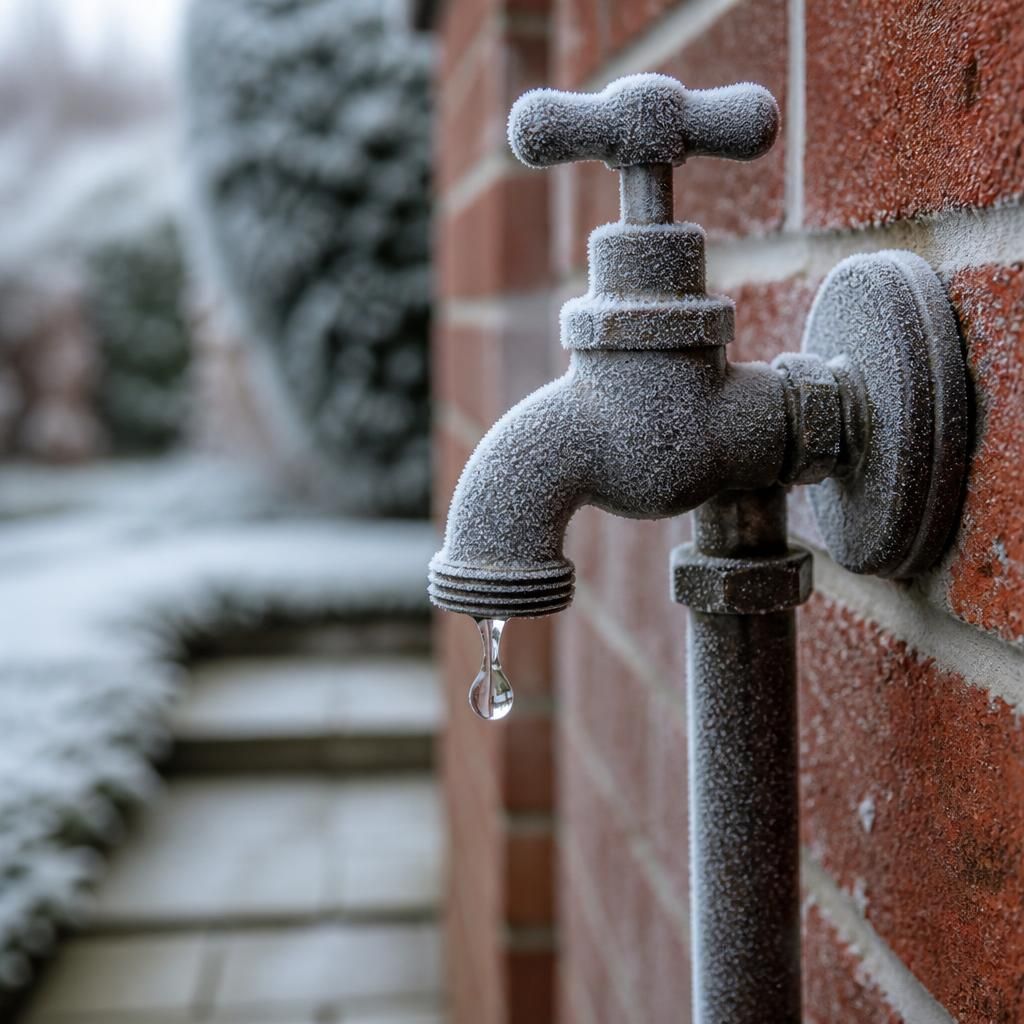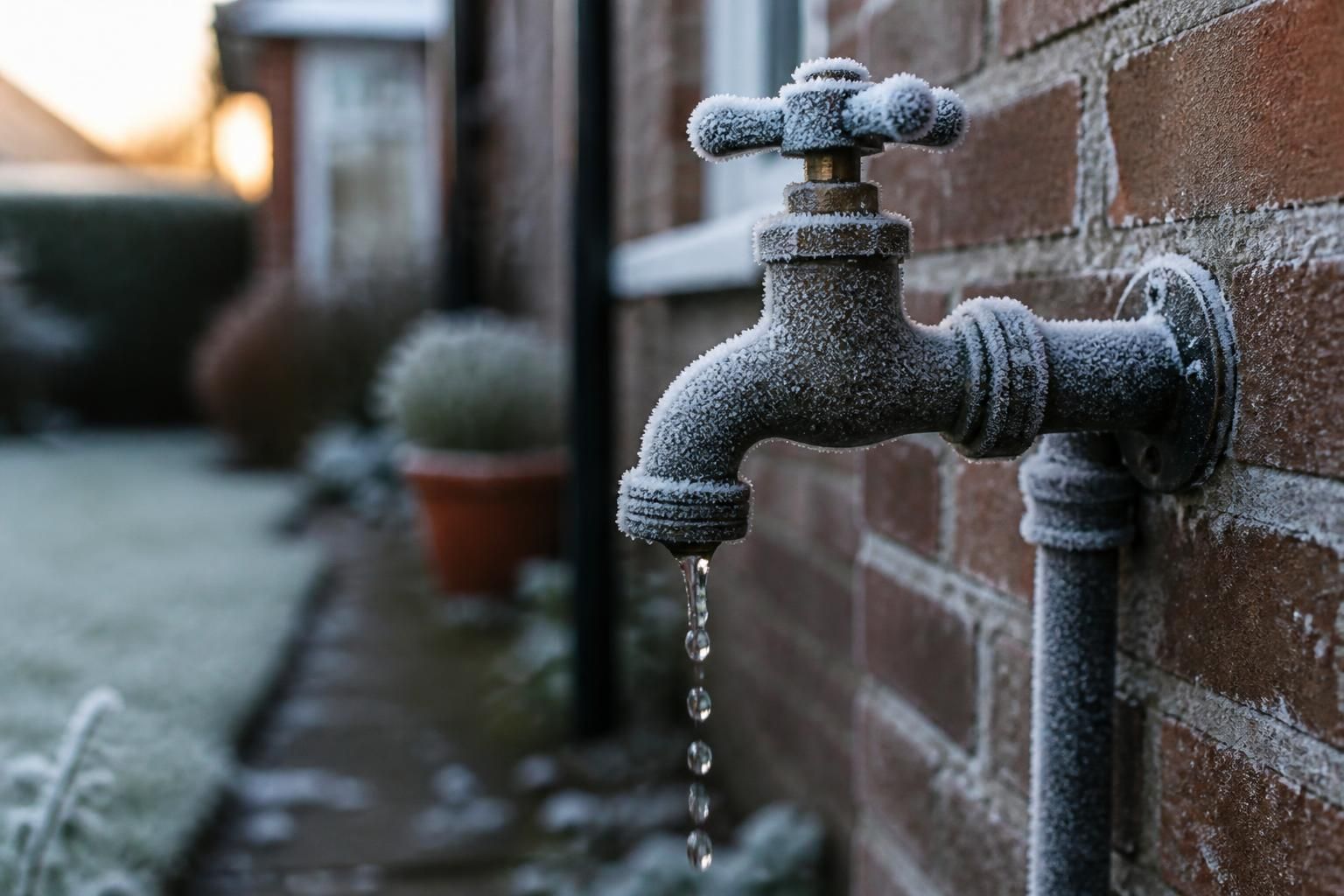
Freezing weather can make an outdoor tap leak because water trapped in the fitting, valve or short section of pipe can place damaging pressure on the surrounding metal or plastic. The problem may not be obvious while temperatures remain below zero; water escaping after thawing is often the first visible sign that the tap assembly or its pipework has been affected.
Outdoor taps are particularly exposed because they are positioned outside the heated part of the property. The risk is greater where:
- the internal isolation valve is missing, inaccessible or not fully closed;
- the external pipe has little or no insulation;
- the tap is connected to pipework running through an unheated wall, garage, loft or utility area;
- water remains in a long, dead-end section of pipe after the tap has been closed; or
- the fitting is old, corroded or already weakened.
Warning signs can include a steady drip from the spout, water appearing around the handle or wall connection, damp brickwork, staining inside the property, reduced pressure at the tap, or a hissing sound when the fitting is not being used. If the tap leaks only after cold weather, do not assume the issue is minor. A split may be inside the wall or beneath a floor, where moisture can damage plaster, insulation, timber and electrical components.
If a leak is found, turn off the supply to the outdoor tap using its internal isolation valve if one is fitted. If that valve does not stop the flow, close the property's main stopcock, then open the outdoor tap carefully to relieve remaining pressure. Keep the affected area clear and avoid using a naked flame, boiling water or a heat gun to thaw the fitting, as sudden heat can worsen damage or create a fire risk.
Prevention starts before cold weather arrives. Disconnect hoses and other attachments, check that the tap closes fully, and use a suitable external tap cover or pipe insulation where appropriate. An internal isolation valve with a drain point is more effective than relying on the outside tap alone, because it allows the exposed section to be emptied. Insulation should be correctly fitted and kept dry; it cannot protect a pipe if water is still trapped inside it.
A plumber will normally trace the leak, check the tap and accessible pipework, test the isolation valve, and assess whether moisture has reached the building fabric. The repair may involve replacing a washer or valve, renewing the tap, repairing a joint, or replacing a damaged section of pipe. If the leak is concealed, non-invasive checks may help identify its route before opening a wall or floor.
For properties in Birmingham and across the West Midlands, Ideal Plumbing Services provides professional assessment and repair for frozen outdoor tap leaks, including support for homeowners, landlords and tenants. Prompt isolation limits the amount of water released, but a persistent leak or any sign of internal damp should be inspected by a qualified plumber.