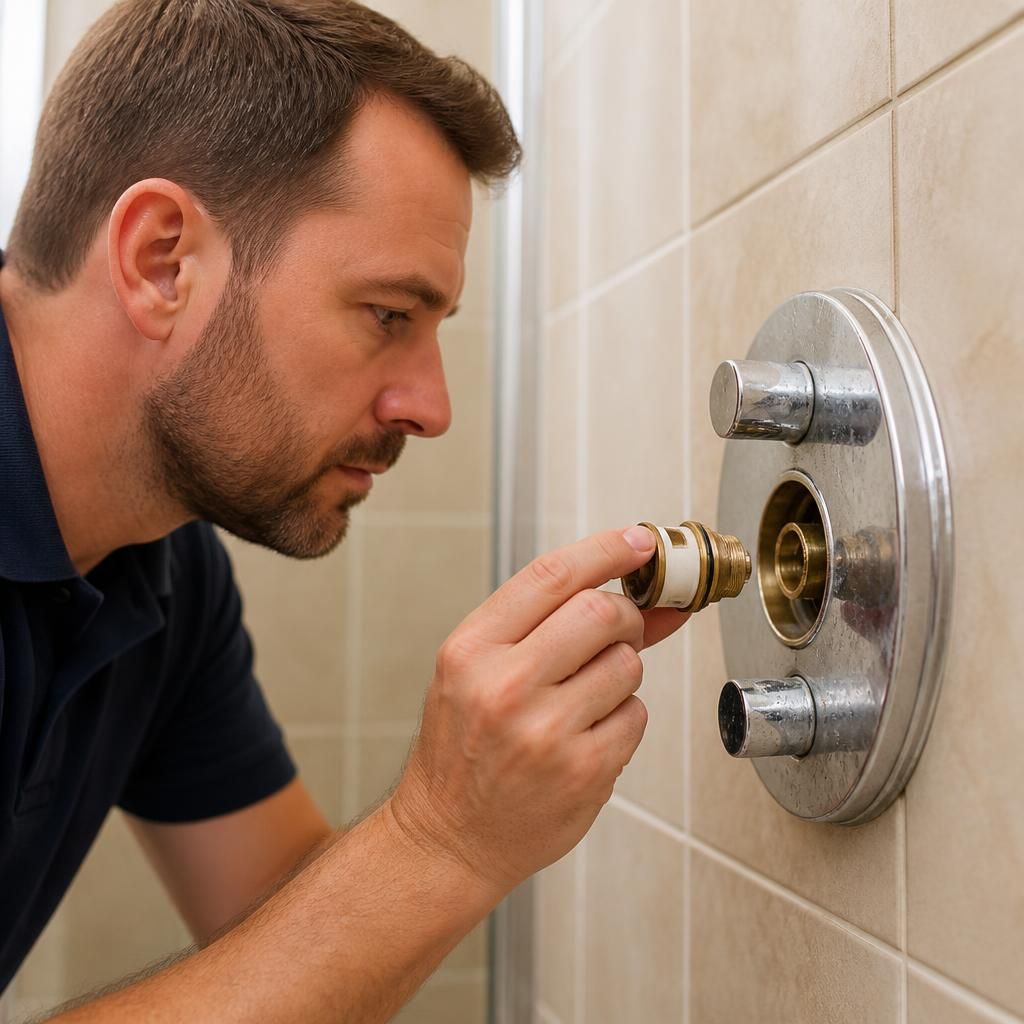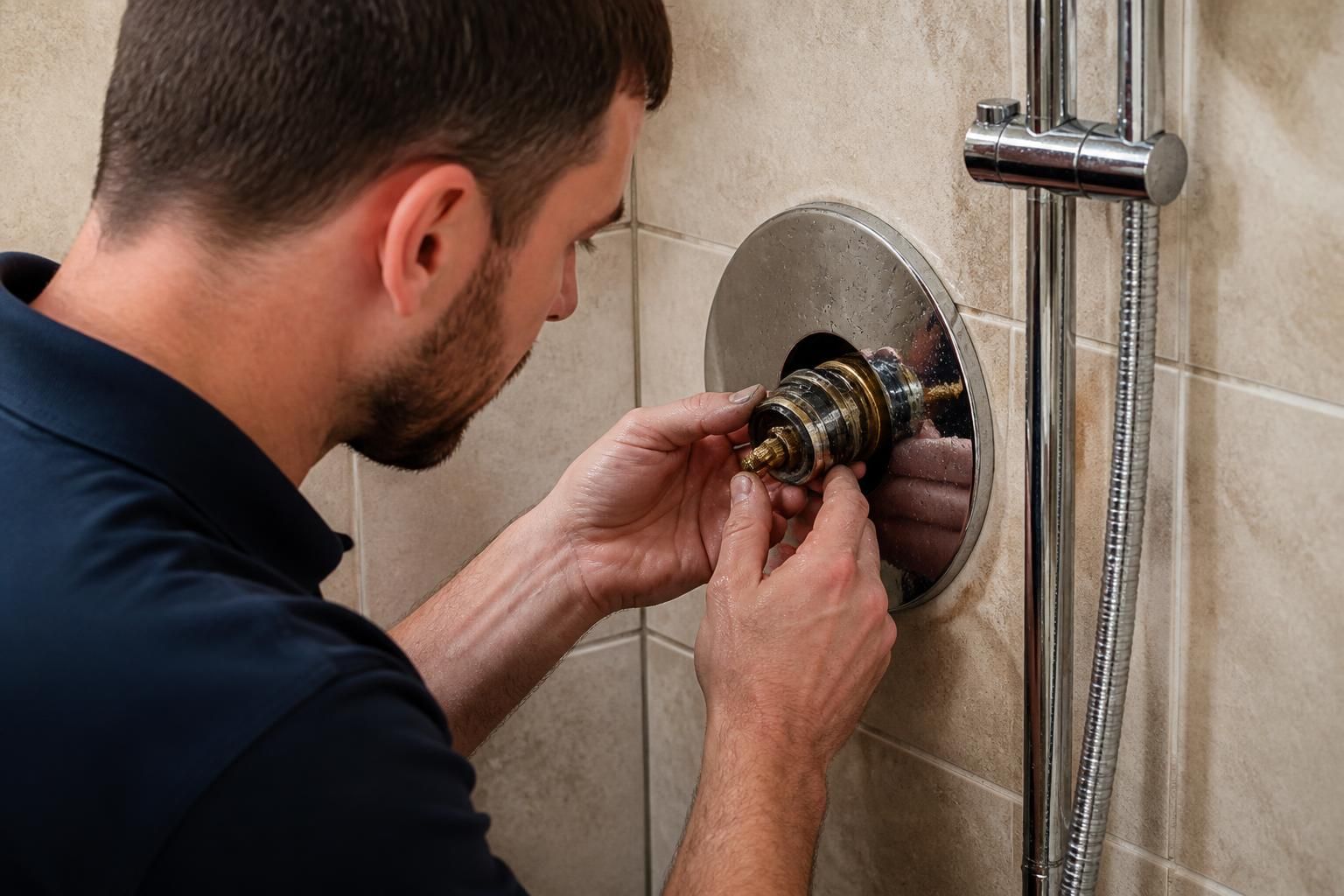
Shower tap and valve repair costs vary according to the fault, the fitting’s design and the parts required. A minor issue, such as a worn washer, seal or cartridge, may involve a relatively straightforward repair. A seized valve, damaged internal mechanism or obsolete fitting can require more involved work and replacement parts. The final price should be confirmed after the fault has been assessed.
The main factors that influence the cost are:
- Type of fault: dripping taps, poor temperature control, stiff handles, inconsistent flow and leaks around the valve can each require different repairs.
- Fitting type: a simple shower tap arrangement is generally less complex to service than a thermostatic valve with several internal components.
- Replacement parts: seals, washers, cartridges, handles and valve components vary in price and may not be interchangeable between fittings.
- Accessibility: exposed pipework and accessible fittings are usually easier to inspect and work on than valves concealed within a wall or behind a finished shower area.
- Condition of the installation: corrosion, seized connections, damaged threads or previous unsuccessful repairs can add to the work involved.
A repair is often the most practical option when the main fitting remains sound and the faulty component can be replaced. For example, changing a cartridge or seal may restore temperature control or stop a drip without replacing the complete shower valve. Replacement may be more appropriate where the valve body is cracked, badly corroded, no longer compatible with available parts or unable to regulate temperature safely.
Labour is only one part of the overall cost. A reliable assessment should also account for the time needed to isolate the fitting, remove components, identify the correct replacement and test the shower afterwards. If the exact part cannot be identified until the fitting is opened, the initial assessment may establish the likely repair route rather than provide a fixed total immediately.
Before work starts, ask what is included in the quoted price. This should clarify whether inspection, labour, replacement parts, removal of damaged components and testing are covered, and whether any additional work would be discussed before it is carried out. It is also worth checking whether the proposed repair is intended as a durable solution or a temporary way of managing an older fitting.
Ideal Plumbing Services can assess shower tap and valve faults for residential customers in Birmingham and the wider West Midlands, explain whether repair or replacement is more suitable, and provide clear advice on the likely work involved. The cost can then be considered alongside the age, condition and accessibility of the existing fitting rather than judged from the symptom alone.