In most cases, a shower tap repair is confined to the shower’s own pipework and does not affect taps, toilets or appliances elsewhere in the property. The extent of any interruption depends on the fitting, the accessibility of its isolation points and whether the shower shares hot-water components with other outlets.
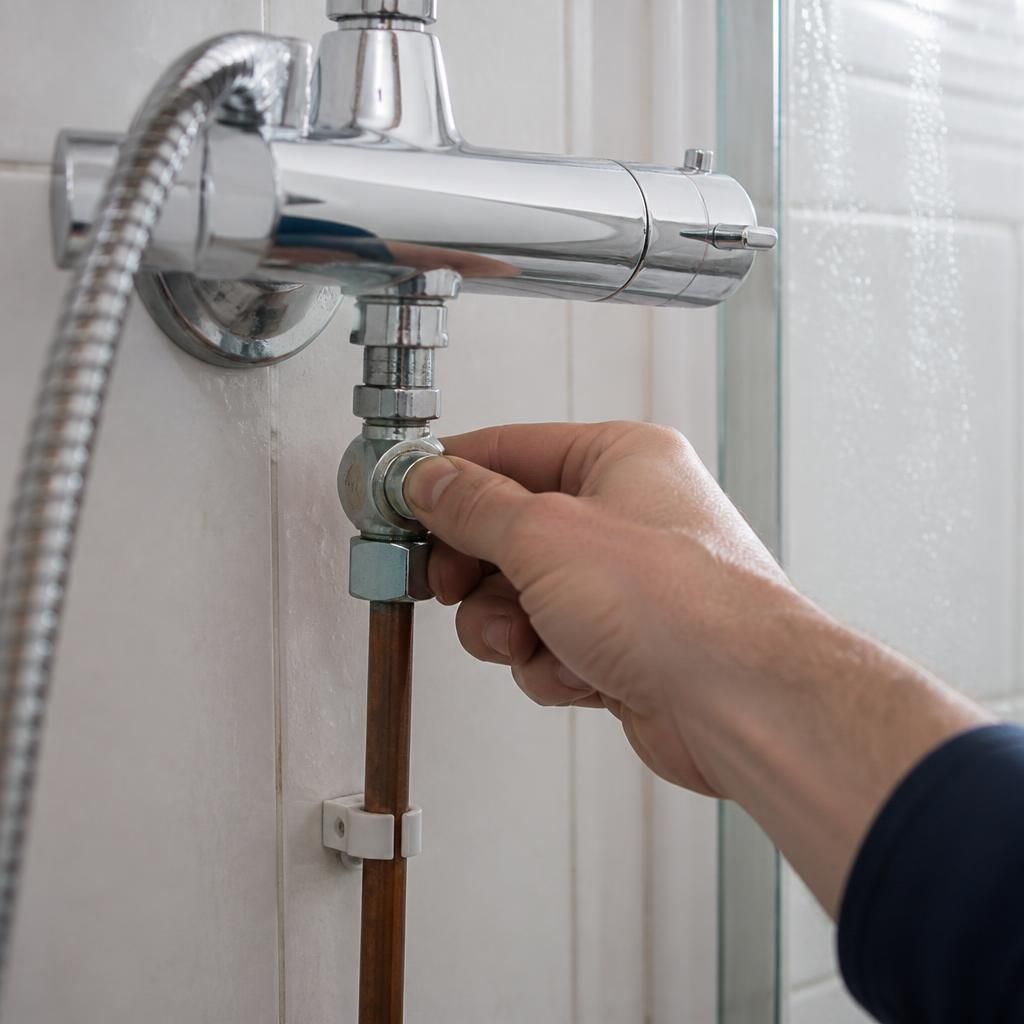
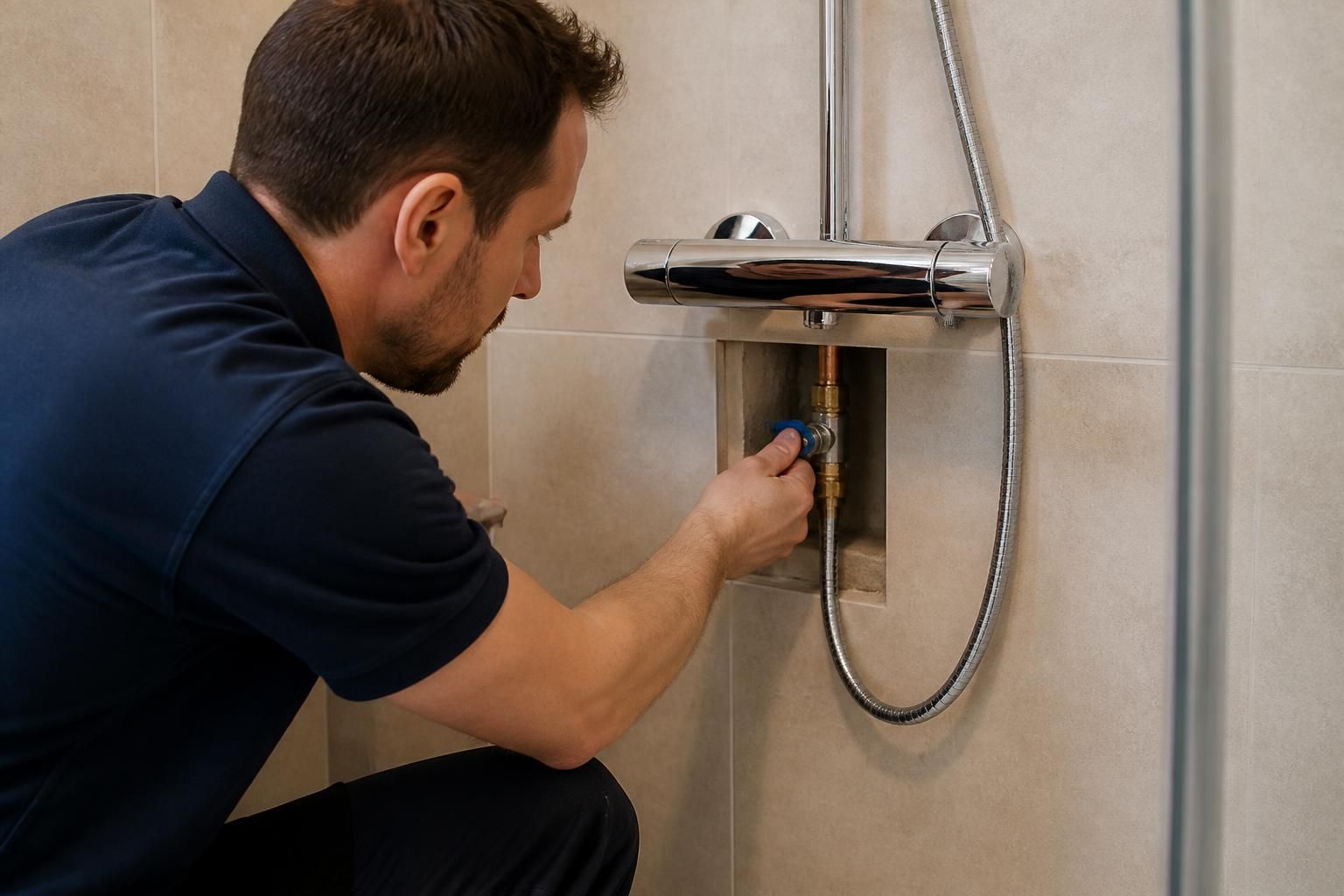
A plumber will first identify how the shower is supplied and isolate the relevant feeds. A thermostatic or manual mixer normally has separate hot and cold connections, while an electric shower is usually supplied by a dedicated cold-water pipe. Some installations have small isolation valves close to the shower or within an accessible service area; others rely on valves elsewhere in the property.
Once the supply is isolated, the remaining water in the shower pipe is released in a controlled way before the tap, cartridge, valve or related seal is removed. This prevents pressure and residual water from making the repair unnecessarily disruptive. The shower may remain unusable while the component is being worked on, but other outlets can generally continue to operate when their own supplies remain open.
There are situations where a wider interruption is more likely:
- The shower has no accessible isolation valves.
- An existing valve is seized, leaking or unable to shut off the flow fully.
- The shower has been connected to shared pipework with no separate means of isolation.
- Access to a hot-water cylinder, pump or other shared equipment is required.
- The repair involves replacing a section of pipework rather than changing an accessible shower component.
If the main stopcock has to be used, the cold-water supply to the home will be unavailable temporarily. Depending on the system, isolating a hot-water cylinder or related equipment may also affect hot water at other taps. This is different from a repair where only the shower’s individual feeds are closed.
Electric showers require an additional safety step: the electrical supply must be switched off at the appropriate isolation point before work begins. This does not usually interrupt water to other fixtures, but the shower should not be used until both its water and electrical connections have been checked.
After the repair, the supply should be reopened gradually. The connections are checked for leaks, the shower is run to clear trapped air and the temperature and flow controls are tested. Where a thermostatic valve has been serviced, its temperature control should also be checked to confirm that it is regulating correctly.
Before arranging work, it is useful to tell the plumber whether the shower is a mixer, thermostatic or electric type, whether other taps lose pressure when it runs, and where the main stopcock or any known service valves are located. Ideal Plumbing Services carries out shower tap and valve repairs for homeowners, landlords and tenants in Birmingham and the West Midlands, with the isolation method assessed as part of the repair.