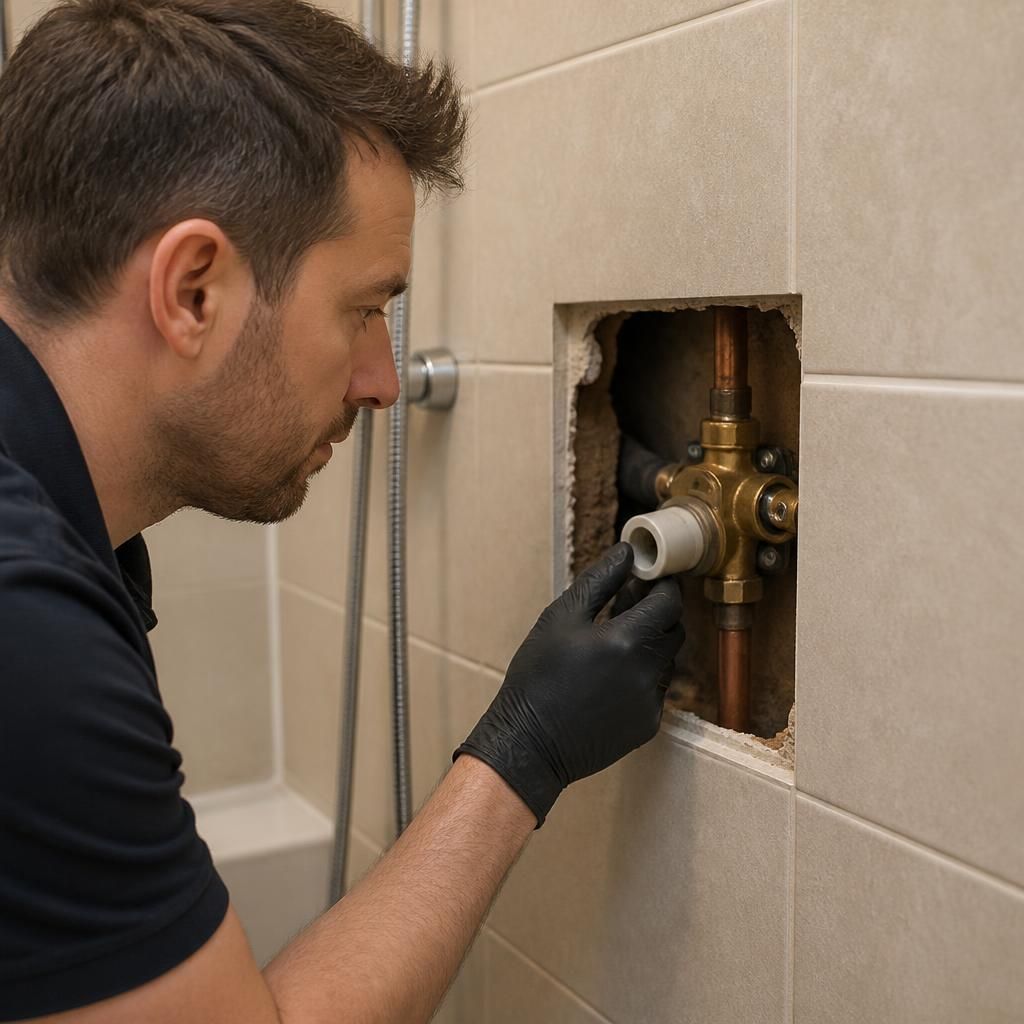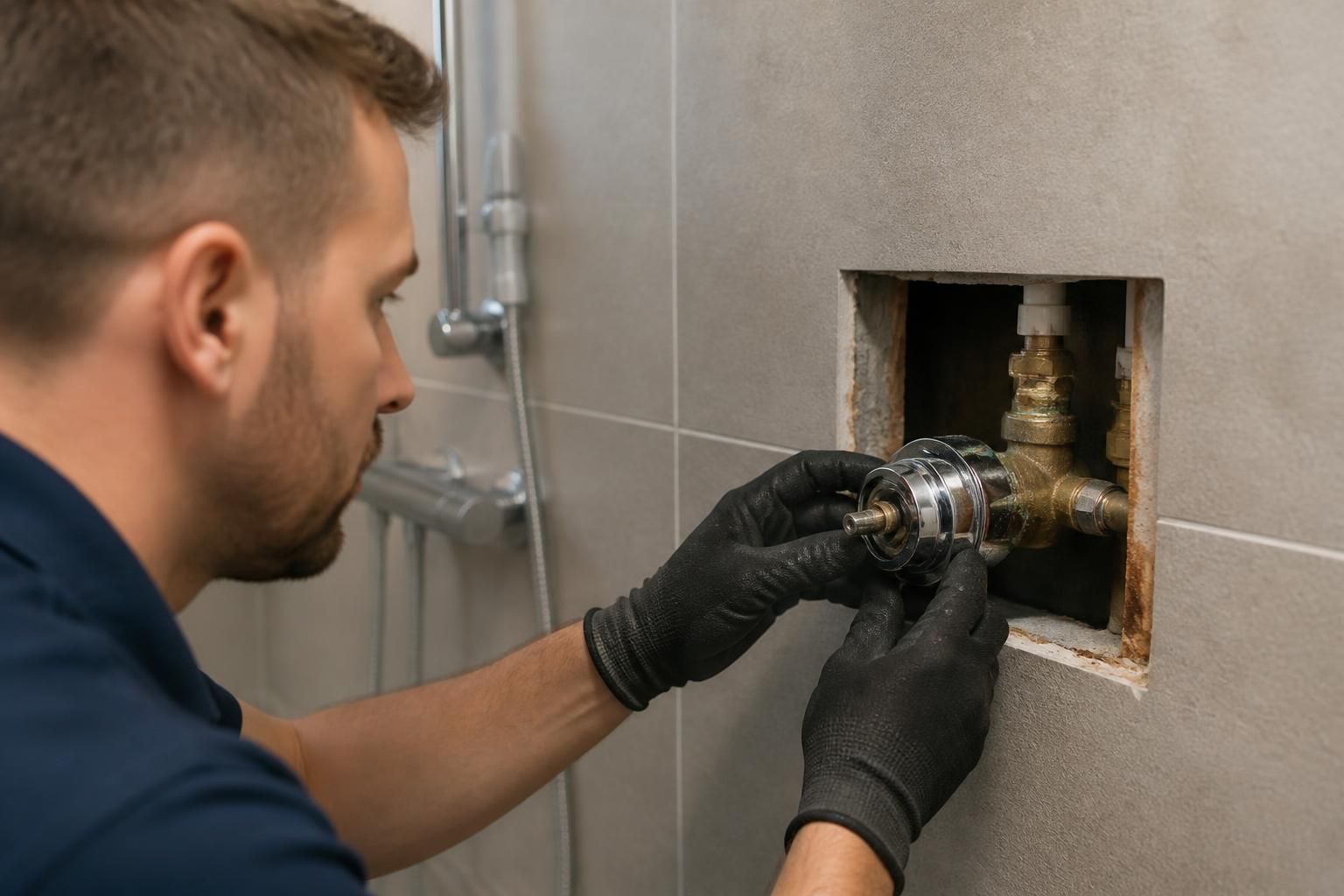
Access behind tiled walls is only normally needed when the faulty part or its pipe connections are concealed and cannot be removed or repaired from the shower side. Many repairs can instead be carried out by removing the handle, trim plate, cartridge, washer or other serviceable component from the front of the fitting.
Repairs that commonly avoid tile removal include:
- Replacing a worn cartridge in a mixer shower
- Changing a washer, seal or O-ring
- Repairing or replacing a handle, cover or escutcheon
- Cleaning or replacing an accessible filter or flow-control component
- Resealing a visible connection where the leak is at the fitting rather than inside the wall
These components are usually designed to be serviced from the front. A plumber will isolate the relevant water supply, remove the handle and decorative trim, inspect the internal mechanism and replace the failed part where a compatible repair is practical.
Access behind the wall may be considered if water is escaping from a concealed joint, the valve body is damaged, a pipe has become loose, or corrosion has affected a connection that cannot be reached through the front opening. It may also be necessary where the shower valve is a sealed or integrated unit with no usable service access. Persistent dampness, staining on the adjoining wall or ceiling, mould, damaged grout and a leak that continues after the visible components have been changed can indicate a concealed problem.
Removing tiles is not automatically the first solution. A plumber should establish whether the leak is coming from the valve, the surrounding seal, the shower arm, the pipework or another nearby fitting. This helps avoid opening the wall when the fault can be dealt with through the existing access point. Where access is required, the exact method depends on the wall construction and the position of the valve. Possible approaches include removing a small number of tiles, opening the wall from the shower side, or accessing the pipework from the opposite side if that is less disruptive.
The condition and availability of replacement tiles can affect how neatly the area can be reinstated. Tiles may crack during removal, particularly if they are firmly bonded or no longer manufactured. For this reason, it is sensible to identify spare tiles before work begins and to discuss whether the plumbing repair and any tiling or decorating are being handled as separate tasks.
In a rented property, the tenant should normally report the fault to the landlord or managing agent before arranging work that involves opening a wall. Homeowners may also wish to check where the stop tap and isolation valves are located, although a qualified plumber can determine which supplies need to be isolated during the repair.
A Birmingham plumber can assess the fitting, trace the source of the water and explain whether front access is sufficient or whether opening the tiled area is justified. The final repair method should be based on the location of the failed component, the condition of the existing installation and the need to prevent further water damage.