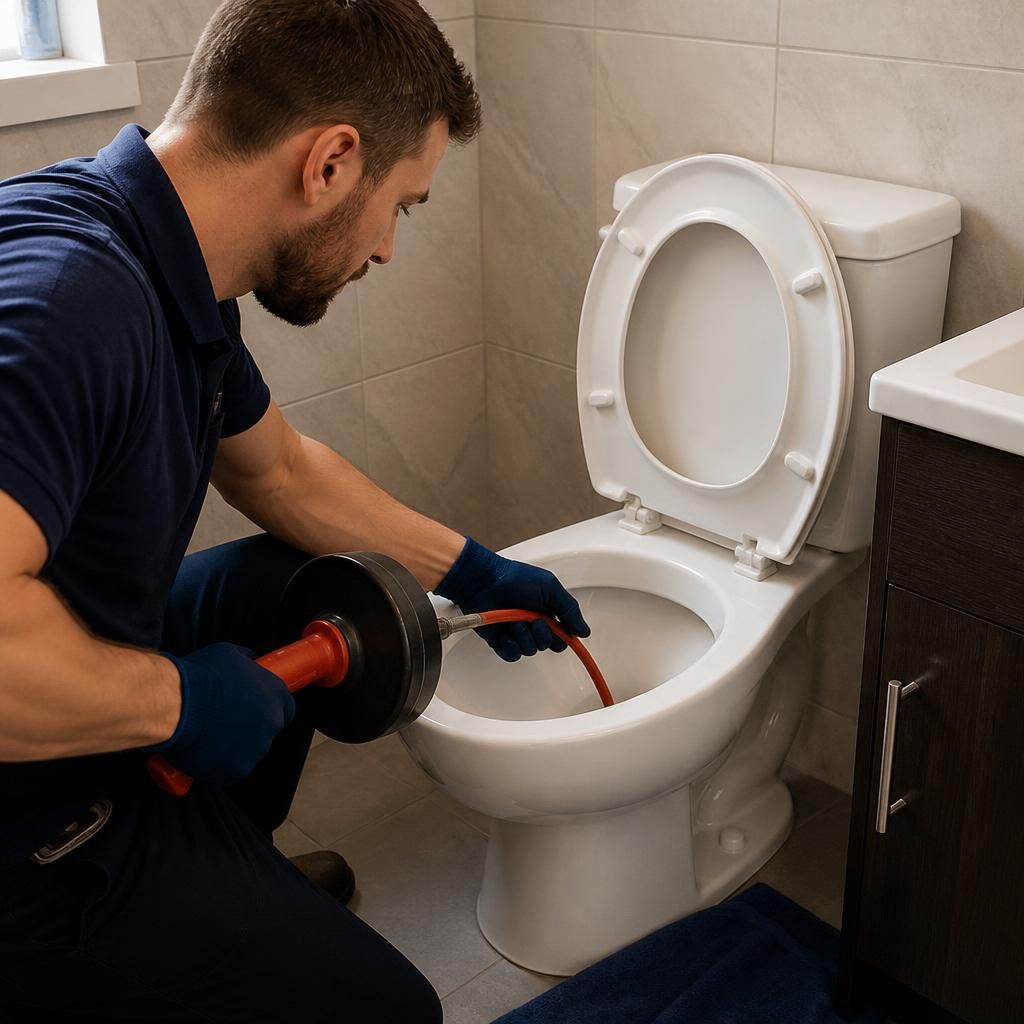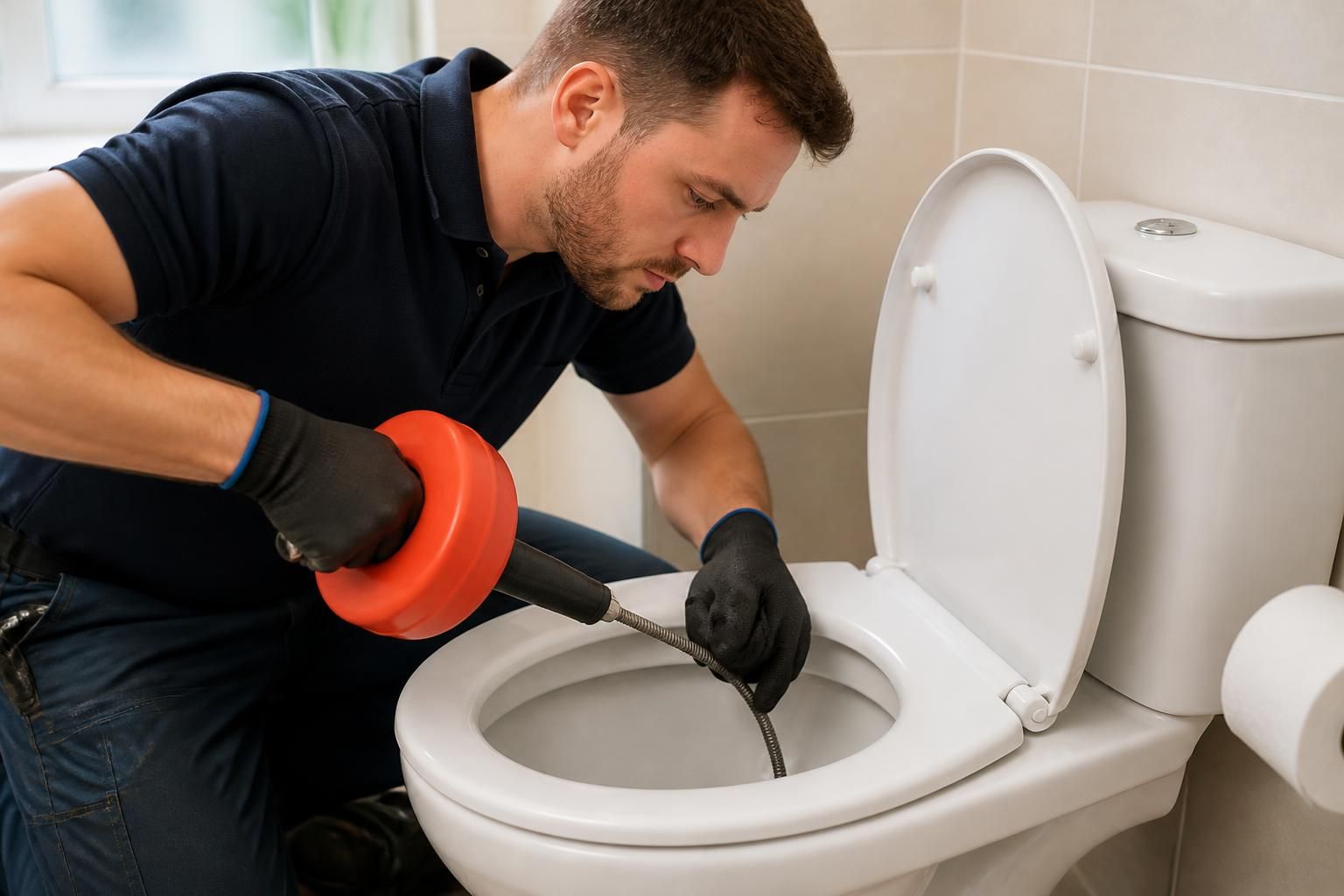
A ceramic toilet pan is normally left undamaged when the obstruction is approached gradually and with equipment designed for toilets. The main risks come from applying excessive force, levering against the ceramic, forcing a solid object further into the trap, or continuing to flush when the water level is already high.
Start by controlling the water. Do not flush again until the blockage has been assessed. If the cistern is still filling, close the isolation valve on the supply pipe or lift the cistern float mechanism sufficiently to stop more water entering. Protect the surrounding floor, and remove some water only if necessary to prevent an overflow.
Work out where the obstruction is located. A blockage limited to the toilet often causes slow drainage from that pan while nearby sinks and baths continue to work normally. Gurgling from several fixtures, rising water in more than one drain, or wastewater returning through another fitting can indicate a restriction further along the shared drain. In that situation, repeatedly treating the toilet may not solve the underlying problem.
Use controlled pressure rather than force. The obstruction may be soft material, paper that has compacted, or a small item caught in the internal trap. Pressure should be applied in a steady manner, with the tool kept centred over the outlet. Avoid rocking the pan, bracing against its rim, or using the cistern, seat or flush pipe as leverage. These actions can place uneven stress on the ceramic or its connections.
If an object such as a toy, air freshener holder or cleaning item may have fallen into the pan, pushing it deeper can make removal more difficult. A professional can select a suitable retrieval or clearing method after assessing the shape of the trap and the position of the object. This is particularly important where the item is rigid, has an edge, or has become firmly lodged.
Check the pan and its connections before and after clearing. Look for movement, a hairline fracture, water appearing around the base, dampness at the flush pipe, or a pan that no longer sits securely on the floor. Once the water begins to drain, test the toilet with a small amount of water first rather than immediately carrying out repeated full flushes. Inspect the base and nearby pipe joints afterwards, as a blockage can expose an existing weakness or disturb a poor seal.
A plumber should assess the toilet if the obstruction cannot be cleared with controlled methods, returns soon after clearing, or is accompanied by leaks, unpleasant odours, unusual gurgling or drainage problems elsewhere in the property. Professional assessment is also sensible when the pan is rocking, the cause is unknown, or there is a risk that a foreign object has entered the trap. The aim is to clear the restriction without damaging the pan, its seals or the connected drainage pipework.
To reduce the chance of a repeat blockage, dispose of sanitary products, wipes, nappies, cotton products and other unsuitable materials in a bin rather than flushing them. Keep small objects away from the toilet and address slow drainage early, before a partial restriction develops into a complete obstruction.