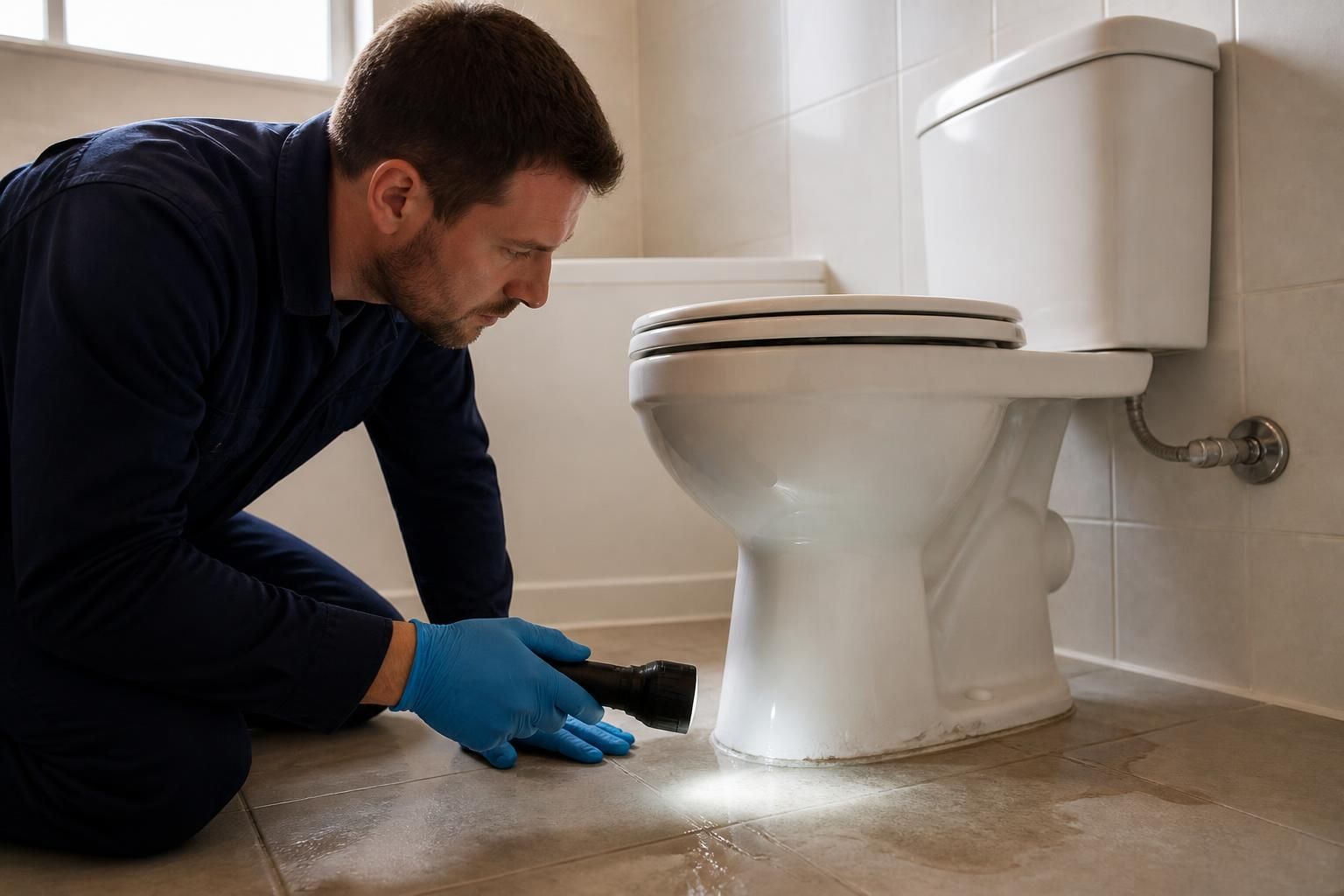
A toilet leak requires emergency repair when it involves contaminated water, threatens the stability of the toilet or surrounding building, or cannot be safely contained until a planned appointment. Leaks from the pan, waste connection or soil pipe are particularly urgent because they may release foul water and create a hygiene risk, even when the visible amount appears small.
Arrange emergency plumbing assistance if you notice any of the following:
- Foul-smelling or visibly dirty water: Water with a sewage odour, unusual colour or solid matter may be coming from the waste system rather than the clean water supply. Avoid contact and keep people and pets away from the affected area.
- A leaking pan seal or waste connection: Water appearing around the base of the toilet after flushing can indicate a failed pan connector, seal or soil connection. Repeated flushing can allow contaminated water beneath flooring and into hidden voids.
- A cracked pan or cistern: A crack can widen without warning. A damaged pan may also become unstable, while a cistern crack can release a large amount of stored water. Do not lean on, lift or attempt to dismantle damaged ceramic.
- Movement at the toilet base: Rocking can indicate failed fixings, a damaged floor, or a deteriorated seal. Continued use may worsen the connection between the pan and waste pipe and may cause further damage.
- Water appearing below the toilet or in an adjoining room: Moisture that is not explained by surface splashing may indicate a concealed leak beneath the flooring or behind a boxing-in panel. The source needs to be identified before the toilet is used again.
- Signs of structural or material damage: Swollen flooring, softened skirting boards, staining, peeling finishes or a damp ceiling below the bathroom suggest that water has already affected building materials.
- An uncertain source: If the leak cannot be traced to a clean-water connection, flushing component or visible joint, professional assessment is appropriate. A hidden waste leak should not be treated as a minor drip.
Not every toilet leak is an emergency. A small, clean-water seep from an accessible compression joint may be suitable for a planned repair if it remains fully contained and the toilet can be taken out of use. Condensation on a cold cistern is also different from a plumbing leak, although persistent moisture should be checked if the cause is unclear. The important distinction is whether the water is clean or contaminated, whether the source is controlled, and whether continued use could cause damage.
Before a plumber attends, keep the area clear and avoid flushing or testing the toilet repeatedly. Do not apply sealant over a leaking pan connection, as this can conceal the fault without restoring a reliable watertight joint. Do not remove the cistern lid or internal parts if ceramic is cracked or under pressure. If water has reached stored belongings, move only items that can be safely handled without walking through contaminated water.
Emergency toilet leak repair normally begins with identifying whether the source is the supply pipework, cistern, flush assembly, pan, pan connector or soil connection. The plumber will assess the condition of the ceramic, fixings, seals and surrounding floor, then determine whether the defective part can be repaired or whether replacement is the safer option. A repair should address the cause rather than simply covering the visible water path.
After the work, the toilet should be checked for movement, correct discharge and leaks during flushing. Where water has affected flooring, ceilings or concealed areas, those materials may need separate drying or inspection. Prompt assessment is especially important for landlords and tenants because recording the source and condition of the leak can help distinguish a failed component from damage caused by continued use.
Ideal Plumbing Services provides toilet leak diagnosis and repair for homeowners, landlords and tenants in Birmingham and across the West Midlands. Its plumbing work covers both urgent faults and planned repairs, with attention to identifying the source before recommending the appropriate solution.