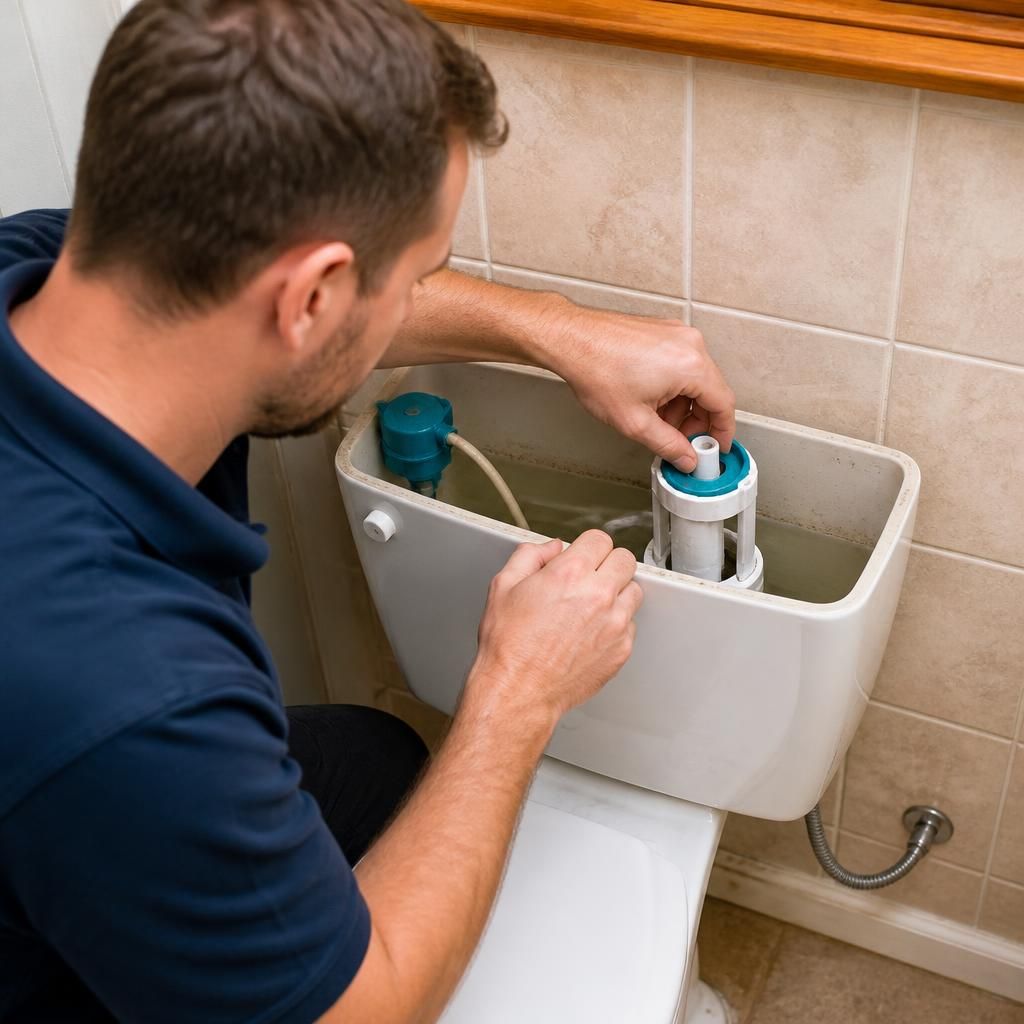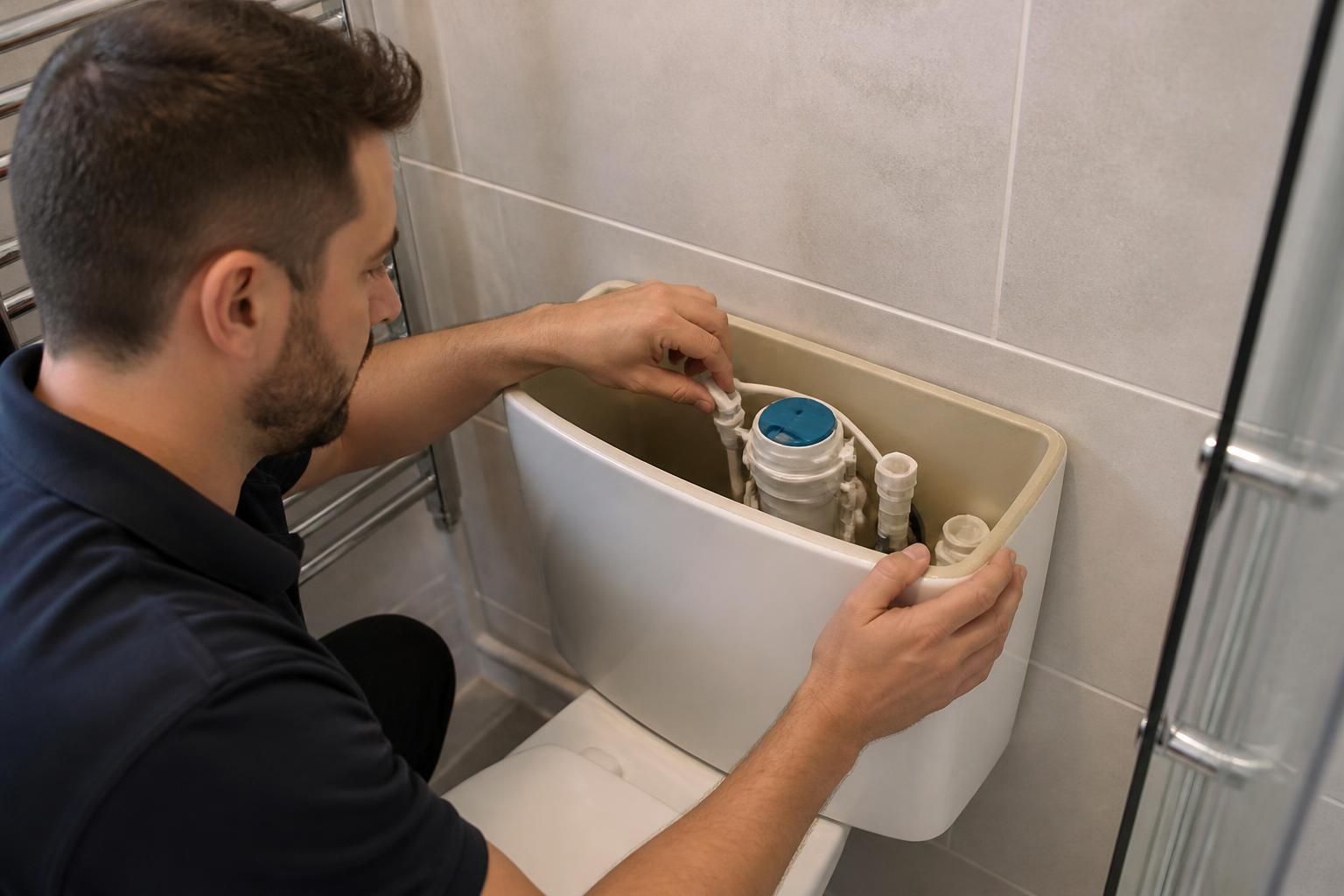
Repair is usually suitable when the cistern itself is sound and the fault is limited to an accessible, replaceable part. A plumber can inspect how the flush operates, identify the failed point and correct the mechanism without removing the whole assembly. This avoids unnecessary replacement where the existing fitting is otherwise serviceable.
Common repairable faults include a flush button that does not engage properly, a handle that feels loose, a chain or lever that has come away from its connection, and a valve that does not lift or close correctly. Internal seals can also deteriorate, allowing water to pass through the flush valve after the toilet has been used. In some cases, the mechanism only needs cleaning, repositioning or adjustment rather than a new part.
The condition of the surrounding cistern is important. A repair is more practical where the ceramic is intact, the mounting points are stable and the flush fitting has not become badly distorted. A faulty connection, worn seal or damaged actuator may be dealt with individually, provided the remaining components still work together correctly.
- Button or handle fault: the actuator may be loose, misaligned or disconnected from the internal linkage.
- Weak or incomplete flush: the lifting action may be restricted, or the valve may not be opening fully.
- Flush that continues to run: the valve may not be seating correctly because of a worn seal, scale or a damaged contact surface.
- Intermittent operation: movement may be obstructed or a connection may be slipping inside the cistern.
A complete replacement becomes more appropriate when the main body is cracked, the plastic has become brittle, the mechanism is severely corroded or several connected parts are worn at the same time. It may also be the better option where an old fitting cannot be adjusted reliably or where a replacement component would not suit the cistern. Replacing one failing part repeatedly can be less practical than fitting a compatible new assembly.
Compatibility should be checked before any part is ordered. Flush mechanisms differ in their fixing arrangements, operating depth, outlet size and button or handle connection. Dual-flush cisterns also require the full and reduced flush actions to be set correctly. A part that appears similar may not seal properly or may prevent the button from operating as intended.
A proper assessment normally involves isolating the water supply, removing the cistern cover where accessible and checking the actuator, linkage, valve, seals and fixing points. The plumber can then test the flush several times, check that the valve closes cleanly and look for water continuing into the pan. With concealed cisterns, access may be through the flush plate or another service opening, so the repair method depends on the installation.
If the toilet is running continuously, the isolation valve can be closed to limit water wastage while the fault is assessed. Avoid forcing a stiff button, handle or cistern cover, as this can damage the linkage or the ceramic. If water is escaping onto the floor, isolate the supply and arrange a plumbing inspection, particularly where the leak could affect flooring, ceilings or adjoining rooms.
The cost of repairing a flush mechanism depends on the failed component, access to the cistern, the type of mechanism and whether additional parts have deteriorated. A straightforward adjustment or seal replacement is different from removing an inaccessible assembly and correcting several worn connections. An accurate assessment should therefore be based on inspection rather than assuming that every flush fault needs the same repair.
Ideal Plumbing Services assesses toilet flush faults for homeowners, landlords and tenants in Birmingham and across the West Midlands. The aim is to repair the existing mechanism where that is technically sound, while explaining when replacement is the more dependable option.